76% Said All-Day Protection, Natural Deodorant with Zinc Ricinoleate
Published 2026-09-02 by Rose Petal Glam

Zinc ricinoleate works. It’s a proven odor absorber that traps smell-causing molecules instead of killing the bacteria that cause them, which makes it a smart pick for anyone who wants a clear, aluminum-free deodorant that won’t sting sensitive skin. Choose it if you’re avoiding harsh bactericides, want a clean finish under clothes, or need gentle odor control that doesn’t fight your body’s natural sweat function. Below, we break down how it works, how it stacks up against zinc oxide, and how to shop or formulate around it.
TL;DR:
- Zinc ricinoleate neutralizes odor by binding odor molecules without disrupting the skin’s microbiome or blocking sweat glands.
- It is often paired with moisture-absorbing powders and emollients in formulations, which helps manage odor and skin feel without irritation.
- Unlike zinc oxide, zinc ricinoleate stays clear and blends smoothly, making it suitable for various formats and darker skin tones without staining.
- When buying, verify that zinc ricinoleate is explicitly listed and that the product is free of aluminum compounds, especially for sensitive skin concerns.
- DIY formulations should use cosmetic-grade zinc ricinoleate in low percentages, with proper sourcing, preservatives for water-based products, and thorough patch testing.
Table of Contents
- What Is Zinc Ricinoleate and How Does It Work in Deodorant?
- Zinc Ricinoleate vs. Zinc Oxide: What’s the Difference?
- What to Look for When Buying a Natural Deodorant With Zinc Ricinoleate
- Can You Make a Zinc Ricinoleate Deodorant at Home?
- How Rose Petal Glam Builds on the Zinc Ricinoleate Approach
- An Editorial Take on Choosing Zinc-Based Deodorants
- Try a Zinc-Free, Aluminum-Free Alternative Built on Tallow
- Sources
- FAQ
What Is Zinc Ricinoleate and How Does It Work in Deodorant?
Zinc ricinoleate is a zinc salt derived from ricinoleic acid, a compound found in castor oil. Unlike antiperspirant ingredients that plug sweat glands, or antibacterial agents that kill the microbes on your skin, zinc ricinoleate takes a completely different approach: it grabs onto the volatile odor molecules your body produces and holds onto them, keeping them from reaching your nose.

That distinction matters for anyone reading ingredient labels. Zinc ricinoleate neutralizes odor by binding odor molecules rather than acting as an antibacterial agent, which means it doesn’t disrupt your skin’s microbiome the way some bactericidal formulas do. It’s also colorless and largely odorless on its own, so formulators can build it into a stick or cream without adding chalky white residue.
In practice, zinc ricinoleate rarely works alone. Formulator guidance for homemade deodorant recipes typically pairs it with:
- Absorbent powders like arrowroot or magnesium hydroxide, which soak up moisture
- Emollients such as jojoba or coconut oil, which keep the formula from feeling dry or waxy
- A base of natural waxes or butters that hold everything together in stick form
The ingredient traps odor without interfering with your body’s natural transpiration, a key selling point for anyone switching away from antiperspirants that block sweat glands entirely.
Zinc Ricinoleate vs. Zinc Oxide: What’s the Difference?
They share a name, but zinc ricinoleate and zinc oxide do almost opposite jobs. Zinc oxide is a mineral compound best known for its antibacterial and skin-soothing properties. It shows up in diaper creams and sunscreens for a reason: it calms irritated skin and slows bacterial growth on contact.
Zinc ricinoleate doesn’t fight bacteria at all. It binds odor molecules chemically, leaving the skin’s natural flora largely undisturbed. The practical differences show up fast once you use both:
- Appearance: Zinc ricinoleate stays clear or near-clear in a finished product; zinc oxide often leaves a visible white cast, especially on darker skin tones.
- Mechanism: Ricinoleate captures odor molecules; oxide reduces the bacteria that create them.
- Skin feel: Zinc oxide can feel slightly drying or chalky; zinc ricinoleate tends to blend more smoothly into creams and roll-ons.
- Staining risk: Zinc oxide is more prone to leaving marks on dark clothing over time.
Some formulas actually use both, layering an odor-blocking ingredient with a mild antibacterial one for broader coverage. If you’re switching between products, don’t assume “zinc” on the label means the same thing twice. Read past the word and check which zinc compound you’re actually getting.
What to Look for When Buying a Natural Deodorant With Zinc Ricinoleate
Not every “natural” deodorant delivers what it promises. A quick label check saves you from buying something that smells nice in the tub and does nothing by 2 p.m.
- Confirm zinc ricinoleate is listed by name, not buried under a vague “odor-neutralizing complex.”
- Check for a paired absorbent like arrowroot powder or magnesium hydroxide, which helps manage moisture alongside odor control.
- Verify the formula skips aluminum compounds entirely if that’s your reason for switching, since some “natural” labels still sneak in aluminum chlorohydrate.
- Look at the fragrance source. Essential oils behave differently on skin than synthetic fragrance blends, and sensitive skin often tolerates one better than the other.
- Match the format to your routine. Sticks glide on dry and last through a workday; creams offer more control for smaller areas; roll-ons work well when you want a lightweight, fast-drying finish.
Trust signals worth checking before you buy: whether the brand’s ingredients show up on resources like EWG’s Skin Deep ingredient index, whether the company publishes real tester feedback, and whether the ingredient list is fully transparent rather than hidden behind proprietary blend language. Our guide to choosing the best natural deodorant covers more of these red flags in detail.
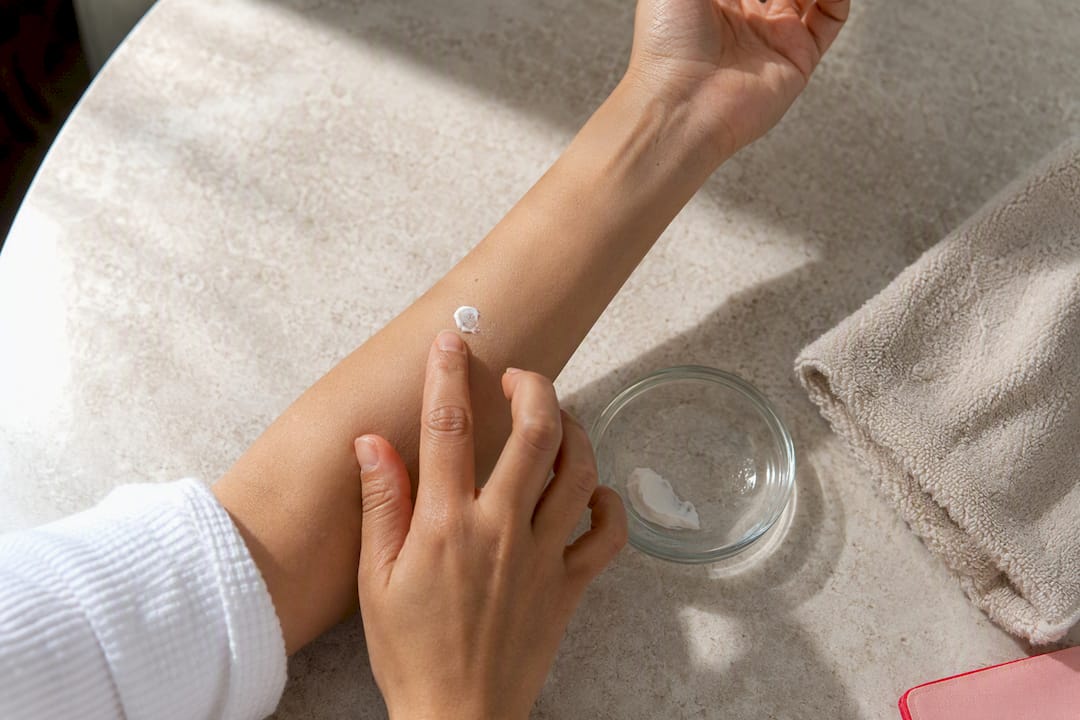
Pro Tip: Patch test any new deodorant on the inside of your forearm for 24 hours before applying it to your underarms. Sensitive underarm skin reacts faster and more visibly than forearm skin, so a clean forearm test doesn’t guarantee comfort elsewhere, but it catches the worst reactions before they happen somewhere more noticeable.
Can You Make a Zinc Ricinoleate Deodorant at Home?
Small-batch formulators can absolutely work with zinc ricinoleate, but a few ground rules keep the results safe and stable. Think of a basic recipe as four roles that need filling, not a fixed formula: a carrier base (oils, butters, or waxes for texture), an absorbent (arrowroot or cornstarch), the zinc ricinoleate itself, and, for roll-ons, a solvent or emulsifier that keeps everything blended in liquid form.
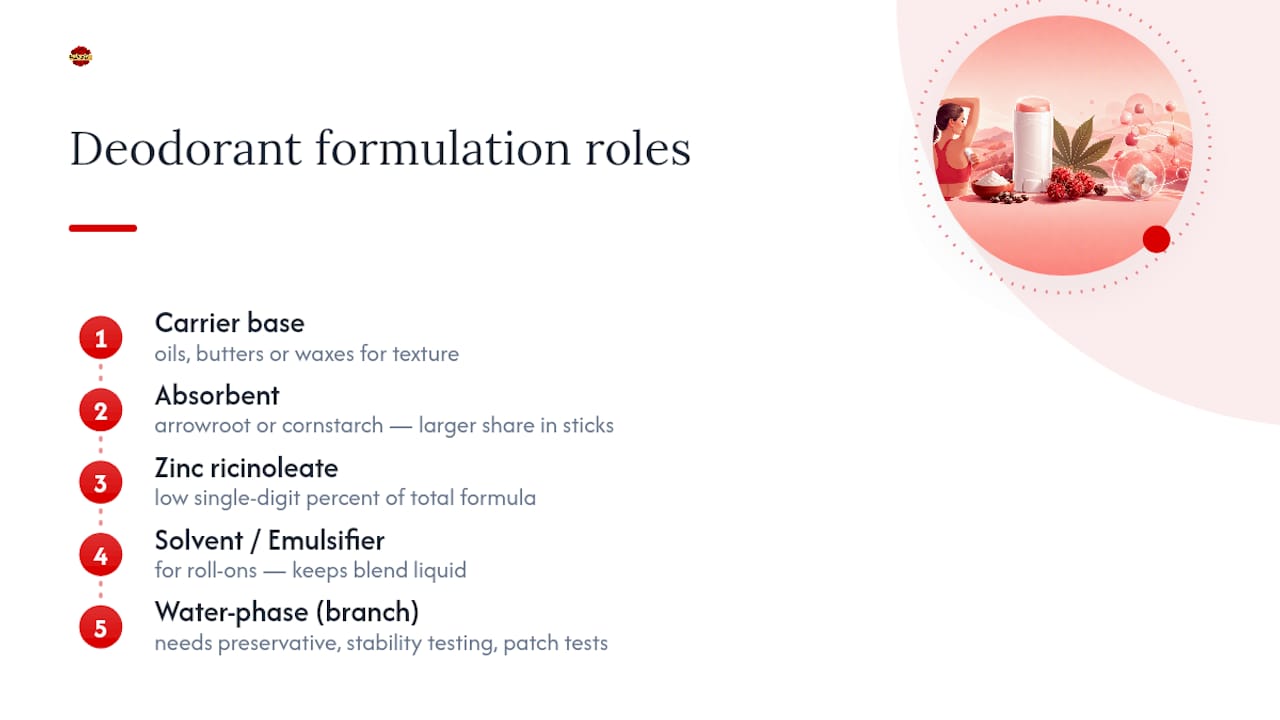
Formulator resources for homemade deodorant generally recommend keeping zinc ricinoleate in the low single-digit percentage range of the total formula, with absorbents making up a larger share depending on whether you’re building a stick or a cream. Exact ratios vary by supplier, so always follow the specific product’s technical sheet rather than guessing.
Sourcing matters more than most DIY guides admit. Buy cosmetic-grade zinc ricinoleate from an established ingredient supplier, not a bulk chemical reseller, and ask for a certificate of analysis. Checking a supplier’s standing, the way you’d check a Better Business Bureau listing for a cosmetics manufacturer, takes five minutes and rules out a lot of risk.
Anything with a water phase, aloe, or botanical extract needs a proper preservative system, or mold and bacteria will move in within days. Small-batch trials should include documented patch tests, dated batch records, and a clear shelf-life estimate before you consider sharing or selling a formula. One data point worth remembering: brand-side tester feedback on zinc ricinoleate sticks has reported figures as high as 76% of users noting all-day or longer odor protection in that brand’s own testing, a useful benchmark, though results like these vary by formula and shouldn’t be read as a guarantee for every batch.
How Rose Petal Glam Builds on the Zinc Ricinoleate Approach
A deodorant taking the aluminum-free, odor-binding approach pairs it with a tallow base instead of a purely plant-based one. Tallow carries a fatty acid profile similar to human skin, so it tends to feel less drying than coconut oil or shea-heavy sticks over a full day of wear.
This type of formula may suit readers looking for a moisturizing transition from traditional antiperspirants, people with reactive or easily irritated underarm skin who have had trouble with baking-soda-based natural deodorants, or shoppers preferring small-batch products made with visible, named ingredients instead of fragrance blend catch-alls.
Switching from an antiperspirant to any natural deodorant, including a tallow-based one, often means a short adjustment window while your body recalibrates sweat and odor patterns. Expect a few weeks, not a few days, before you can fairly judge how well it’s working.
Start with a patch test on your inner arm, then wear it on a low-stakes day before committing full time. Our notes on switching to a baking-soda-free tallow deodorant walk through exactly what that transition period tends to feel like.
An Editorial Take on Choosing Zinc-Based Deodorants
Most advice on natural deodorants treats every “natural” claim as equally trustworthy, and that’s the biggest blind spot in this whole category. A deodorant can be aluminum-free and still irritate your skin, still smell fine in the jar and fail by noon, still call itself “clean” while hiding a vague fragrance blend that does the actual odor control. Zinc ricinoleate earns its reputation because its mechanism is specific and testable: it binds odor molecules, full stop. That’s a narrower, more honest claim than most marketing copy makes.
Where conventional advice falls short is treating all “zinc” deodorants as interchangeable. Zinc oxide and zinc ricinoleate solve different problems, and conflating them leads people to buy the wrong product for their skin type. If you have reactive skin, prioritize the odor-binding, non-antibacterial route first, and only add antibacterial ingredients if odor control alone isn’t cutting it. Test one variable at a time. That’s the part shoppers skip, and it’s the part that actually tells you what’s working.
— Brent
Try a Zinc-Free, Aluminum-Free Alternative Built on Tallow
If the zinc ricinoleate research above has you weighing whether a binding-based deodorant fits your skin, An alternative deodorant option uses aluminum-free odor control built on tallow instead of mineral salts. Such products are often handcrafted in small batches, with a short, visible ingredient list rather than a lab blend, and may be formulated to moisturize while working rather than just sit on top of the skin.

This approach suits readers who found the zinc oxide comparison above compelling for its skin-calming reputation but want that gentleness paired with real hydration, not a drying stick. The Halo Vanilla Tallow Deodorant is the starting point, and pairing it with a whipped body butter rounds out a full switch from conventional antiperspirants without dry patches anywhere. Order a single stick to patch test this week, or bundle it with a soap bar from the tallow skincare collection to start the transition across your whole routine at once.
Sources
- Products That Contain ZINC RICINOLEATE || Skin Deep®
- Zinc Oxide vs. Zinc Ricinoleate: Choose the Right Deodorant for Your Needs
- Homemade Deodorant Recipes | Natural Formulas
FAQ
Is Zinc Ricinoleate Safe to Use in Deodorant?
Yes. It’s widely used in commercial and DIY natural deodorant formulas because it works by binding odor molecules rather than disrupting skin bacteria, and it’s listed on transparency resources like EWG’s Skin Deep index. As with any active ingredient, patch testing is smart before regular use, especially on sensitive skin.
Which Brands of Deodorants Contain Zinc Ricinoleate?
Several natural deodorant brands use zinc ricinoleate as a primary odor-control ingredient, often in roll-on and stick formats paired with soothing agents like aloe and panthenol. Rose Petal Glam’s tallow-based deodorants take a different formulation route, relying on tallow’s fatty acid profile instead of zinc salts for a similar aluminum-free result.
What Is the Healthiest, Most Natural Deodorant?
There’s no single “healthiest” formula, since the right choice depends on your skin type and what you’re avoiding, whether that’s aluminum, synthetic fragrance, or baking soda. Look for short, transparent ingredient lists, a clearly named odor-control ingredient like zinc ricinoleate, and a base of recognizable oils or fats rather than proprietary blends.
Is Zinc Ricinoleate Good for Sensitive Skin?
Generally, yes. Because it works by binding odor molecules instead of killing bacteria, it tends to be less irritating than antibacterial or antiperspirant ingredients. People with reactive underarm skin still should patch test first, since sensitivity varies by individual and by the other ingredients in the formula.
How Does Zinc Ricinoleate Compare to Baking Soda for Odor Control?
Baking soda raises skin pH to reduce bacterial growth, which is effective for many people but causes redness and irritation in others with sensitive skin. Zinc ricinoleate skips that pH shift entirely, binding odor molecules directly, which is why it’s often recommended as the gentler alternative for anyone who’s reacted poorly to baking soda formulas.