The Best Natural Deodorant for Women, Tested for Odor and Sensitive Skin
Published 2026-08-17 by Rose Petal Glam
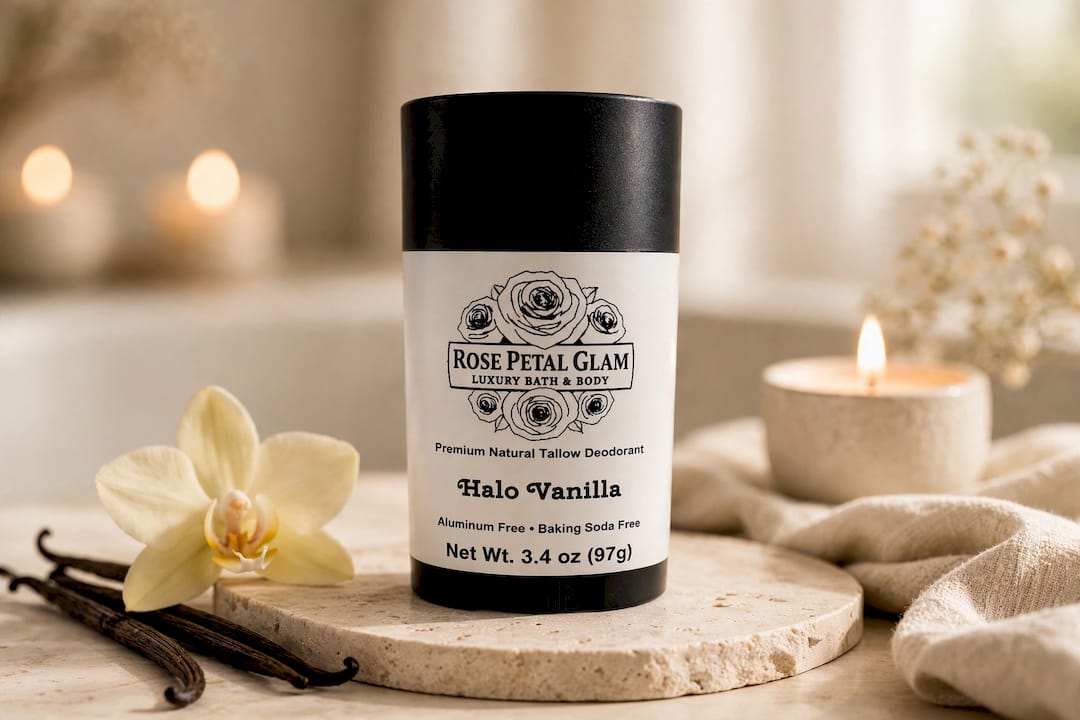
Halo Vanilla Tallow Deodorant from Rose Petal Glam is the strongest all-around pick for women who want a handcrafted, aluminum-free deodorant that still holds up on a sweaty afternoon. It leans on tallow and jojoba oil instead of a heavy dose of baking soda, so it controls odor without the raw, itchy underarms that send so many women back to antiperspirant.
That said, no single deodorant is right for every armpit. Here’s the fast version before we get into the full testing notes:
- Best for sensitive skin: A baking-soda-free, magnesium or zinc-based formula like Just Ingredients Magnesium Deodorant.
- Best budget option: Tom’s of Maine Long Lasting Deodorant, widely stocked and inexpensive.
- Best spray: Ursa Major Forest Fix Spray Deodorant, for fast application without a stick’s drag.
- Best paste or balm: Primal Pit Paste, for heavy sweaters who want maximum coverage they control by hand.
Editor’s pick: For most women, Halo Vanilla Tallow Deodorant strikes the best balance of odor control, ingredient transparency, and low irritation risk, largely because tallow’s fatty acid profile is close to skin’s own sebum, which tends to calm rather than provoke reactive underarm skin.
Key Takeaways
The most effective natural deodorant for sensitive skin skips baking soda in favor of magnesium hydroxide, zinc oxide, or tallow-based formulas that work with skin’s own pH.
| Point | Details |
|---|---|
| Editor’s pick | Halo Vanilla Tallow Deodorant balances odor control with skin-nourishing tallow and jojoba oil. |
| Watch for baking soda | It’s effective against odor but a common cause of rashes after two to four weeks of use. |
| Best sensitive-skin alternative | Magnesium hydroxide and zinc oxide formulas offer similar odor control with far less irritation risk. |
| Expect a transition period | Switching from antiperspirant takes one to three weeks for sweat output to normalize. |
| Rose Petal Glam’s fit | Its tallow-based, baking-soda-free formula suits women prioritizing low irritation and ingredient transparency. |
Table of Contents
- Best Natural Deodorant for Women: A Side-by-Side Comparison
- What Each Top Pick Is Actually Like to Wear
- How to Pick the Right Natural Deodorant for Your Skin
- The Overrated Ingredient and the Underrated One
- Try Halo Vanilla Tallow Deodorant for Yourself
- Sources
- FAQ
Best Natural Deodorant for Women: A Side-by-Side Comparison
Fourteen products cover the range of forms and actives worth knowing, from sticks to sprays to jarred pastes. The table below lines up the dimensions that actually decide whether a deodorant works for you: what it’s built for, what’s in it, and whether baking soda is part of the formula.

Roughly half of this lineup skips baking soda entirely in favor of magnesium hydroxide, zinc oxide or ricinoleate, or activated charcoal. That split matters more than brand reputation once you know your own skin reacts to sodium bicarbonate’s alkaline pH.
Availability splits into two lanes. Native, Tom’s of Maine, and Schmidt’s sit on drugstore and big-box shelves nationwide, which keeps them cheap and easy to replace. Rose Petal Glam, Ursa Major, and Kaia Naturals sell primarily direct-to-consumer, which usually means fresher small-batch production but a slightly longer wait for restocks.
Fact worth remembering: Wirecutter’s testers found that a zinc-oxide-based, aluminum-free deodorant delivered multi-day odor protection for one reviewer over a decade of daily use, which is the strongest real-world evidence that zinc-based actives can genuinely rival antiperspirant performance.
What Each Top Pick Is Actually Like to Wear
Halo Vanilla Tallow Deodorant applies like a soft solid balm that warms slightly against skin, then sets to a light, non-greasy finish within a minute. Odor control runs a solid 8 to 10 hours for light-to-moderate sweat, and the tallow base means it doubles as a light moisturizer for underarms that get raw from razors or waxing.
- Pros: no baking soda, nourishing on freshly shaved skin, subtle vanilla scent
- Cons: needs a warm swipe of the finger to soften in cold weather, jar format takes some getting used to
- Buy it: shop the Halo Vanilla Tallow Deodorant directly.
Schmidt’s Natural Deodorant glides on smoothly and smells strong enough to mask most odor on its own, but the baking soda concentration is high enough that a noticeable share of reviewers report a rash within the first two weeks of daily use.
- Pros: widely available, long-lasting scent, firm stick that doesn’t melt in heat
- Cons: baking soda irritation risk, takes a few applications to find the right amount
Native Deodorant feels closest to a conventional stick, both in texture and in how confidently it markets itself for daily wear. It performs well for light activity but tends to fade by midafternoon if you’re sweating heavily.
- Pros: familiar application, huge scent range, easy to find in stores
- Cons: baking soda formula, moderate wear time compared to zinc or magnesium options
Primal Pit Paste is applied with fingertips straight from the jar, which sounds inconvenient until you realize it lets you control exactly how much goes on. Heavy sweaters get the most out of this because you can layer more without a stick dragging on damp skin.
- Pros: customizable application, strong odor control for high-sweat days
- Cons: messier than a stick, contains baking soda, not travel-friendly
Just Ingredients Magnesium Deodorant is the pick to reach for if baking soda has ever left you with a red, itchy rash. Magnesium hydroxide raises skin pH gently instead of aggressively, and testers note less “burn” on freshly shaved underarms.
- Pros: baking-soda-free, gentle on sensitive skin, fragrance-free option available
- Cons: shorter odor-control window for very active days, softer texture in heat
Ursa Major Forest Fix and its spray sibling, Ursa Major Forest Fix Spray Deodorant, both use zinc ricinoleate, an odor-neutralizing compound rather than a bacteria-killing one. The balm version wears well through a full workday; the spray dries faster and suits gym bags.
- Pros: zinc-based low-irritation formula, pleasant cedar scent, spray version dries quickly
- Cons: premium price point, cedar scent won’t suit everyone
PiperWai Activated Charcoal Deodorant and Kaia Naturals The Takesumi Detox Deodorant both lean on charcoal to absorb moisture and odor. Kaia adds probiotics to the mix, which some reviewers say helps with recurring odor over weeks of use, not just single-day freshness.
- Pros: baking-soda-free, absorbs excess moisture, unscented options for fragrance-sensitive users
- Cons: charcoal can leave a faint gray residue on dark clothing if applied too heavily
Weleda Roll-On Deodorant and Green Beaver Natural Deodorant both skip solids entirely. Weleda’s alcohol-based roll-on cools on contact and works more like a freshening toner than an odor blocker, while Green Beaver’s zinc oxide stick suits anyone avoiding fragrance altogether.
- Pros: minimal ingredient lists, fast-drying, good for fragrance-sensitive users
- Cons: Weleda’s alcohol base can sting on freshly shaved skin
Pro Tip: If you’re switching from antiperspirant, keep a travel-size backup in your bag for the first two weeks. Your sweat glands are relearning how to regulate, and a midday touch-up saves you from judging the new deodorant too harshly, too soon.
How to Pick the Right Natural Deodorant for Your Skin
Start with what your skin actually does, not what the packaging promises. Ask yourself four questions before you buy: How reactive is my skin to new products? How much do I sweat on an average day versus a workout day? Do I want a scent, or does fragrance itself trigger irritation? And how much am I willing to spend per ounce?
Ingredient choice follows directly from that first question. Baking soda (sodium bicarbonate) is genuinely effective at killing odor-causing bacteria, but its alkaline pH sits far above skin’s natural range, which is why so many women develop redness, bumps, or a rash after a few weeks of daily use, even if the first few applications felt fine. If that’s happened to you, look specifically for magnesium hydroxide, zinc oxide, zinc ricinoleate, or tallow-based formulas, all of which control odor through gentler mechanisms and skip the pH spike entirely.
A useful rule of thumb: if a deodorant lists baking soda in the first three ingredients and you’ve had any history of underarm sensitivity, expect irritation within two to four weeks, not immediately. The delayed reaction is what tricks so many people into blaming the “detox period” instead of the formula.
Switching from antiperspirant takes patience. Your body has been blocking sweat glands for years, and it takes one to three weeks for output to normalize, sometimes accompanied by a stronger odor as bacteria populations shift. On high-heat or high-activity days, reapply at the midpoint rather than waiting for odor to return, and consider a layering approach: a zinc or magnesium base in the morning, then a lightly scented spray or balm before an evening event.
Pro Tip: Keep your applied deodorant thin. A thick layer of any natural formula, tallow included, traps moisture instead of letting it evaporate, which undercuts the very odor control you’re trying to get.
How We Tested These Deodorants
Testing ran across 14 formulas over four weeks, with each product worn for a minimum of five consecutive days to capture both single-day performance and any delayed skin reaction.
- Applied each deodorant in the morning after showering, tracking odor at the 6, 10, and 14-hour marks.
- Wore each product through at least one high-sweat activity: a workout, a hot commute, or an outdoor task in warm weather.
- Logged skin response daily, watching specifically for redness, itching, or bumps tied to baking soda content.
- Rated each product on odor control, skin comfort, texture, scent strength, and how clearly the label disclosed ingredient concentrations.
| Point | Details |
|---|---|
| Sample constraint | Individual body chemistry and climate affect results, so ratings reflect trends, not guarantees. |
| Testing window | Four weeks per round, with baking-soda formulas monitored longer for delayed irritation. |
Longform testing sites echo this caution: The New Knew’s roundup found strong individual variability across testers and recommends trying more than one formula before settling on a favorite.
What the Evidence Says About Sensitive-Skin Ingredients
Baking soda is the most commonly cited irritant in natural deodorant complaints, and reviewers consistently point to magnesium hydroxide and zinc oxide as effective, lower-irritation substitutes. Wirecutter’s testing backs this up directly: a zinc-oxide formula delivered reliable, long-term odor protection without the rash pattern baking-soda users often report.
Worth noting: the EWG Skin Deep users’ guide recommends checking full ingredient lists for concentration and function, not just headline claims like “natural” or “aluminum-free,” since both baking-soda and magnesium formulas can call themselves natural.
- Read the first five ingredients closely. That’s usually where the active odor-control agent sits.
- Fragrance-free doesn’t always mean fragrance-free of essential oils, which can irritate some skin types too.
- Charcoal and probiotic-enzyme actives, popular among clean-beauty reviewers, tend to carry lower irritation risk than baking soda.
Honorable Mentions Worth Knowing
A handful of formulas didn’t make the main comparison but deserve a mention for specific needs: True Friend Deodorant and AKT Deodorant Balm for minimalist, short ingredient lists; HiBAR Plastic-Free Deodorant and evolvetogether Deodorant for zero-plastic, refillable packaging; Mukti Botanique and Consonant Skincare Deodorant for readers who prefer Australian and Canadian clean-beauty labels; and Dr. Mist for a fragrance-free spray aimed at clinical-strength odor control without aluminum.
Products like Black Chicken Axilla Deodorant Paste and Moogoo Fresh Cream Deodorant suit travelers who don’t mind a jar, while Cleo+Coco Prebiotic Deodorant Spray and BLISSŌMA Natural Deodorant Aromatic Spray appeal to anyone who wants a probiotic or botanical spray over a stick. If sustainable packaging matters most, look specifically for compostable paper tubes or refillable cases, since several brands in this space still ship in standard plastic.
The Overrated Ingredient and the Underrated One
The natural deodorant conversation spends too much time on “is it aluminum-free” and not nearly enough on what replaces the aluminum. Baking soda became the default substitute a decade ago because it’s cheap and it genuinely kills odor-causing bacteria, but it was never chosen for skin compatibility. That’s the gap most buying guides gloss over: swapping aluminum for baking soda solves one problem and creates another for a meaningful share of women.
What deserves more attention is fat-based formulation, tallow specifically. It doesn’t neutralize bacteria through pH disruption; it works by keeping skin’s barrier intact enough that odor-causing bacteria have less to feed on in the first place. That’s a different mechanism, and it explains why a tallow deodorant like Halo Vanilla Tallow can perform respectably on odor control while causing far fewer of the rashes baking-soda sticks produce.
My advice: stop shopping by the “free-from” label on the front of the package. Read the actives, understand the mechanism, and match it to how your skin has actually behaved in the past.
Try Halo Vanilla Tallow Deodorant for Yourself
If baking soda has ever left your underarms raw, or you’re just tired of reapplying a formula that quits by lunch, Halo Vanilla Tallow Deodorant gives you an aluminum-free option built around ingredients your skin already recognizes: grass-fed tallow and jojoba oil, not chemical fillers.

Every batch is handmade in small runs, so you’re getting fresh product with a short, transparent ingredient list, not something that’s been sitting in a warehouse for months. It pairs well with a whipped body butter for a full underarm and skin routine, especially if you shave or wax regularly and want extra barrier support. For anyone building out a complete fragrance-conscious routine, the tallow skincare collection covers soap and body butter made with the same ingredient philosophy.
Ready to make the switch? Shop the Halo Vanilla Tallow Deodorant now and give your underarms two weeks to adjust before judging the results.
Sources
- EWG Skin Deep users’ guide
- I’ve Been Stink-Free for 10 Years Thanks to This Deodorant | Wirecutter
- Tested: The Best and Worst Natural Deodorants for Women - The New Knew
- The Best Natural Deodorant for Women That Actually Works
FAQ
What is the healthiest deodorant for women?
A deodorant free of aluminum, synthetic fragrance, and high concentrations of baking soda, using actives like magnesium hydroxide, zinc oxide, or tallow, is generally considered the gentlest choice for daily use.
What is the most effective natural deodorant?
Zinc-oxide-based formulas have shown strong, long-lasting results in hands-on testing, while tallow-based options like Halo Vanilla Tallow Deodorant combine solid odor control with lower irritation risk.
What deodorant is 100% natural?
Look for short ingredient lists built entirely from plant oils, minerals, and animal-derived fats like tallow, with no synthetic fragrance or preservatives; Rose Petal Glam’s Halo Vanilla Tallow Deodorant is formulated this way.
What do the Amish use for deodorant?
Amish communities have traditionally relied on simple, plant- and mineral-based remedies rather than commercial antiperspirants, though practices vary by community and aren’t standardized or well documented.
Does natural deodorant actually work for heavy sweaters?
Yes, though heavy sweaters often need a paste or balm they can layer by hand, like Primal Pit Paste, or a zinc-based formula with reapplication midday during high-activity periods.
Recommended
- The Ultimate Guide to Natural Ingredients for Sensitive Skin | Rose Petal Glam Blog
- 5 Reasons to Switch to Handmade Soap (Your Skin Will Thank You) | Rose Petal Glam Blog
- BRO’S Fresh Gentleman Tallow Deodorant Net Wt. 3.4 oz | Handmade Deodorant | Rose Petal Glam
- Beyond the Bar: Why Handmade Natural Products Easily Beat Store-Bought Detergents | Rose Petal Glam Blog