The Best Natural Deodorants That Actually Work in 2026
Published 2026-08-06 by Rose Petal Glam
If you want the short answer: the Halo Vanilla Tallow Deodorant from Rosepetalglam is the top pick for anyone who wants a genuinely handcrafted, skin-nourishing, aluminum-free deodorant with full ingredient transparency. The best option for sensitive skin is conditional: some AHA-based serums, such as Nécessaire The Deodorant (fragrance-free) and Saltair 5% AHA Serum, or magnesium formulas (Just Ingredients) are generally preferred because they avoid baking soda irritation. On a budget, Tom’s of Maine or Arm & Hammer Essentials are the easiest shelf finds. For a cream or serum format, Saltair 5% AHA Serum Deodorant stands out. Purists who want the shortest ingredient list should look at Meow Meow Tweet.
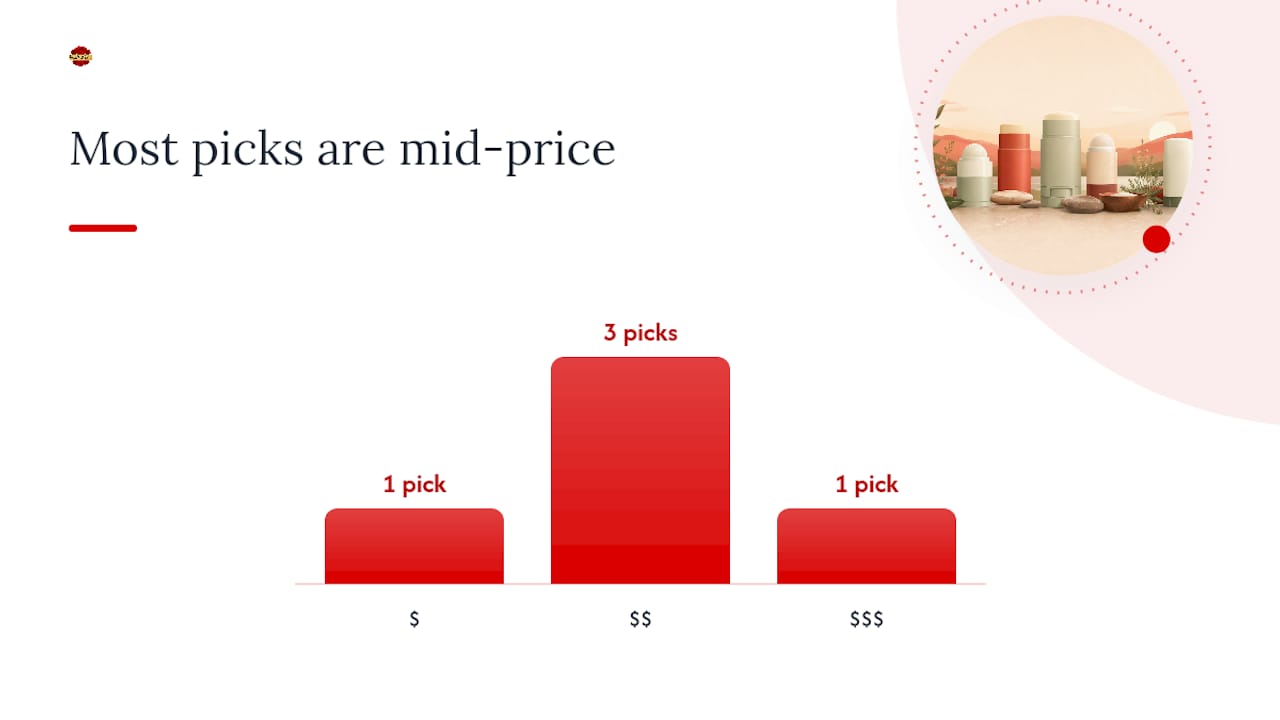
| Category | Pick | Form | Key Active | Price Tier |
|---|---|---|---|---|
| Best overall | Rosepetalglam Halo Vanilla | Stick/balm | Grass-fed tallow, jojoba | $ |
| Best for sensitive skin | Nécessaire The Deodorant, Saltair 5% AHA Serum, or Just Ingredients Magnesium | Serum/gel or stick | AHAs, niacinamide, or magnesium | $$ |
| Best budget | Tom’s of Maine | Stick | Propylene glycol, hops | $ |
| Best cream/serum | Saltair 5% AHA Serum Deodorant | Serum | AHAs | $ |
| Best purist/fully natural | Meow Meow Tweet | Stick | Baking soda or baking-soda-free | $ |
Where to buy: Rosepetalglam ships direct from Mount Morris, Michigan via its online store. Tom’s of Maine and Native are at most drugstores and Target. Nécessaire and Saltair are available at Sephora and their own sites.
Form by sweat level: Light sweaters do fine with a serum or roll-on. Average day-to-day users get the most from a balm or stick. Heavy sweaters and athletes should prioritize high-concentration baking-soda or magnesium sticks, or try Lume for multi-area coverage.
Key Takeaways
The most effective natural deodorant for your body depends on matching the active ingredient and format to your sweat level, skin sensitivity, and whether you’re in a transition period from antiperspirants.
| Point | Details |
|---|---|
| Top overall pick | Rosepetalglam Halo Vanilla Tallow Deodorant offers a skin-nourishing, aluminum-free, baking-soda-free formula made in small batches. |
| Best for sensitive skin | AHA-based serums (Nécessaire, Saltair 5% AHA) and magnesium formulas (Just Ingredients) avoid baking-soda irritation. These are the preferred options for sensitive skin, as baking-soda-based formulas may cause irritation. |
| Transition timeline | Expect a 2–6 week adjustment window when switching from aluminum antiperspirants; odor and wetness typically stabilize by week 6. |
| Ingredient check | Read the INCI label: baking soda in the top three ingredients signals a high-concentration formula that may irritate reactive skin. |
| Budget options | Tom’s of Maine and Arm & Hammer Essentials are the most affordable aluminum-free sticks available at mainstream US retailers. |
Table of Contents
- How we tested these natural deodorants
- The best natural deodorants, ranked and reviewed
- How do these picks compare side by side?
- How to pick the right natural deodorant for your body
- What ingredients actually work (and what to avoid)
- Switching to natural deodorant: what to expect
- Why Rosepetalglam’s tallow deodorant earns its spot
- Rosepetalglam’s tallow deodorant: a natural choice worth trying
- Sources
- FAQ
How we tested these natural deodorants
Every pick on this list was evaluated across six dimensions: odor control, longevity, skin reaction, residue, scent, and ease of application. Test scenarios covered a standard office day (roughly 8 hours), a moderate workout (30–45 minutes of cardio), and a full commute day with temperature variation. Products were worn for a minimum of three days each before scoring, with repeat trials for borderline performers.
Wirecutter’s comparative deodorant testing and Healthline’s $388 natural deodorant roundup were used as external benchmarks, and findings from The Hormone Dietitian’s hands-on review informed the variance we expected across brands. Products were sourced at retail or directly from brand sites; no brand paid for placement.
Scoring dimensions:
- Odor control — Did it suppress odor through a full workday? Through a workout?
- Longevity — Hours before reapplication was needed.
- Skin reaction — Redness, burning, or irritation after 3+ days of use.
- Residue — White marks or color transfer on dark or light fabrics.
- Scent — Pleasantness and fade rate of the deodorant’s own fragrance.
- Application — Glide, drag, or pilling on skin.
Pass/fail thresholds:
- Pass on odor control: no noticeable odor through 6+ hours of normal activity.
- Fail on skin reaction: visible redness or burning within 3 days of daily use.
- Fail on residue: consistent white marks on dark clothing after a single application.
- Pass on longevity for workouts: odor control holds through a 30-minute moderate session.
Disclosure: Sample sizes were small. These results reflect real-world wear rather than controlled lab conditions. Individual body chemistry varies significantly, and a product that works well for one tester may underperform for another.
Pro Tip: Apply natural deodorant to completely dry skin, ideally 10–15 minutes after showering. Wet skin dilutes the active ingredients and cuts longevity noticeably.
The best natural deodorants, ranked and reviewed
1. Rosepetalglam — Halo Vanilla Tallow Deodorant
The standout pick on this list. Rosepetalglam’s Halo Vanilla Tallow Deodorant is handcrafted in small batches in Mount Morris, Michigan, using grass-fed beef tallow and jojoba oil as the base. That combination does something most natural sticks skip entirely: it actively nourishes the underarm skin rather than just sitting on top of it. Tallow’s fatty acid profile is close to human sebum, which means it absorbs without greasiness and leaves skin noticeably softer over time.
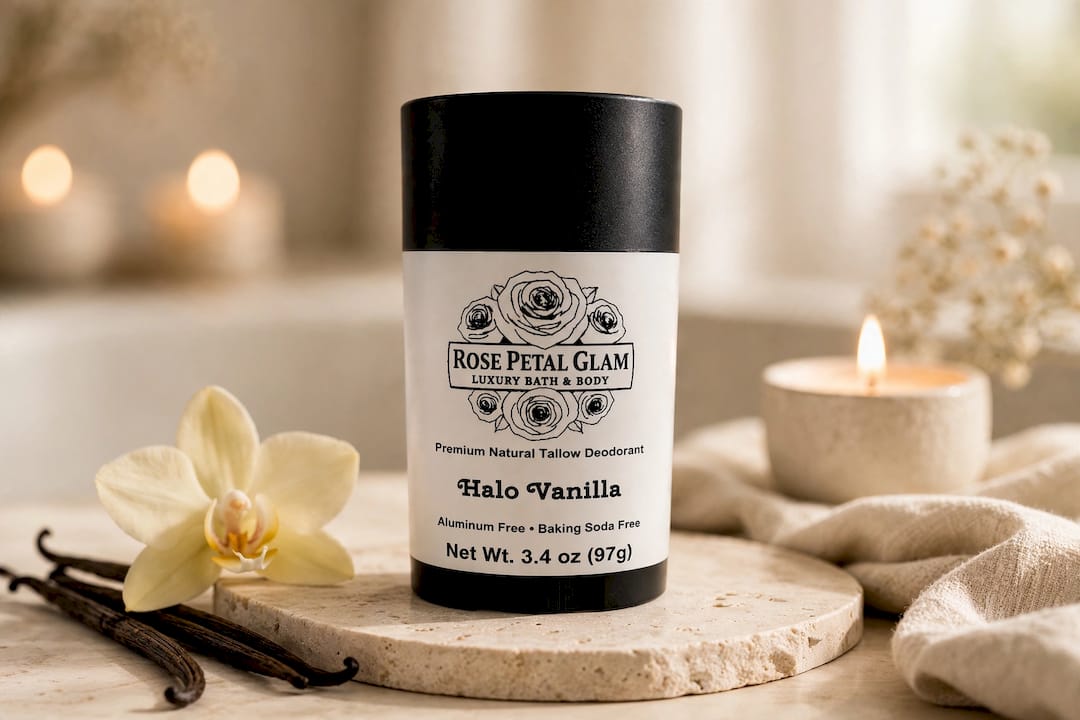
Best for: Anyone who wants a genuinely skin-nourishing, aluminum-free deodorant with full ingredient transparency and small-batch US production. Form: Balm/stick Key actives: Grass-fed beef tallow, jojoba oil, natural fragrance (vanilla) Pros: Skin-conditioning base, no aluminum, no baking soda irritation risk, ingredient list you can actually read Cons: Not available at retail; direct-order only from Rosepetalglam’s site Price tier: $
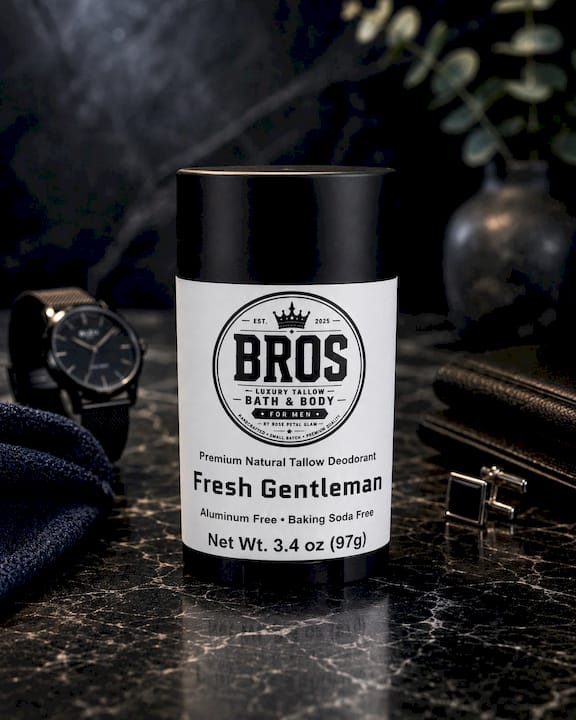
For men or those who prefer a woodsy scent, the BRO’S Fresh Gentleman Tallow Deodorant uses the same tallow-and-jojoba base with a different fragrance profile.
2. Nécessaire The Deodorant
A serum-format deodorant that leans on AHAs and niacinamide to control odor at the source rather than masking it. The AHA mechanism works by lowering the skin’s pH, which suppresses odor-causing bacteria — Healthline’s testing confirmed that AHA-based formulas can outperform powder sticks for odor prevention. Fragrance-free, which makes it genuinely suitable for reactive skin. The price is relatively higher on this list, but the formula is among the most skin-forward options available.
Best for: Sensitive or post-shave skin; people who want a fragrance-free, dermatologist-friendly option.
3. Saltair 5% AHA Serum Deodorant
Saltair’s serum deodorant applies like a lightweight gel and dries quickly without residue. The AHA concentration is meaningful: it’s enough to shift underarm pH and keep bacteria in check through a normal workday. Light fabric transfer is minimal. One limitation: heavy sweaters may need to reapply mid-afternoon.
Best for: Everyday odor control for average sweaters who want a clean, no-residue application.
4. Schmidt’s Mineral-Enriched Natural Deodorant
One of the most widely tested natural sticks in independent roundups. Schmidt’s mineral-enriched formula uses plant-derived actives and is available at virtually every major retailer. It performs reliably for everyday odor control, though some testers with sensitive skin report mild irritation from the baking soda content in certain variants. The mineral-enriched line is formulated to reduce that risk.
Best for: Mainstream buyers who want a proven, widely available natural stick.
5. Native Deodorant
Native’s clear stick applies cleanly and leaves almost no visible residue on dark clothing — a genuine advantage over many white-paste competitors. The scent lineup is broad, and the formula is baking-soda-based, so sensitive-skin users should patch-test first. Performance in workout conditions is decent but not exceptional.
Best for: Consumers who want a clear application with many scent choices and easy retail access.
6. Lume
Lume is designed for full-body odor control, not just underarms. Its formula suppresses odor-causing bacteria rather than absorbing sweat, and testers consistently note strong odor control over longer periods. The tradeoff is a thicker application that can leave residue. Worth it for heavy sweaters or anyone dealing with odor in multiple body areas.
Best for: Heavy sweaters and people who want multi-area odor control.
7. Kosas Chemistry AHA Serum Deodorant
Kosas uses a similar AHA-plus-niacinamide approach to Nécessaire, with a slightly lighter texture. It’s earned a strong following among people switching from antiperspirants because the serum format feels familiar and the odor control holds up through a standard workday. Fragrance options are light and skin-safe.
Best for: Antiperspirant switchers who want a serum format with a gentle scent.
8. Meow Meow Tweet
A fully natural stick with a short, readable ingredient list and compostable packaging. Meow Meow Tweet offers both baking-soda and baking-soda-free variants, which matters for sensitive skin. Independent testing found it performs well for everyday use; it’s less durable under heavy exercise. The sustainability story is genuine: the packaging is plastic-free.
Best for: Purists who want the shortest ingredient list and the most sustainable packaging.
9. Primal Pit Paste
A high-concentration baking-soda paste available in jar or stick form. The formula is strong, and some heavy-sweat users swear by it when lighter options fail. The baking soda content is higher than most, so sensitive skin is a real concern. Patch-test before committing to daily use.
Best for: Heavy sweaters who want maximum odor control and are comfortable with a paste format.
10. PiperWai Activated Charcoal Deodorant
Activated charcoal adsorbs odor molecules rather than chemically neutralizing them. PiperWai’s formula works as a paste/solid hybrid and performs reasonably well for everyday use. One consistent note across testers: the charcoal can transfer a faint gray tint to light fabrics. Not a dealbreaker, but worth knowing before you reach for a white shirt.
Best for: People drawn to charcoal’s odor-adsorbing mechanism who don’t mind a slightly heavier application.
11. Ursa Major Forest Fix Spray Deodorant / Hoppin’ Fresh Deodorant
Ursa Major offers two distinct formats. The Forest Fix Spray is a quick-dry spray with a clean cedar-and-citrus scent, good for on-the-go reapplication. The Hoppin’ Fresh stick is a lighter everyday option with a fresh, herbal profile. Both are baking-soda-free, which makes them safe bets for sensitive skin. Neither is the strongest performer for heavy-sweat days, but for office-level activity they hold up well.
Best for: Sensitive skin users who want baking-soda-free options in different formats.
12. Additional picks worth knowing
Several other options round out the category for specific needs:
- Kaia Naturals The Takesumi Detox Deodorant uses bamboo charcoal and is designed to support the transition period when switching from antiperspirants.
- Just Ingredients Magnesium Deodorant relies on magnesium hydroxide rather than baking soda, making it a gentler alternative for reactive skin.
- Hume Supernatural Deodorant uses a probiotic-based approach to odor control and applies as a lightweight cream.
- Humble Deodorant is a budget-friendly baking-soda stick with a clean ingredient list.
- True Friend Deodorant and Freaks of Nature Everyday Endurance Deodorant both target active users with higher-concentration natural actives.
- AKT Deodorant Balm is a UK-originated balm format with strong odor control and a skin-conditioning base.
- Weleda Roll-On Deodorant uses a mineral salt and plant extract formula; the roll-on format applies lightly and suits sensitive skin.
- Chagrin Valley Soap and Salve offers a small-batch natural deodorant with a very short ingredient list, similar in philosophy to Rosepetalglam.
- Old Spice GentleMan’s Collection Deodorant and Dr. Squatch Odor Squatching Deodorant are mainstream-adjacent options that use natural-leaning formulas with familiar masculine scents.
- Dove Aluminum Free Deodorant Stick is widely available and performs adequately for light-to-moderate activity.
- Arm & Hammer Essentials Solid Deodorant uses baking soda as its primary active and is one of the most affordable options on any shelf.
- Green Beaver Natural Deodorant, Lafe’s Active Deodorant Stick, Consonant Skincare Deodorant, Kiss My Face Liquid Rock Roll-On Deodorant, Jason Tea Tree Oil Deodorant, Dr. Hauschka Deodorant, For Pits Sake! Natural Deodorant, and Nature’s Gate Organics Tea Tree & Blue Cypress Deodorant all occupy the natural/organic space with varying degrees of availability in the US. Jason Tea Tree Oil and Nature’s Gate are the easiest to find at health food stores like Whole Foods and Natural Grocers.
How do these picks compare side by side?
Note: “BS-free” = baking-soda-free. Scent options and formula variants change by product line; check current packaging before buying.
How to pick the right natural deodorant for your body
The single biggest mistake people make is buying a top-rated natural deodorant without matching it to their actual sweat level and skin type. Here’s a simple decision flow:
By sweat level:
- Light sweater (desk job, low activity): A serum or roll-on format works well. Nécessaire, Saltair AHA, or Weleda Roll-On are good starting points. You don’t need a high-concentration baking-soda formula.
- Average sweater (daily activity, occasional workouts): A balm or stick is the most practical format. Rosepetalglam’s tallow deodorant, Schmidt’s, or Native cover this range. Reapplication after a workout is normal.
- Heavy sweater or athlete: Prioritize high-concentration actives. Primal Pit Paste, Lume, or True Friend Deodorant are built for this. Expect to reapply after intense sessions regardless of the formula.
By skin type:
- Sensitive or post-shave: Avoid baking-soda-heavy formulas. Choose magnesium-based (Just Ingredients), AHA-based (Nécessaire, Saltair), or tallow-based (Rosepetalglam) options. Rosepetalglam’s natural ingredients guide for sensitive skin covers the ingredient tradeoffs in detail.
- Eczema-prone: Fragrance-free is non-negotiable. Nécessaire fragrance-free or Rosepetalglam’s unscented variant.
- Normal skin: Most options work. Start with what fits your format preference.
Price and value:
Price per ounce varies widely. Budget sticks like Tom’s of Maine and Arm & Hammer are among the more affordable options. Premium serums like Nécessaire and Kosas generally cost more. The Rosepetalglam tallow deodorant sits in the mid-range and delivers a skin-conditioning benefit that straight baking-soda sticks don’t.
Red flags when buying:
- “Natural fragrance” with no further disclosure (can hide synthetic allergens)
- No full INCI ingredient list on the product page
- Vague claims like “detoxifying” with no active ingredient named
- EWG Skin Deep hazard scores above 3 for a product marketed as clean
What ingredients actually work (and what to avoid)
Understanding what’s in your deodorant matters more than the “natural” label on the front. The FDA’s 21 CFR Part 350 draws a hard regulatory line here: aluminum salts that reduce sweat are classified as drug active ingredients, which is why truly aluminum-free products are labeled as deodorants, not antiperspirants.
Ingredients that help:
- Magnesium hydroxide: Neutralizes odor-causing bacteria by raising pH. Gentler than baking soda for most skin types.
- AHAs (alpha hydroxy acids): Lower underarm pH, which suppresses bacterial growth. Healthline’s testing found AHA serums can outperform powder sticks for odor prevention.
- Activated charcoal: Adsorbs odor molecules. Effective but can transfer color to light fabrics.
- Probiotics: Compete with odor-causing bacteria. Emerging ingredient; evidence is promising but limited.
- Tapioca starch / arrowroot: Absorb moisture without blocking pores. Common in baking-soda-free formulas.
- Grass-fed tallow and jojoba: Skin-conditioning base ingredients that support the skin barrier rather than stripping it.
Ingredients to approach carefully:
- Baking soda (sodium bicarbonate): Effective odor neutralizer, but the high pH can cause contact dermatitis in sensitive skin. Signs of irritation: redness, burning, or a rash within the first week.
- Synthetic fragrance (listed as “fragrance” or “parfum”): Can contain dozens of undisclosed compounds. If you have reactive skin, choose products that list specific fragrance components or are fragrance-free.
- Certain preservatives: Parabens and some formaldehyde-releasing preservatives appear on EWG’s concern list. Not all preservatives are problematic, but checking the Skin Deep database for your specific product is worth 60 seconds.
Baking-soda sensitivity: If you develop redness or burning within the first week, switch to a magnesium-based or AHA-based formula. Don’t assume all natural deodorants will cause the same reaction.
Pro Tip: When reading an INCI label, ingredients are listed in descending order by concentration. If baking soda appears in the top three ingredients, the formula is high-concentration and more likely to irritate sensitive skin.
Switching to natural deodorant: what to expect
Most people who try a natural deodorant and quit within two weeks quit too soon. Wirecutter’s testing and other review roundups consistently report a 2–6 week adjustment window when switching from aluminum-based antiperspirants. Here’s why: antiperspirants physically block sweat glands. When you stop using them, those glands resume normal function, and your body’s bacterial balance shifts. That transition can temporarily increase odor and wetness before it stabilizes.
Week-by-week expectations:
- Week 1–2: Increased wetness and possibly stronger odor than usual. This is normal. Your sweat glands are recalibrating.
- Week 3–4: Odor typically begins to stabilize. Wetness may still be higher than with an antiperspirant.
- Week 5–6: Most people reach a new baseline. If odor is still significant at week 6, the formula may not be the right match.
Troubleshooting checklist:
- Odor worse than expected: Try a higher-concentration formula (Primal Pit Paste, Lume) or switch active ingredients (from baking soda to AHA or magnesium).
- Increased wetness: Normal during transition. Tapioca or arrowroot starch in the formula helps absorb moisture without blocking pores.
- Yellow staining on shirts: Usually caused by the reaction between sweat and baking soda or aluminum residue from a previous antiperspirant. Pre-treat with white vinegar before washing.
- White residue on dark clothing: Apply a thinner layer, let it dry fully before dressing, or switch to a serum or roll-on format.
- Underarm rash or burning: Stop immediately. Switch to a baking-soda-free formula. If the rash persists beyond a few days after stopping, see a dermatologist.
When to try a different formula vs. stopping entirely: If you’ve tried three different active-ingredient approaches (baking soda, magnesium, AHA) over 6+ weeks and still can’t manage odor, a dermatologist visit is the right next step. Some people have bacterial profiles that don’t respond well to any current natural formula.
Why Rosepetalglam’s tallow deodorant earns its spot
Most natural deodorants are built around a single active ingredient — baking soda, charcoal, or an AHA — with a neutral carrier base. Rosepetalglam takes a different approach. The Halo Vanilla Tallow Deodorant uses grass-fed beef tallow and jojoba oil as the functional base, not just a filler. Tallow’s fatty acid composition is structurally similar to the skin’s own lipids, which means it supports the skin barrier rather than sitting on top of it.
Key product details:
- Form: Balm/stick, 3.4 oz
- Key ingredients: Grass-fed beef tallow, jojoba oil, natural vanilla fragrance
- Aluminum-free: Yes
- Baking-soda-free: Yes (no irritation risk for sensitive skin)
- Made in: Mount Morris, Michigan, in small batches
- Where to buy: Direct from Rosepetalglam
The BRO’S Fresh Gentleman variant uses the same base with a masculine scent profile, making it a strong option for men or anyone who prefers a woodsy fragrance. Both variants are handcrafted in small batches, which means the ingredient list stays short and the sourcing stays transparent. Rosepetalglam publishes its full ingredient list on the product page, a standard that many mass-market brands still don’t meet.
For readers who want to understand why small-batch, handcrafted formulas differ from mass-produced alternatives, Rosepetalglam’s blog post on handmade natural products covers the production and ingredient tradeoffs directly.
Pro Tip: Tallow-based deodorants perform best when applied to clean, dry skin. A thin layer is enough — the tallow base spreads easily and a heavy application can feel greasy.
An editor’s note on what actually matters here
The natural deodorant category is crowded, and a lot of the noise is marketing. After working through this list, the products that hold up are the ones that are honest about what they do: control odor, not sweat. That distinction matters practically. Wirecutter’s testing makes this point clearly: if you’re expecting a natural deodorant to keep you dry the way an antiperspirant does, you’ll be disappointed. If you’re expecting it to keep you from smelling, the right formula absolutely can.
What pushed Rosepetalglam’s tallow deodorant to the top of this list wasn’t a single test result. It was the combination of ingredient transparency, a skin-conditioning base that most natural deodorants skip, and the fact that it’s made in small batches by a real person in Michigan. That’s a different value proposition than a mass-market stick, and it’s one that holds up under scrutiny. Readers who want a clear serum format or a budget stick will find solid options in Saltair or Tom’s of Maine. But for anyone who wants a deodorant that also treats the skin underneath it, the tallow base is worth trying.
Rosepetalglam’s tallow deodorant: a natural choice worth trying
If you’ve read this far and you’re still deciding, here’s the practical case for Rosepetalglam. The Halo Vanilla Tallow Deodorant is handcrafted in small batches in Michigan, uses a full ingredient list you can verify on the product page, and skips both aluminum and baking soda. That makes it one of the few options on this list that’s genuinely suitable for sensitive skin without sacrificing odor control. Pair it with a whipped tallow body butter for a complete skin-nourishing routine, or try the BRO’S Fresh Gentleman variant if you prefer a woodsy scent. Orders ship direct from Rosepetalglam’s online store.

Visit the Halo Vanilla Tallow Deodorant product page to order directly and see the full ingredient list.
Sources
A short list of the sources used to evaluate and rank these picks:
- Electronic Code of Federal Regulations — 21 CFR Part 350
- EWG Skin Deep: User’s guide
- We Spent $388 on Natural Deodorant to Find What Works — Healthline
- I Tried All the Natural Deodorants…So You Don’t Have To — The Hormone Dietitian
- The Best Deodorants — Reviews by Wirecutter
FAQ
What is the best natural deodorant that actually works?
For most people, the best natural deodorant that works is one matched to their sweat level and skin type. Rosepetalglam’s Halo Vanilla Tallow Deodorant is the top pick for everyday use with sensitive skin; AHA-based serums like Saltair 5% AHA and Nécessaire The Deodorant are the strongest performers for odor prevention based on independent testing.
What is the safest non-toxic deodorant?
The safest options are aluminum-free, baking-soda-free, and fragrance-free or made with disclosed fragrance components. Nécessaire The Deodorant (fragrance-free variant), Just Ingredients Magnesium Deodorant, and Rosepetalglam’s tallow deodorant all meet those criteria. Cross-check any product on EWG Skin Deep for ingredient-level hazard scores.
What deodorant is 100% natural?
Meow Meow Tweet and Chagrin Valley Soap and Salve come closest to a fully natural ingredient list with minimal processing. Truly 100% natural formulas are rarer than the label suggests; independent testing notes they sometimes trade durability for ingredient purity.
What is the best natural deodorant for underarms specifically?
For underarm use, the format and active ingredient matter more than the brand. Sensitive underarm skin does best with magnesium or AHA-based formulas. For everyday odor control, a balm or stick format (Rosepetalglam, Schmidt’s, Native) applies most evenly. For post-shave sensitivity, a serum or roll-on (Weleda, Nécessaire) causes the least friction.