The Best Aluminum-Free Deodorant for Sensitive Skin
Published 2026-08-22 by Rose Petal Glam
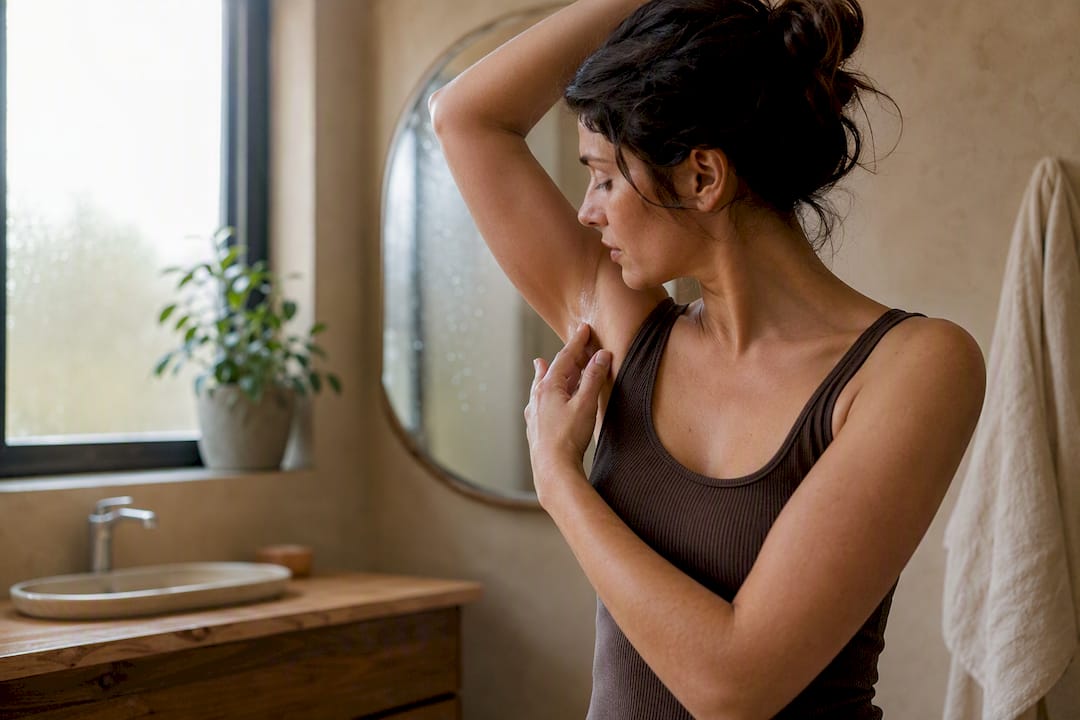
The best aluminum-free deodorant for most people with sensitive skin is Rose Petal Glam’s tallow-based formula, built on grass-fed beef tallow, jojoba oil, and kaolin clay instead of synthetic fillers or aluminum salts.
- Why it wins: the ingredient list is short and recognizable, small-batch production allows tighter quality control than mass-market lines, and the tallow base mimics skin’s natural lipids instead of sitting on top of it.
- Who should pick it: anyone with reactive or eczema-prone underarm skin, fragrance-sensitive noses, or a general preference for recognizable, natural ingredients over synthetic ones.
If you sweat heavily for medical reasons or need clinical-strength wetness control, an aluminum antiperspirant, or a conversation with a dermatologist, is still the more reliable route.
Key Takeaways
Aluminum-free deodorants control odor effectively but not wetness, and ingredient quality, not the aluminum-free label alone, determines whether a formula works for sensitive skin.
| Point | Details |
|---|---|
| Deodorant vs. antiperspirant | Deodorant fights odor-causing bacteria; only antiperspirant mechanically blocks sweat with aluminum. |
| Safety consensus | Major health organizations report no convincing link between deodorant aluminum and cancer or Alzheimer’s. |
| Real allergy risk | Aluminum contact allergy is uncommon but can cause noticeable dermatitis in sensitized individuals. |
| Transition expectations | Expect one to two weeks of adjustment when switching from antiperspirant to natural deodorant. |
| Recommended pick | Rose Petal Glam’s tallow deodorants use tallow, jojoba oil, and kaolin clay for gentle, effective odor control. |
Table of Contents
- What Makes This the Best Aluminum-Free Deodorant Pick
- Why Choose Aluminum-Free Deodorant Over an Antiperspirant?
- How to Choose the Right Aluminum-Free Formula
- How These Aluminum-Free Deodorant Picks Were Evaluated
- Making the Switch from Antiperspirant to Natural Deodorant
- The Environmental Case for Aluminum-Free Deodorant
- Why the Aluminum Panic Misses the Real Question
- Try Rose Petal Glam’s Tallow Deodorant Today
- Sources
- FAQ
What Makes This the Best Aluminum-Free Deodorant Pick
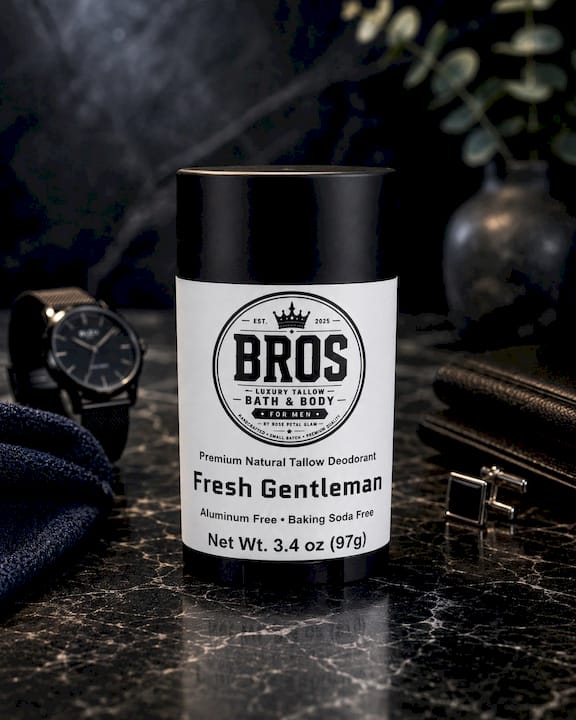
Rose Petal Glam makes two standout tallow deodorants worth knowing by name: Halo Vanilla and BRO’S Fresh Gentleman. Both are handcrafted in small batches, sold in a standard format, and built around the same core idea: skin absorbs what you put on it, so the formula should read like a skincare ingredient list, not a chemistry set.
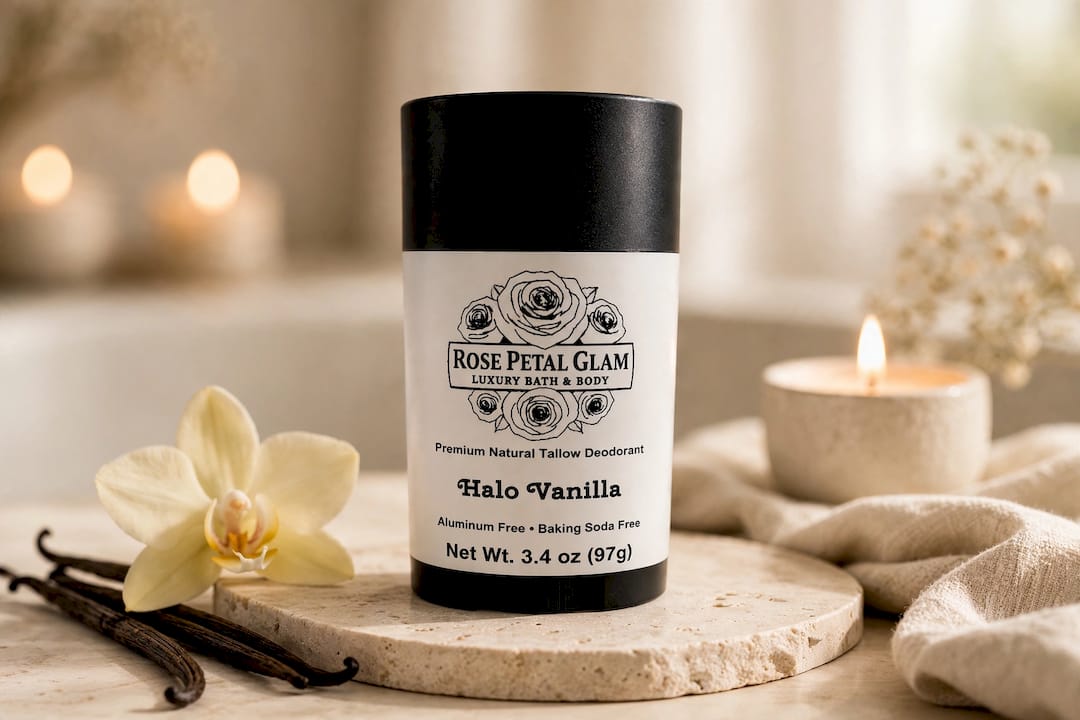
The mechanics matter more than the marketing here. Tallow is rich in fatty acids that closely resemble the lipids already in human skin, which is part of why it spreads without leaving a chalky residue. Jojoba oil adds a lightweight layer of moisture that doesn’t clog pores the way heavier plant oils can. Kaolin clay pulls excess moisture and absorbs surface oils, giving the formula a drier feel on application even though it isn’t functioning as a sweat-blocking antiperspirant. Natural antimicrobial elements in the blend go after the bacteria that actually cause underarm odor, since odor is a bacterial byproduct, not sweat itself.
On performance: expect solid all-day odor control for typical daily activity, with reapplication recommended after a hard workout, a hot commute, or a long shift on your feet. The texture applies as a balm rather than a hard stick or a spray, so a light warm-up between your fingertips before application helps it glide on evenly.
- Halo Vanilla: warm, subtle vanilla scent, good for those who want a light fragrance
- BRO’S Fresh Gentleman: a fresher, more traditional “men’s” scent profile, though it works fine for anyone
- Both are formulated for daily use on sensitive underarm skin
Pro Tip: Apply tallow deodorant to clean, completely dry skin. Even a little residual moisture can make the balm feel greasy going on, when the issue is really just timing.
Both deodorants are available directly through Rose Petal Glam, with Halo Vanilla and BRO’S Fresh Gentleman priced comparably to other small-batch natural personal care products.
Why Choose Aluminum-Free Deodorant Over an Antiperspirant?
Deodorant and antiperspirant solve two different problems, and mixing them up is where most confusion starts. Deodorant neutralizes and masks odor by targeting the bacteria on your skin that break down sweat into smell. Antiperspirant does something more mechanical: aluminum-based compounds temporarily plug sweat ducts to physically reduce how much moisture reaches the surface. That’s a drug-level claim in the United States, which is why antiperspirant active ingredients are regulated under 21 CFR Part 350 as an over-the-counter drug category, not a cosmetic.
The safety fears around aluminum have circulated for decades, but they don’t hold up well under scrutiny. Major cancer organizations, including the National Cancer Institute, report no convincing evidence linking antiperspirant or deodorant use to increased cancer risk. Editor-tested, dermatologist-aligned reporting from outlets like Health reaches the same conclusion on the long-rumored Alzheimer’s connection: there’s no established causal link as of 2026.
Where aluminum does cause a real, documented problem is allergy. The American Contact Dermatitis Society named aluminum an allergen of the year in 2022, and while aluminum contact reactions are uncommon, they can trigger marked dermatitis in people who are sensitized to it. If you’ve noticed persistent redness, itching, or rash specifically where antiperspirant touches your skin, that’s a strong signal to switch.
The honest trade-off: aluminum-free formulas control odor well but don’t block sweat production. If you’re chasing a bone-dry underarm through a summer heat wave, you’ll likely still feel damp. If your actual complaint is smell, not wetness, aluminum-free wins without much of a downside.
Quick guidance on who should prioritize going aluminum-free:
- People with a known or suspected aluminum allergy or a history of underarm rash from antiperspirant
- Parents choosing products for children’s more reactive skin
- Anyone who simply prefers a shorter, more recognizable ingredient list
- People whose main daily concern is odor rather than heavy sweating
How to Choose the Right Aluminum-Free Formula
Not every aluminum-free deodorant performs the same, and the gap between a good one and a mediocre one usually comes down to six specific factors.
1. Odor-control ingredients. Look for zinc ricinoleate, mandelic acid, triethyl citrate, or plant-based antimicrobial blends. These work by neutralizing odor molecules or reducing the bacteria that cause smell, rather than trying to stop sweat outright. Some clean-beauty formulas lean on kaolin or other clay-based ingredients paired with plant starches for a similar effect.
2. Sensitivity of the base formula. Baking-soda-based natural deodorants are common, but sodium bicarbonate is alkaline and can irritate skin with regular use, especially after shaving. If you’ve ever had a natural deodorant leave you red and itchy, baking soda is usually the culprit. A tallow or oil-based formula without it is generally gentler.
3. Texture and format. Balms, creams, sticks, and sprays all apply differently. A balm like tallow deodorant needs a slight warm-up before gliding on; a hard stick applies instantly but can drag on sensitive skin; a spray dries fast but often needs more frequent reapplication.
4. Scent level. If you’re sensitive to fragrance or just prefer not to layer scents under clothing, an unscented aluminum-free deodorant or a fragrance-free option avoids one more variable that can trigger irritation.
5. Residue and clothing transfer. Tallow and oil-based balms can leave a faint mark if overapplied, so a thin layer works better than a thick one. This matters more with dark, tight-fitting fabrics.
6. Packaging and sustainability. Compostable paper tubes, recyclable jars, and minimal plastic all factor into the environmental footprint of a product you’re using daily, year-round.
Here’s a checklist worth running through before you buy:
- Does the ingredient list avoid baking soda if you have sensitive or recently shaved skin?
- Is there a botanical antimicrobial or acid-based odor fighter listed (zinc ricinoleate, mandelic acid, or similar)?
- Is the scent level appropriate for your sensitivity, or is a fragrance-free version available?
- Does the texture match your routine (balm vs. stick vs. spray)?
- Is the packaging recyclable, compostable, or otherwise lower-impact?
- Does the brand disclose sourcing or production practices, rather than hiding behind vague marketing language?
- Is it labeled cruelty-free if that matters to your purchasing decisions?
- Does the product page clearly state expected wear time and reapplication guidance?
Pro Tip: If you’re active outdoors or work out often, pair your deodorant switch with breathable, moisture-wicking fabrics. Synthetic blends trap heat and bacteria against skin, which undercuts even the best formula. Lightweight training shorts designed for airflow make a bigger difference than most people expect.
If none of this solves persistent sweating, that’s your cue to see a dermatologist rather than keep cycling through natural formulas. Clinical-strength antiperspirants, prescription options, and procedures like iontophoresis exist specifically for hyperhidrosis, and no aluminum-free deodorant is designed to compete with them.
How These Aluminum-Free Deodorant Picks Were Evaluated
Recommendations here were built around five criteria that actually predict whether a natural deodorant works day-to-day: odor control over a full wear cycle, likelihood of skin reaction on sensitive or recently shaved skin, application texture, realistic wear time before reapplication is needed, and how transparent the brand is about sourcing and ingredients.
That last point matters more than it sounds. A lot of “natural” deodorant marketing hides behind vague terms without listing what’s actually doing the work. Regulatory context helps here too: because antiperspirants are regulated as over-the-counter drugs under 21 CFR Part 350, deodorants (which aren’t drugs) face looser labeling requirements, so ingredient transparency becomes a brand choice, not a legal minimum.
Rose Petal Glam’s approach leans on a short list of traceable ingredients: grass-fed beef tallow, jojoba oil, and kaolin clay, produced in small batches rather than mass manufacturing runs. That production model, visible across the brand’s full tallow skincare line, allows tighter quality control per batch than a factory turning out thousands of units an hour.
Editor-tested, dermatologist-aligned reporting consistently points to the same conclusion: aluminum-free formulas can control odor effectively, but wetness control and skin compatibility depend heavily on the specific ingredients used, not just the “aluminum-free” label itself.
A few things worth knowing as you evaluate any natural deodorant, including this one:
- Ingredient sourcing should be traceable, not just labeled “natural”
- Small-batch production allows for tighter quality control than mass manufacturing
- Dermatologist-aligned guidance consistently separates odor control from wetness control
- Regulatory categories (drug vs. cosmetic) explain why label transparency varies between antiperspirants and deodorants
Making the Switch from Antiperspirant to Natural Deodorant
Your underarm skin gets used to whatever you put on it daily, and switching off an aluminum antiperspirant after years of use often triggers a rough adjustment period. This isn’t a sign the new product is failing. It’s typically your skin’s microbiome and sweat glands recalibrating after months or years of pore-blocking.
Expect a brief adjustment period during which you may feel sweatier or smellier than usual. Some people call this a “detox” period, though that’s more marketing language than a precise description. What’s actually happening is simpler: sweat ducts that were mechanically blocked are functioning normally again, and the bacterial balance on your skin is resetting without the antiperspirant’s antimicrobial ingredients suppressing it.
A few things make the transition smoother. Wash underarms thoroughly each morning and night during the switch to help reset the skin’s bacterial balance faster. Apply your new aluminum-free deodorant generously and reapply midday if needed rather than assuming you did something wrong. Avoid switching right before a big event. Give it a full two weeks minimum, ideally during a lower-stakes stretch of your calendar. And resist the urge to go back to antiperspirant at the first sign of odor. That’s the adjustment period doing exactly what it’s supposed to do.
The Environmental Case for Aluminum-Free Deodorant
Aluminum salts used in antiperspirants come from mined bauxite ore, processed through an energy-intensive refining chain before they ever reach a spray can or stick. Aluminum-free formulas built around plant oils, tallow, and clay generally rely on simpler, less industrial supply chains, though “simpler” doesn’t automatically mean “zero impact.”
Packaging is where the sustainability differences show up most clearly to an everyday shopper. Plastic stick containers dominate the antiperspirant aisle, and most aren’t recycled in practice even when the plastic is technically recyclable, because the mixed materials in twist-up mechanisms complicate sorting. Deodorant balms sold in glass jars, tins, or paper tubes tend to have a smaller packaging footprint and are easier to reuse or recycle.
Sourcing matters too. Tallow, when it’s a byproduct of grass-fed beef production rather than a separately farmed input, reduces waste from an existing agricultural supply chain instead of creating demand for a new one. That’s a different sustainability story than palm-oil-based deodorant bases, which have their own well-documented deforestation concerns in other consumer goods categories.
None of this means every aluminum-free deodorant is automatically the greener choice. A synthetic-heavy “natural” formula in a non-recyclable plastic tube isn’t meaningfully better for the planet than a well-made antiperspirant. The ingredient list and the packaging both need scrutiny, not just the aluminum-free label on the front.
Why the Aluminum Panic Misses the Real Question
The conventional wisdom on this topic splits into two unhelpful camps: people convinced aluminum deodorant is quietly dangerous, and people convinced “natural” deodorant is a marketing gimmick that never works. Both miss what the evidence actually supports.
The research is fairly clear that aluminum in deodorant isn’t the health threat internet rumors made it out to be. What gets lost in that debate is the question that actually matters to most people switching: does it work, and will it irritate my skin? Those are ingredient questions, not aluminum questions. A poorly formulated natural deodorant loaded with baking soda can irritate skin worse than a well-made antiperspirant ever would.
What I’d prioritize first isn’t the aluminum-free label at all. It’s the ingredient list underneath it. Tallow-based formulas succeed because they work with skin’s own chemistry instead of fighting it, which is a more useful standard than chasing a “natural” label that means almost nothing on its own.
— Brent
Try Rose Petal Glam’s Tallow Deodorant Today
If you’ve read this far, you already know what separates a working aluminum-free deodorant from a disappointing one: real ingredients, honest sourcing, and a formula built for sensitive skin instead of a factory line. That’s the entire premise behind Rose Petal Glam’s tallow deodorants, made in small batches in Mount Morris, Michigan, not mass-produced in bulk runs.

Both scent options are available now: Halo Vanilla for a softer, warm fragrance, and BRO’S Fresh Gentleman for a fresher profile that works for anyone. If you’d rather skip fragrance entirely, pair your deodorant with the fragrance-free tallow soap for a full unscented routine. Every order ships from a small-batch production run, and the same tallow-and-jojoba philosophy carries through the brand’s whipped body butter line if you want to pair your deodorant switch with a full skin routine change.
Pick your scent, add it to your cart, and give your skin two weeks to adjust. That’s really all it takes to find out if this is the switch you’ve been putting off.
Sources
- The 11 Best Invisible Deodorants of 2026, Editor-Tested
- Aluminum contact allergy / American Contact Dermatitis Society allergen report (2022)
- Antiperspirants and breast cancer risk — National Cancer Institute
FAQ
What is the best aluminum-free deodorant that actually works?
Formulas built around zinc ricinoleate, mandelic acid, or tallow-based bases with natural antimicrobials tend to perform best for daily odor control. Rose Petal Glam’s tallow deodorants use this approach with a short, traceable ingredient list.
Do dermatologists recommend aluminum-free deodorant?
Dermatologist-aligned guidance generally supports aluminum-free deodorant for people with sensitive skin or aluminum allergy, while noting it won’t reduce wetness the way an antiperspirant does.
Are aluminum-free deodorants effective?
Yes, for odor control specifically. They neutralize odor-causing bacteria but don’t block sweat production, so heavy sweaters may still feel damp even with a high-performing formula.
What is the healthiest deodorant to use?
The healthiest choice depends on your skin’s sensitivities, but formulas free of baking soda, synthetic fragrance, and aluminum, built instead around tallow, jojoba oil, or botanical antimicrobials, tend to cause the fewest reactions for sensitive skin.
Recommended
- The Ultimate Guide to Natural Ingredients for Sensitive Skin | Rose Petal Glam Blog
- Halo Vanilla Tallow Deodorant Net Wt. 3.4 oz | Handmade Deodorant | Rose Petal Glam
- BRO’S Fresh Gentleman Tallow Deodorant Net Wt. 3.4 oz | Handmade Deodorant | Rose Petal Glam
- Sour Watermelon Candy Tallow Deodorant Net Wt. 3.4 oz | Handmade Deodorant | Rose Petal Glam