Stop Odor, Not Sweat: Tallow Deodorant for Sweaty, Sensitive Armpits
Published 2026-09-01 by Rose Petal Glam
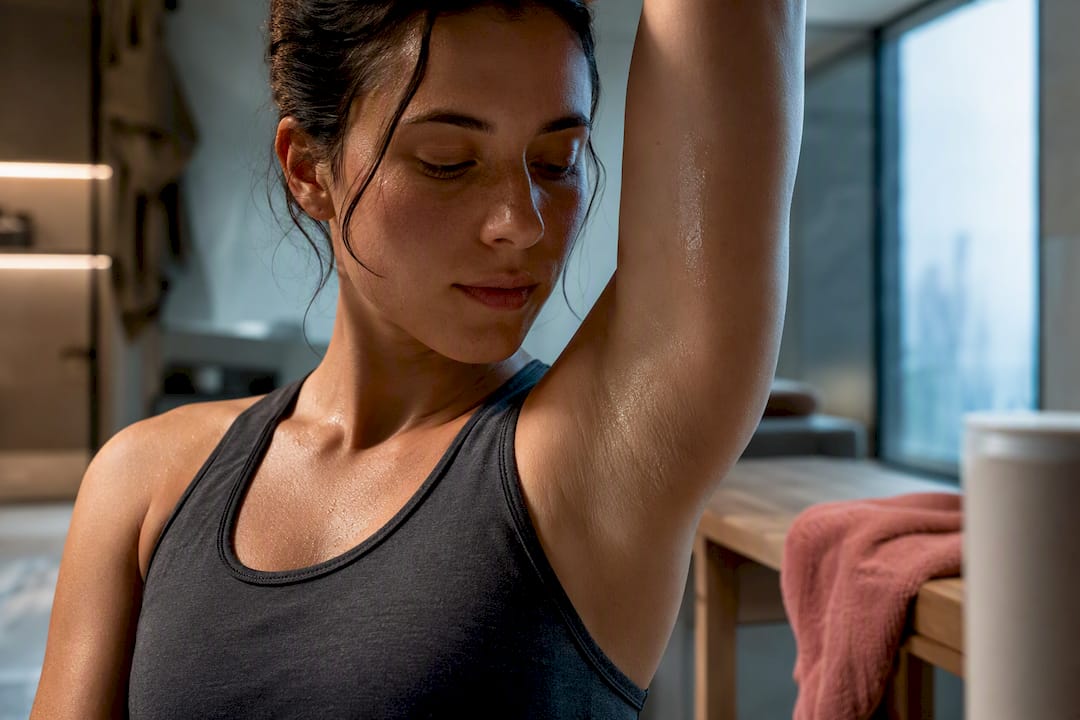
Yes, an aluminum-free tallow deodorant controls underarm odor and typically feels gentler on sensitive skin than conventional formulas, but it won’t stop you from sweating. If your goal is drier armpits rather than fresher ones, you’re chasing the wrong product. If you sweat heavily but mainly want to smell good and avoid irritation, a well-formulated tallow deodorant is worth trying, though very heavy sweating or diagnosed hyperhidrosis may need a separate conversation with a doctor.
TL;DR:
- Tallow deodorants moisturize and support skin without blocking sweat glands, making them suitable for sensitive, irritated, or shaved skin.
- They do not reduce sweat volume, so heavy sweaters should pair them with clothing choices or lifestyle adjustments to manage moisture.
- Baking soda-based natural deodorants often cause irritation, so alternatives like clay, arrowroot, or zinc ricinoleate are preferable for sensitive skin.
- Switching from antiperspirants requires a patch test, a gradual adjustment period, and possibly reapplying after sweat-heavy activities for effective odor control.
- Because scientific proof of tallow’s deodorizing superiority is limited, choosing transparent small-batch brands that source quality ingredients helps ensure safety and trust.
Table of Contents
- What to Look for in an Aluminum-Free Deodorant for Sweaty, Sensitive Skin
- How Tallow-Based Deodorants Work (and Why They Don’t Stop Sweat)
- How to Switch to a Tallow Deodorant Without Losing Odor Control
- Managing Heavy Sweat Alongside a Natural Deodorant
- Comparing Deodorant Types for Sweaty Armpits
- Rose Petal Glam’s Tallow Deodorant Lineup: How to Pick Yours
- Author Perspective: Weighing Evidence Against Small-Batch Craftsmanship
- Sources
- FAQ
What to Look for in an Aluminum-Free Deodorant for Sweaty, Sensitive Skin
Not every “natural” deodorant is built for skin that sweats a lot and reacts easily. The label matters more than the marketing.
Baking soda is the biggest offender. It’s cheap, effective at neutralizing odor, and also alkaline enough to throw off underarm pH, which is exactly why so many people report redness, bumps, or a rash after switching to a baking-soda-based stick. Cedars-Sinai notes that a “natural” label doesn’t guarantee a formula is safe for sensitive skin, and irritation from baking soda and certain essential oils is common enough that dermatologists flag it directly. Lower-irritant substitutes to look for instead include kaolin clay, arrowroot powder, zinc ricinoleate, and magnesium hydroxide, all of which absorb moisture or fight odor-causing bacteria without the pH spike.
Here’s what actually earns a spot on your shelf:
- Moisturizing base oils like unsaponified beef tallow, jojoba oil, or shea butter, which support the skin barrier instead of drying it out.
- Fragrance-free options if you react to essential oils or synthetic fragrance, especially during hot months when sweat increases contact time on skin.
- Antimicrobial ingredients such as arrowroot or clay-based blends, which tend to be better tolerated than baking soda.
- A cream or jar format for precise, thin application, versus a stick that can go on too thick and leave residue.
- Simple, transparent ingredient lists with no vague “fragrance” catch-alls and no synthetic preservatives you can’t pronounce.
Since “natural” isn’t a regulated term for cosmetics, according to ScienceAlert’s breakdown of antiperspirant versus deodorant chemistry, reading the actual ingredient panel matters more than the front-of-label claims. A brand that publishes its full ingredient list for baking-soda-free formulas is giving you the information you actually need.
Pro Tip: If you’ve reacted to a baking-soda deodorant before, don’t assume all natural deodorants will do the same thing. Check the second ingredient on the list, not just the first, since that’s often where baking soda hides in smaller amounts.
How Tallow-Based Deodorants Work (and Why They Don’t Stop Sweat)
Deodorants and antiperspirants solve two different problems, and mixing them up is where most disappointment starts. According to the Cleveland Clinic, deodorants neutralize the odor that bacteria produce when they break down sweat, while antiperspirants use aluminum salts to physically block sweat glands, which is why antiperspirants are FDA-regulated as drugs and deodorants are not. A tallow deodorant falls firmly in the first category. It will not plug a single pore.
Tallow’s fatty-acid profile, rich in oleic, palmitic, and stearic acids, closely resembles the composition of human sebum. That similarity is why it behaves as an occlusive, barrier-supporting emollient on skin rather than just a cosmetic filler.
That’s a meaningful detail for anyone whose armpits are irritated from years of antiperspirant use or frequent shaving, since National Geographic’s reporting on tallow in skincare points out that this fatty-acid match gives tallow humectant and occlusive properties similar to what your skin already produces naturally.
Where the science gets thinner is tallow’s specific role as a deodorizer. There’s no large clinical trial proving tallow itself kills odor-causing bacteria better than other emollients. What it does reliably is moisturize and soften skin, which is why it’s typically paired with ingredients that do the odor work, like arrowroot, clays, or antimicrobial botanicals, while the tallow handles comfort and barrier support. Sourcing matters here too. Grass-fed, properly rendered tallow tends to carry fewer contaminants than tallow from conventionally raised cattle, so the source is worth checking before you buy.
How to Switch to a Tallow Deodorant Without Losing Odor Control
Switching from an antiperspirant to a natural deodorant isn’t a one-day swap. Your skin and its bacterial population have adjusted to aluminum salts, and undoing that takes a little planning.
- Patch test first. Apply a small amount to the inside of your elbow or a small underarm patch for 24 to 48 hours, watching for redness, itching, or bumps before committing to daily use.
- Expect a washout period. Many people notice a rougher week or two after quitting antiperspirant, as reported by The Cut’s reporting on the armpit “detox” phenomenon, while the skin’s bacterial balance resets. Using a pH-balancing or gently antibacterial body bar during this stretch helps control odor while your skin catches up.
- Apply a thin layer to clean, dry skin, morning and after any heavy sweat session, rather than a thick coat that just sits on the surface.
- Reapply after workouts or heat exposure. Deodorant wears off with movement and moisture, so keep a travel-size version in your gym bag.
- Layer smart. A moisture-wicking undershirt can reduce how much sweat reaches fabric in the first place, and pairing better base layers with your grooming routine is a simple, often-overlooked lever for odor control on hot days.
If irritation shows up and doesn’t fade within a few days, stop use and check your ingredient list for the common triggers behind natural deodorant reactions. Persistent odor despite consistent use, or a rash that spreads, is a sign to talk to a dermatologist rather than push through it.
Pro Tip: Keep your old antiperspirant on hand during the first week of switching, just for high-stakes days like interviews or flights. There’s no rule that says the transition has to be all or nothing.
Managing Heavy Sweat Alongside a Natural Deodorant
A deodorant, no matter how well formulated, isn’t built to manage genuinely heavy sweating, and pretending otherwise sets you up for frustration. If you sweat a lot, the smarter approach is treating sweat and odor as two separate problems with two separate fixes.
On the lifestyle side, loose, breathable fabrics like cotton or moisture-wicking blends reduce how long sweat sits against skin. Cutting back on spicy food, caffeine, and alcohol can dial down sweat volume for some people, since all three stimulate the nervous system pathways tied to perspiration. Staying hydrated sounds counterintuitive, but dehydration actually makes sweat more concentrated and harder-smelling.
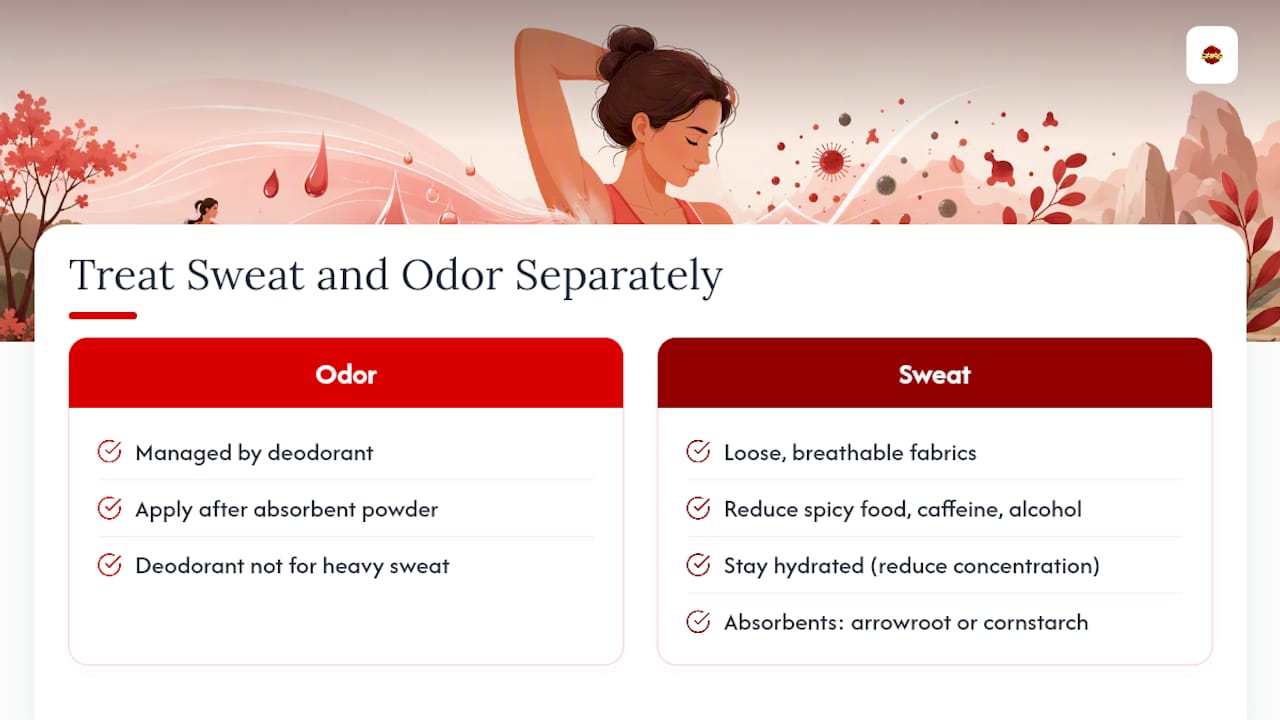
Some natural remedies focus on absorption rather than blocking: dusting a small amount of arrowroot or cornstarch under the arms before deodorant application soaks up excess moisture through the day. For sweating that’s disrupting daily life, medical options exist outside the deodorant aisle entirely, including prescription-strength aluminum chloride solutions, iontophoresis, or in more severe hyperhidrosis cases, Botox injections or nerve-targeting procedures. A dermatologist can determine if your sweating falls into that category rather than the typical range.
Comparing Deodorant Types for Sweaty Armpits
| Type | How it works | Best for | Main limitation |
|---|---|---|---|
| Antiperspirant (aluminum-based) | Blocks sweat gland ducts with aluminum salts | People whose main goal is reduced wetness | Not the focus here; can irritate sensitive skin |
| Baking-soda natural deodorant | Neutralizes odor via alkaline pH shift | People with tolerant, non-reactive skin | Common cause of underarm rashes and redness |
| Tallow-based aluminum-free deodorant | Moisturizes while antimicrobial ingredients target odor | Sensitive, sweat-prone skin needing a gentler formula | Won’t reduce sweat volume at all |
| Crystal/mineral salt deodorant | Forms a thin antimicrobial layer on skin | Light odor, minimal formula preference | Often weak against heavier body odor |
| Probiotic deodorant | Introduces “good” bacteria to crowd out odor-causing strains | Long-term microbiome-focused users | Slower results, inconsistent across brands |
The pattern here is consistent: every aluminum-free option controls odor through a different mechanism, but none of them touch sweat volume. That’s the tradeoff you’re accepting by choosing this category, and it’s a fair one if odor and skin comfort are your actual priorities.
Rose Petal Glam’s Tallow Deodorant Lineup: How to Pick Yours
Rose Petal Glam makes its tallow deodorants in small batches, which means every jar reflects the same ingredient list from batch to batch, not a mass-market formula reworked to cut costs. Each product page lists exactly what’s inside, down to the fatty-acid-rich unsaponified tallow and jojoba oil that give the formulas their moisturizing feel, so you’re never guessing what’s touching your skin.

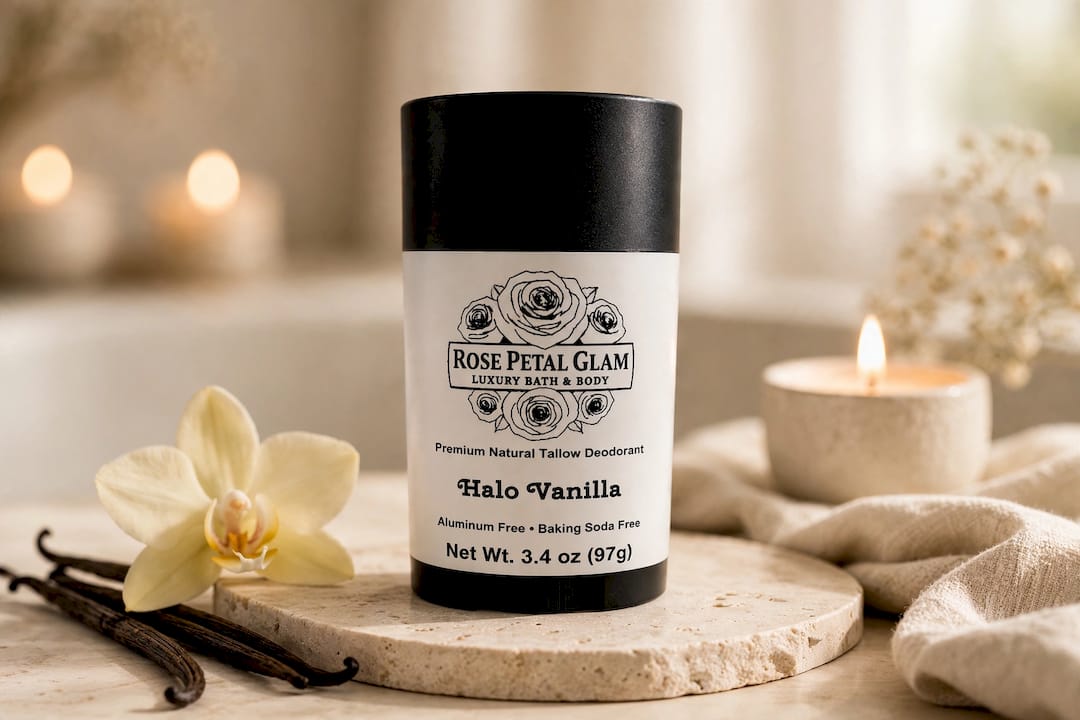
Three options cover most needs. The Halo Vanilla Tallow Deodorant leans soft and warm, a good pick if you want a subtle, everyday scent that isn’t overpowering by midafternoon. BRO’S Fresh Gentleman Tallow Deodorant is built for a sharper, more traditional masculine scent profile, aimed at anyone who wants their deodorant to smell distinctly like cologne rather than like nothing at all. Sour Watermelon Candy Tallow Deodorant is the playful option, a fruity, candy-like scent for anyone bored of unscented sticks and eucalyptus-mint everything.
If you’re new to any of these, patch test on your inner arm first, exactly as you would with any new tallow deodorant, and pay attention to how your skin handles the specific fragrance oils in each scent since sensitivity can vary formula to formula. Fragrance-heavy skin should start with the mildest scent and work up. Every Rose Petal Glam deodorant ships from small-batch production runs in Mount Morris, Michigan, and the full tallow skincare collection includes matching soaps and body butters if you want the same barrier-supporting ingredients across your whole routine. Grab a jar, run the patch test for 48 hours, and if your skin agrees, you’ve got a daily deodorant that treats your armpits like skin, not just a smell to cover up.
Author Perspective: Weighing Evidence Against Small-Batch Craftsmanship
The clinical research on tallow as a deodorizing ingredient is thin, and I won’t pretend otherwise. Nobody has run a large trial proving tallow-based sticks outperform other natural formulas at fighting odor. What the evidence does support is tallow’s fit with human skin chemistry, and that’s not a small thing when you’re dealing with armpits that react to nearly everything.
What tips the scale for me is the transparency piece. A small-batch maker that lists every ingredient and sources tallow deliberately gives you something mass manufacturers rarely do: the ability to actually vet what’s touching your skin before you commit to it. That’s not a guarantee of performance, but it’s a real trust signal in a category where “natural” gets slapped on almost anything.
If you’re on the fence, don’t buy a lifetime supply. Try a smaller size, patch test it properly, and judge it on your own skin over two honest weeks before deciding it’s not for you.
— Brent
Sources
- Antiperspirant vs. Deodorant: Key Differences — Cleveland Clinic
- Beef tallow in skincare — National Geographic
FAQ
Does aluminum-free deodorant stop sweating?
No, aluminum-free deodorants only target odor, not sweat production, since they lack the aluminum salts that antiperspirants use to block sweat glands.
Is tallow deodorant good for sensitive skin?
Many people with sensitive skin tolerate tallow deodorant well because tallow’s fatty-acid profile mirrors human sebum, though everyone should patch test before regular use.
How long does it take to adjust to a natural deodorant?
Most people notice a washout period of several days to a couple of weeks as their underarm bacteria rebalance after stopping antiperspirant.
What ingredients should I avoid if I have sensitive armpits?
Baking soda and certain essential oils are the most common irritants in natural deodorants; look for baking-soda-free formulas with kaolin, arrowroot, or zinc ricinoleate instead.
Can I use a natural deodorant if I sweat a lot?
Yes, but expect odor control only, not dryness; heavy sweaters who sweat a lot should combine a tallow deodorant with breathable fabrics or moisture-wicking layers for the best result.