Aluminum Free Deodorant for Sensitive Skin: What to Try
Published 2026-08-03 by Rose Petal Glam
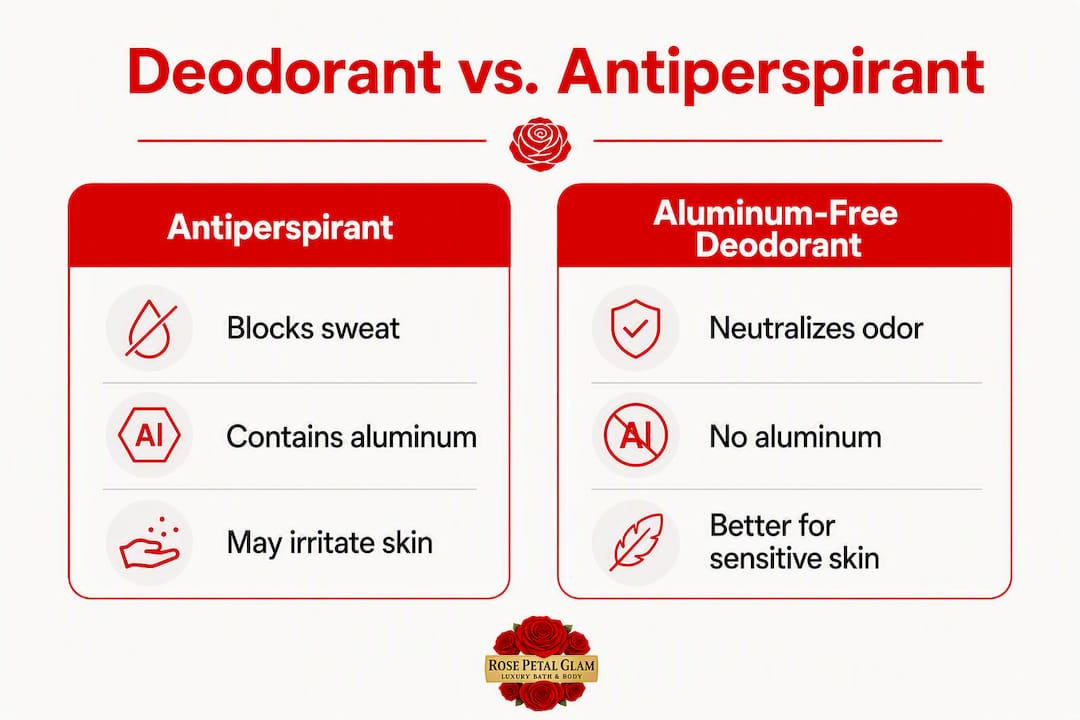
Aluminum-free deodorant controls odor. It does not stop you from sweating, and that distinction matters before you buy anything. If odor is your concern, not sweat volume, dermatologists confirm you can switch successfully without aluminum. A practical first try: Rosepetalglam’s tallow-based deodorant, made in small batches in Mount Morris, Michigan, with grass-fed tallow, jojoba oil, and no baking soda. Expect to keep sweating. Expect odor to improve. Those are two different things, and knowing that upfront saves a lot of frustration.
Table of Contents
-
What’s the real difference between antiperspirant and aluminum-free deodorant?
-
Why Rosepetalglam’s tallow deodorant is our recommended pick
What’s the real difference between antiperspirant and aluminum-free deodorant?
Aluminum is the active ingredient the FDA recognizes for sweat reduction. It works by physically blocking sweat glands, which is why products containing it are classified as antiperspirants, a regulated drug category. Remove the aluminum, and you have a cosmetic: a deodorant that targets odor-causing bacteria and absorbs surface moisture, but leaves your sweat glands alone.
“Aluminum is necessary to block sweat, but people focused only on odor control can often switch successfully to deodorants that rebalance the underarm microbiome with antimicrobial and absorbent botanical ingredients.” — Board-certified dermatologist Marisa Garshick, via InStyle
That framing from Dr. Garshick is worth holding onto. If you sweat heavily and that bothers you, an aluminum-containing antiperspirant is the more effective tool. Dermatologists are clear on this: aluminum-free formulas are built for odor, not sweat volume. For most people with normal perspiration and a focus on cleaner ingredients, the switch works well once the body adjusts.
How do aluminum-free deodorants actually control odor?
The active ingredients vary more than most product labels suggest. Here is what each category does and where it tends to fall short:
- Activated charcoal: — Draws out impurities and absorbs odor compounds. Often combined with kaolin or arrowroot for moisture control.
Some brands advertise 48–72 hour odor protection windows, but effectiveness depends heavily on the specific actives, formula format, your activity level, and your individual skin microbiome. A 72-hour claim on a stick formula tested under lab conditions may perform quite differently during a summer workout.
Pro Tip: If you see “baking soda free” on a label, check whether the formula substitutes magnesium hydroxide or zinc. Those are the actives doing the real odor work. A formula that just removes baking soda without replacing it with another active is not a meaningful upgrade for sensitive skin.
How do you choose the right aluminum-free deodorant?
Start with your skin type, not the scent. Sensitive skin narrows the field quickly: skip anything with baking soda, heavy fragrance, or denatured alcohol near the top of the ingredient list. Those three are the most common causes of underarm irritation in natural deodorant users.
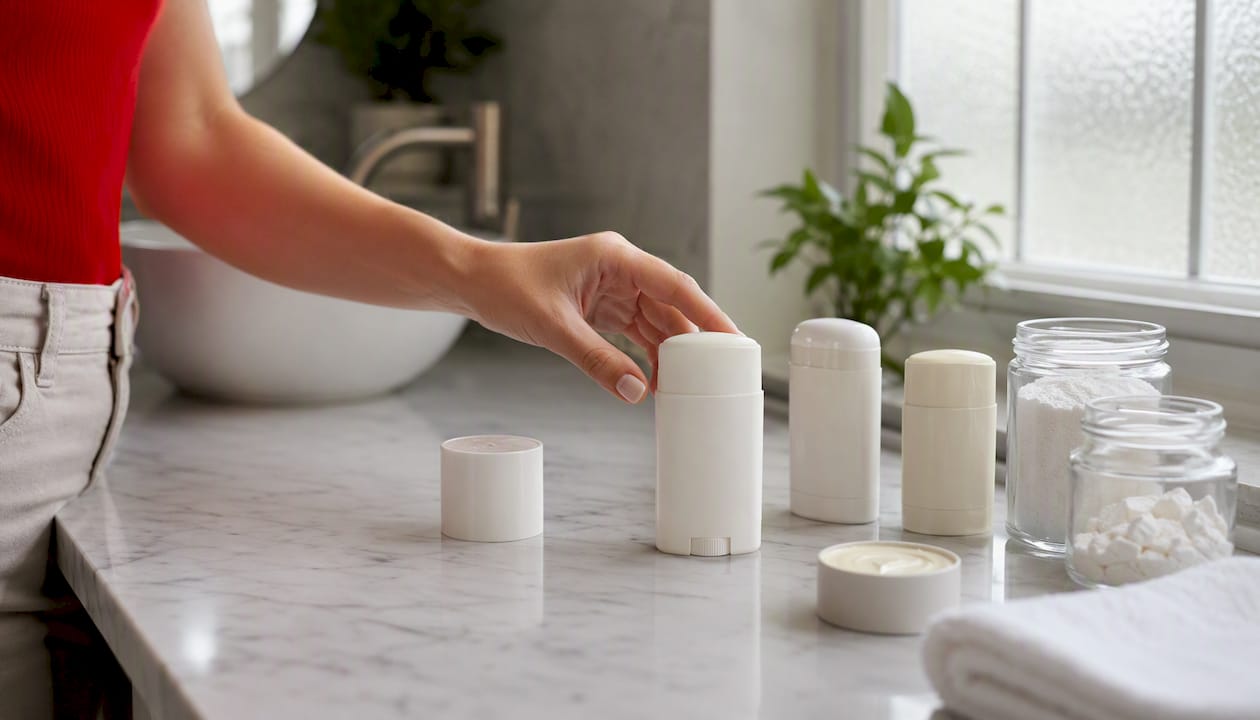
Format matters more than most shoppers realize. Sticks are convenient and familiar. Creams and pastes often deliver more actives per application and work well for people who apply with their fingers and prefer a richer feel. Sprays tend to be lighter and dry faster, but they can miss coverage on textured skin.
Trust signals to look for: Clinically tested or dermatologist-tested badges and full, disclosed ingredient lists are the two most useful signals on a product page. A brand that hides its ingredient list or uses vague terms like “natural fragrance” without disclosure is a brand worth skipping.
Red flags on product pages:
-
Ingredient list not fully disclosed
-
“Baking soda free” with no named replacement active
-
Claims that mimic antiperspirant language (“stops sweat”) without aluminum
-
Heavy synthetic fragrance in a product marketed for sensitive skin
Pro Tip: Before committing to a full-size stick, order a small jar or sample size and do a patch test on the inside of your wrist for 24 hours. Then try it on one underarm for three days before switching both. This catches irritation early and saves you from wasting a full product.
What should you expect when you switch?
The first two weeks are the hardest, and most people quit right before things improve. Here is a realistic timeline:
-
Days 1–7: Increased odor and possibly more noticeable sweating. Your pores are clearing residue from prior antiperspirant use, and your skin microbiome is adjusting. This is normal, not a sign the product is failing.
-
Week 2: Sweating typically stabilizes. Odor may still be stronger than you want, but the sharp spike from days 1–7 usually settles.
-
Weeks 3–4: For most users, odor control improves noticeably as the microbiome rebalances. Consistency through this phase is critical — many users see performance improve significantly once residue from prior antiperspirants clears.
If irritation appears during the transition, baking soda is the most likely culprit. Switch to a magnesium- or zinc-based formula and test on a small area before full application. If odor persists past week four, try a different active or a different format rather than abandoning aluminum-free entirely.
Practical maintenance: apply to clean, dry skin only. Wet or damp underarms dilute the actives and reduce longevity. Avoid layering heavily scented body products over your deodorant; they can interact with the formula’s odor-neutralizing chemistry in unpredictable ways. A fragrance-free wash routine, like using a gentle fragrance-free tallow soap, keeps the underarm environment cleaner and gives the deodorant a better surface to work on.
Why Rosepetalglam’s tallow deodorant is our recommended pick
Most aluminum-free deodorants solve the odor problem while ignoring what repeated application does to underarm skin. Rosepetalglam’s approach is different: grass-fed beef tallow and jojoba oil are the base, which means every application also conditions the skin rather than drying it out.
| Feature | Rosepetalglam Halo Vanilla Tallow Deodorant |
|---|---|
| Format | Stick (paste-style) |
| Net weight | 3.4 oz |
| Key actives | Magnesium-based odor control |
| Base ingredients | Grass-fed beef tallow, jojoba oil, beeswax |
| Baking soda | No |
| Fragrance | Light vanilla (Halo Vanilla variant) |
| Made in USA | Yes, small-batch, Mount Morris, Michigan |
| Best for | Sensitive skin, daily wear, light to moderate activity |
The tallow base is the detail worth paying attention to. Tallow’s fatty acid profile is close to human sebum, so it absorbs without clogging pores and leaves skin noticeably softer over time. For anyone who has dealt with raw, irritated underarms from baking soda formulas, that combination of magnesium-based odor control and a nourishing fat base is a meaningful upgrade.
The Halo Vanilla Tallow Deodorant is the best starting point for most people, particularly those with sensitive skin or a history of irritation. For men or anyone who prefers a fresher, more herbal scent, the BRO’S Fresh Gentleman variant covers the same skin-nourishing base with a different scent profile. Neither contains baking soda. Both are made in small batches, which means ingredient quality stays consistent in a way that mass-produced sticks rarely match.
One honest caveat: tallow-based formulas are not for everyone. If you follow a vegan lifestyle, this is not your product. And like any natural deodorant, it works best when applied to clean, dry skin and reapplied after heavy exercise.
How does cost compare to conventional antiperspirants?
Conventional antiperspirants from mass-market brands typically run $4–$8 for a standard stick at a drugstore. Aluminum-free deodorants span a wider range: entry-level natural sticks from larger brands sit around $8–$12, while small-batch handmade options like Rosepetalglam’s tallow deodorant sit at a modest premium reflecting ingredient quality and batch size.
The cost-per-use gap is smaller than the sticker price suggests. Handmade paste-style sticks tend to require fewer swipes per application than conventional sticks, and the 3.4 oz net weight is competitive with standard drugstore sizing. When you factor in that you are also getting a conditioning skin treatment in the same application, the value calculation shifts.
Where the real cost difference shows up is in trial and error. Sensitive-skin shoppers often cycle through two or three conventional or mass-market natural deodorants before finding one that does not irritate. Starting with a formula specifically built for sensitive skin, with no baking soda and a skin-nourishing base, tends to shorten that cycle.
Key Takeaways
Aluminum-free deodorant controls odor by targeting bacteria and absorbing moisture, not by blocking sweat glands, and switching successfully requires choosing the right active ingredient for your skin type.
| Point | Details |
|---|---|
| Deodorant vs. antiperspirant | Aluminum blocks sweat glands; aluminum-free formulas target odor-causing bacteria instead. |
| Baking soda sensitivity | Baking soda is a common irritant; magnesium or zinc-based formulas are the better choice for sensitive skin. |
| Detox timeline | Expect 1–3 weeks of adjustment; odor and sweating often spike before stabilizing. |
| Choosing a formula | Look for full ingredient disclosure, a named active (magnesium or zinc), and a dermatologist-tested badge. |
| Rosepetalglam pick | The Halo Vanilla Tallow Deodorant uses a magnesium-based active with a tallow-and-jojoba base, no baking soda, made in the USA. |
The case for tallow-based formulas that most guides miss
The conversation around aluminum-free deodorant almost always focuses on what gets removed: no aluminum, no baking soda, no parabens. That framing is useful for safety-conscious shoppers, but it misses the more interesting question: what does the formula actually do for your skin over time?
Most natural deodorants, even good ones, treat the underarm as a problem to neutralize. The actives fight bacteria. The powders absorb moisture. The job is done. Tallow-based formulas take a different position: the underarm is skin, and skin benefits from conditioning the same way the rest of your body does. Grass-fed tallow’s fatty acid composition is genuinely close to the skin’s own lipid structure, which is why it absorbs without the greasy residue you might expect from an animal fat.
The practical result is that long-term users of tallow deodorants tend to report less underarm dryness and irritation than users of powder-heavy or alcohol-based natural formulas. That is not a marketing claim. It follows directly from the ingredient logic. If you have been cycling through natural deodorants that work for odor but leave your underarms rough or irritated, the base ingredient is probably the variable you have not changed yet.
Rosepetalglam’s tallow deodorant: a low-risk way to start
Switching to a natural deodorant without a clear first choice is where most people stall. Rosepetalglam removes that friction: handcrafted in small batches in Mount Morris, Michigan, with grass-fed tallow, jojoba oil, and magnesium-based odor control, the tallow deodorant line is built specifically for people who have had trouble with conventional natural formulas.

The Halo Vanilla Tallow Deodorant is a practical starting point for sensitive skin. The tallow skincare collection covers the full range if you want to build a consistent natural routine around the same ingredient philosophy. Both ship across the US. Start with a single stick, apply to clean dry skin, and give it three weeks before judging the results.
Useful sources
-
The 10 Best Aluminum-Free Deodorants of 2026, According to Dermatologists — Independent editorial coverage with dermatologist input on actives, irritants, and switching guidance.
-
Huron Aluminum-Free Deodorant for Men — Product page referencing dermatologist-tested trust signals and ingredient transparency.
-
Halo Vanilla Tallow Deodorant – Rosepetalglam — Brand product page for the recommended tallow deodorant.
-
Natural Ingredients for Sensitive Skin – Rosepetalglam Blog — Editorial resource on ingredient choices for sensitive skin, including tallow and jojoba.