Natural Skincare Products for Clean, Sensitive Skin
Published 2026-08-03 by Rose Petal Glam

For clean, effective skincare in the U.S., start with small-batch formulas that publish a full INCI ingredient list and source traceable ingredients. Rosepetalglam’s tallow-based lineup, made in Mount Morris, Michigan, checks both boxes and is the clearest starting point for anyone switching from conventional products.
Two trust signals worth noting upfront:
- Full INCI transparency: Every Rosepetalglam product lists ingredients by their International Nomenclature of Cosmetic Ingredients names, so you know exactly what you’re putting on your skin.
- Grass-fed tallow provenance: The core ingredient is rendered from grass-fed beef, a sourcing detail that matters for nutrient density and is explicitly stated on product pages.
One thing to know before you shop: the word “natural” carries no legal definition under U.S. law for cosmetics. Any brand can print it on a label. That’s why the checklist in this guide matters more than the marketing copy on the front of the bottle.
Table of Contents
- What does a natural skincare routine actually look like?
- How do you evaluate a natural skincare brand before buying?
- Which ingredients should you look for, and which should you avoid?
- How do Rosepetalglam products fit into a daily routine?
- What do natural skincare products cost, and when will you see results?
- Key Takeaways
- Why small-batch transparency changes everything
- Rosepetalglam’s tallow skincare collection is worth starting with
- Useful sources and further reading
What does a natural skincare routine actually look like?
The shortest effective routine has four steps, and you don’t need to buy all of them at once. Healthline’s natural skincare guidance outlines the same core framework: gentle cleanser, targeted serum, moisturizer, and a mineral sunscreen using zinc oxide or titanium dioxide.
Daily order:
- Gentle cleanser (morning and evening)
- Targeted serum, if using one (apply to damp skin before moisturizer)
- Moisturizer or body butter
- Mineral sunscreen (morning only, after moisturizer)
Exfoliants, like a whipped sugar scrub, belong in the routine once or twice a week at most, not daily. Overuse strips the skin barrier faster than most people expect.
Skin-type quick map
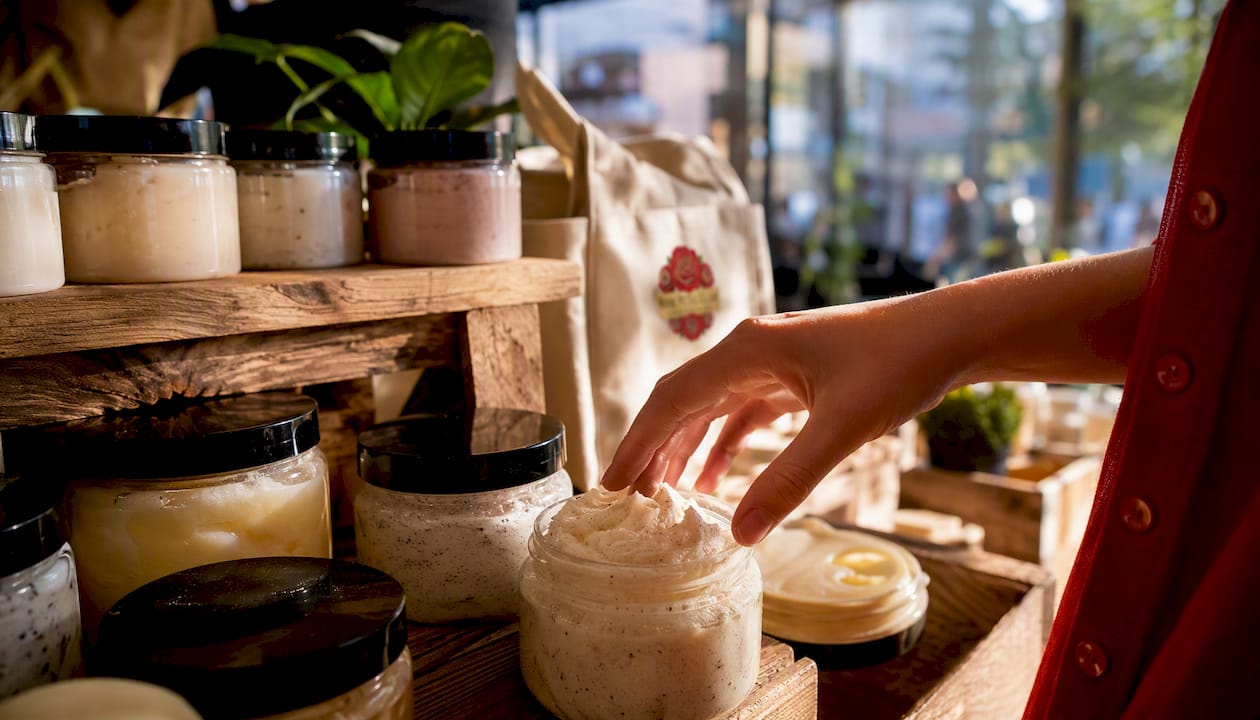
| Skin type | Texture to prioritize | Key ingredients to look for |
|---|---|---|
| Dry | Rich cream or balm | Tallow, shea butter, jojoba oil |
| Oily | Lightweight, non-comedogenic | Jojoba oil, aloe vera, kaolin clay |
| Combination | Gel or light lotion | Aloe vera, jojoba oil |
| Sensitive | Fragrance-free, minimal ingredients | Tallow, oat extract, phytoceramides |
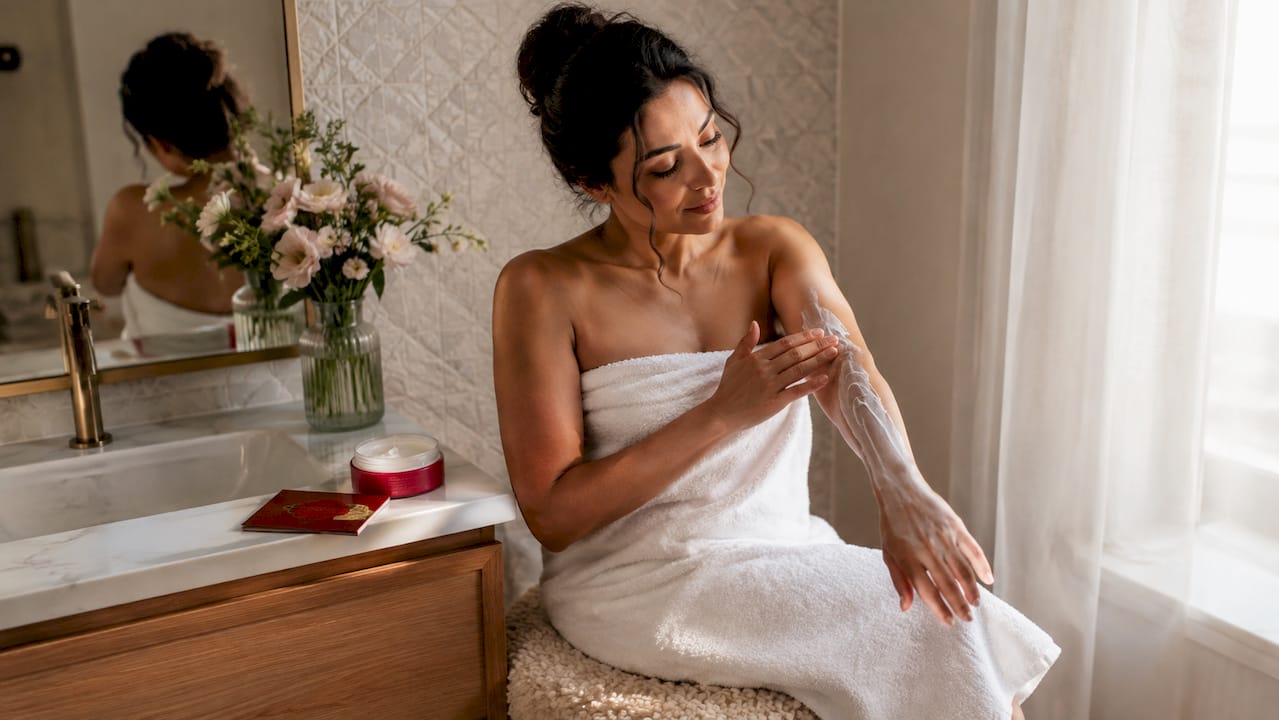
Patch-testing matters for every skin type, but especially for sensitive skin. Apply a small amount to your inner forearm and wait to check for any reaction before using a new product on your face or body.
Pro Tip: If you’re switching from conventional to natural products, start with one product at a time rather than replacing your entire routine at once. Swapping everything simultaneously makes it impossible to identify what’s working or what caused a reaction.
For a more detailed walkthrough, Rosepetalglam’s guide on building a clean skincare routine covers layering order and ingredient pairing in depth.
How do you evaluate a natural skincare brand before buying?
The front of a product label is marketing. The back is where the real information lives. Here’s how to read it.
The evaluation checklist
- Full INCI list published: If a brand won’t show you the complete ingredient list in INCI format, that’s a hard stop.
- Sourcing specificity: “Natural” is vague. “Grass-fed beef tallow from U.S. farms” is not. Look for that level of detail.
- Preservative strategy: Water-based products need a preservative. If a brand claims “no preservatives” on a water-containing formula, that’s a red flag, not a selling point.
- Shelf life stated: Honest brands list a period-after-opening symbol (the open jar icon) or an explicit use-by date.
- Certification badges that link to verification: A badge you can’t verify is decoration.
Questions to ask on any product page
- Where are the ingredients sourced, and are they traceable?
- Are concentrates or isolates used, and at what percentage?
- Has the formula been dermatologist-reviewed or patch-tested in any documented way?
- What is the manufacturing environment (small-batch, GMP-certified facility)?
Red flags to walk away from
- “Natural fragrance” listed without disclosure of what’s in it
- No INCI list anywhere on the site
- Certifications displayed with no clickable verification link
- Claims like “chemical-free” (everything is a chemical, including water)
- Vague “proprietary blend” language hiding ingredient concentrations
What certifications actually verify
| Certification | What it verifies |
|---|---|
| MADE SAFE | Ingredients screened against a list of known harmful chemicals |
| NATRUE | Natural and organic origin of ingredients, plus biodegradability |
| COSMOS | European standard for organic and natural cosmetics, ingredient sourcing and processing |
| Leaping Bunny | No animal testing at any stage of production or supply chain |
To verify a badge, go directly to the certifying organization’s website and search the brand name in their database. The EWG Skin Deep database is a useful cross-reference for individual ingredient safety ratings.
Which ingredients should you look for, and which should you avoid?
Not all natural ingredients are equal, and not all synthetic ones are dangerous. The goal is knowing which ones earn their place in a formula.
Ingredients worth seeking out
Jojoba oil is technically a liquid wax, which means it mimics the skin’s own sebum more closely than most plant oils. It’s non-comedogenic and works across skin types, including oily and acne-prone. Shea butter and olive oil are well-documented emollients for hydration and nourishment, recommended by dermatology sources for their fatty acid content.
Grass-fed beef tallow is having a genuine moment in 2026, and the reasons are grounded in biology. Tallow’s fatty acid profile, particularly its oleic and stearic acid content, closely mirrors human skin lipids. That structural similarity supports barrier repair in a way that many plant oils don’t replicate as efficiently. Aloe vera calms and hydrates without adding weight. Phytoceramides reinforce the skin barrier at a structural level, which is why they appear in formulas targeting dryness and sensitivity. Bakuchiol, a plant-derived retinol alternative, addresses fine lines without the irritation that synthetic retinoids cause in sensitive skin.
Kaolin clay deserves a specific mention for oily and combination skin. It absorbs excess sebum without stripping, making it one of the few ingredients that genuinely balances rather than dries.
Ingredients to scrutinize or avoid
- Synthetic parabens — (methylparaben, propylparaben): preservatives with documented endocrine-disruption concerns flagged by the EWG
Natural ingredients, including essential oils and plant extracts, can still trigger allergic reactions. The patch-test rule applies to botanical formulas just as much as synthetic ones. If you have a known sensitivity or are managing a skin condition under medical care, check with a dermatologist before adding new actives.
Ingredient suitability by skin concern
| Concern | Recommended ingredients | Formulation notes |
|---|---|---|
| Deep moisture | Tallow, shea butter, jojoba oil | Balm or whipped butter texture |
| Barrier repair | Phytoceramides, tallow, oat extract | Fragrance-free; avoid alcohol |
| Anti-aging | Bakuchiol, rosehip oil, aloe vera | Layer under moisturizer |
| Acne-prone | Jojoba oil, kaolin clay, aloe vera | Lightweight; avoid heavy waxes |
| Sensitivity / reactive | Tallow, oat extract, aloe vera | Minimal ingredients; no essential oils |
For a deeper look at ingredient choices for reactive skin, Rosepetalglam’s guide to natural ingredients for sensitive skin covers common triggers and safer alternatives.
How do Rosepetalglam products fit into a daily routine?
Rosepetalglam’s lineup is built around grass-fed beef tallow as the base ingredient, with jojoba oil, shea butter, coconut oil, olive oil, and kaolin clay filling supporting roles. Every product is made in small batches in Mount Morris, Michigan, and ingredient lists are published in full on each product page.
Flagship products and where they fit
Cold process tallow soap is the logical first step. Cold process manufacturing preserves glycerin, a natural humectant that commercial soap-making strips out. The Gentle Clean Fragrance-Free Tallow Soap is the right starting point for sensitive skin or anyone new to natural cleansers. It lathers without the squeaky-tight feeling that synthetic detergent bars leave behind.
Whipped tallow body butter is the moisturizer step for dry and sensitive skin. The tallow base absorbs without sitting on top of skin the way heavier synthetic creams do. The fragrance-free 2 oz body butter is a practical trial size before committing to a larger jar.
Whipped tallow sugar scrub handles exfoliation. The Gentle Clean Whipped Tallow Sugar Scrub is fragrance-free and combines physical exfoliation with tallow’s moisturizing effect, so skin doesn’t feel stripped after use. Once or twice a week is the right frequency.
Aluminum-free tallow deodorant rounds out the natural body care routine. The formula skips aluminum salts and synthetic fragrance options are available alongside unscented versions. The Halo Vanilla Tallow Deodorant is a popular scented option; fragrance-free versions suit sensitive underarm skin.
Men’s and unisex options are part of the lineup too. The BRO’S Fresh Gentleman body butter and deodorant use the same tallow base with a scent profile designed for a broader range of preferences.
Grass-fed tallow’s fatty acid composition, particularly its oleic and stearic acid content, closely mirrors the lipid profile of human skin. That structural similarity is why tallow-based formulas tend to absorb efficiently and support barrier repair rather than sitting on the surface. Rosepetalglam sources tallow specifically from grass-fed cattle to preserve that nutrient density.
For the full product range, the tallow skincare collection documents ingredient lists and product categories in one place.
Suitability map
| Skin type / concern | Recommended Rosepetalglam product |
|---|---|
| Sensitive skin | Gentle Clean Fragrance-Free Soap + Fragrance-Free Body Butter |
| Dry skin | Whipped Tallow Body Butter (any scent) |
| Combination skin | Gentle Clean Soap + lightweight body butter application |
| Men’s grooming | BRO’S Fresh Gentleman Body Butter + Deodorant |
| Exfoliation | Whipped Tallow Sugar Scrub (1–2x per week) |
What do natural skincare products cost, and when will you see results?
Price in this category runs across a wide range, and the gap between entry-level and small-batch handcrafted products is real.
Entry-level ($5–$15): Mass-market products marketed as “natural” often fall here. Ingredient quality is inconsistent, and the “natural” label is frequently unverified. These are the products most likely to use “fragrance” as a catch-all.
Mid-range ($15–$35): Certified organic or clean-label products from specialty retailers. Better ingredient transparency, though not always small-batch. This is where most shoppers start when making the switch.
Small-batch handcrafted ($12–$45): Products like Rosepetalglam’s lineup fall here. The price reflects real ingredient costs (grass-fed tallow, jojoba oil, shea butter) and small-batch manufacturing rather than synthetic fillers and mass production. A 2 oz body butter or a single soap bar sits at the accessible end; bundles bring the per-unit cost down.
When to expect visible results
- Days 1–3: Immediate hydration improvement, especially for dry or tight skin. Tallow and shea butter absorb quickly and the difference in skin feel is noticeable fast.
- Weeks 2–4: Barrier repair becomes visible. Redness, flaking, and reactivity typically reduce as the skin adjusts to cleaner formulas without synthetic irritants.
- Months 2–3: Longer-term concerns like uneven tone, fine lines, or persistent dryness show measurable improvement with consistent use of actives like bakuchiol or phytoceramides.
Budgeting tip: Spend on the products that stay on your skin longest, specifically your moisturizer and serum. A cleanser rinses off in seconds, so that’s where you can reasonably spend less. A quality body butter or tallow balm that sits on skin all day earns its price point.
Key Takeaways
The single most important rule when buying natural skincare products is to verify the full INCI ingredient list before purchasing, because “natural” on a label is marketing, not a regulated claim.
| Point | Details |
|---|---|
| “Natural” is unregulated | Rely on third-party certifications (USDA Organic, MADE SAFE, Leaping Bunny) and full INCI lists, not front-label claims. |
| Patch-test every new product | Apply to your inner forearm and wait before full use, even with plant-based formulas. |
| Prioritize mineral sunscreen | Choose zinc oxide or titanium dioxide for UV protection without conventional chemical filters. |
| Spend on leave-on products | Invest in moisturizer and body butter; a rinse-off cleanser is where you can reasonably spend less. |
| Rosepetalglam starter option | The Gentle Clean Fragrance-Free Soap and Fragrance-Free Body Butter are the clearest entry point for sensitive or reactive skin. |
Why small-batch transparency changes everything
Most skincare articles will tell you to read labels. What they won’t tell you is how rare it actually is for a brand to make that easy.
The standard industry move is to list ingredients in a font size that requires a magnifying glass, bury the INCI list three clicks deep on a product page, or use “fragrance” as a legal shield for a cocktail of undisclosed compounds. Brands get away with this because U.S. cosmetic law doesn’t require pre-market approval or ingredient disclosure beyond what fits on the label.
Small-batch brands have a structural advantage here, and it’s not just marketing. When you’re making products in batches of dozens rather than thousands, every ingredient decision is deliberate. There’s no room for cheap filler. The cost of a low-quality ingredient shows up immediately in the product’s performance, and in a small operation, that feedback loop is short.
Rosepetalglam’s approach, making everything in Mount Morris, Michigan, with grass-fed tallow and a short, readable ingredient list, is exactly what that structural advantage looks like in practice. The case for handmade natural products over store-bought alternatives comes down to this: when a brand can’t hide behind scale, ingredient quality becomes the only competitive lever.
The one thing I’d push back on in the broader “clean beauty” conversation is the assumption that natural always means gentle. It doesn’t. High-concentration essential oils, certain plant acids, and even some botanical extracts can irritate reactive skin more aggressively than a well-formulated synthetic. The right question isn’t “is it natural?” It’s “is the formula transparent, and does it match my skin’s actual needs?”
Rosepetalglam’s tallow skincare collection is worth starting with
If you’ve been reading ingredient labels and walking away from most products because the list reads like a chemistry exam, Rosepetalglam is the cleaner alternative. Every product is handcrafted in small batches using grass-fed beef tallow, jojoba oil, and shea butter, with full ingredient transparency on every product page.
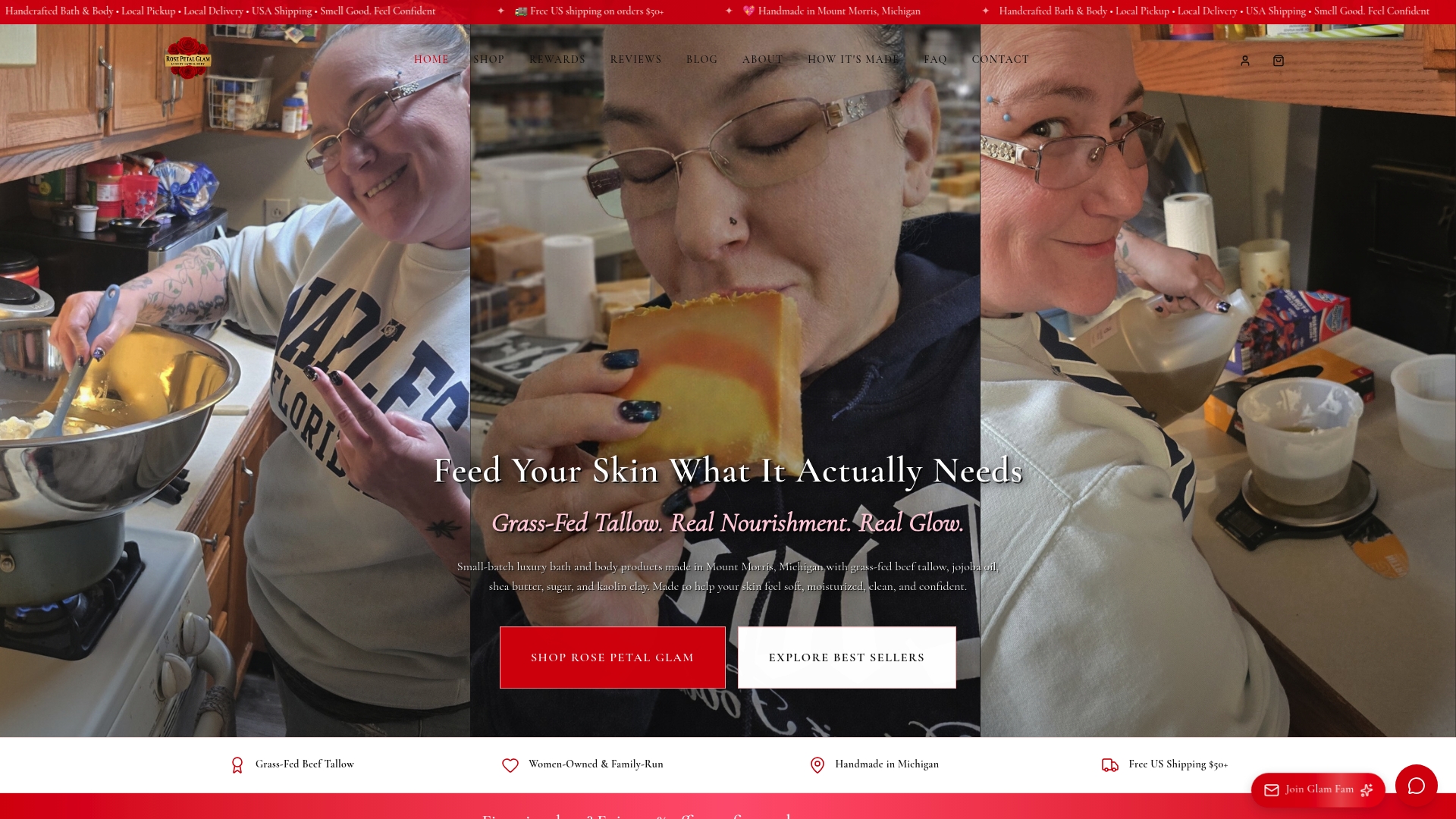
The practical starting point for new shoppers is the tallow skincare collection, which covers the core routine: a cold process soap bar, whipped body butter, and a sugar scrub. Fragrance-free versions of each are available, making the lineup accessible for sensitive skin, reactive skin, and anyone avoiding synthetic fragrance. Men’s and unisex options are part of the range too.
Rosepetalglam ships across the U.S., with local pickup available in Mount Morris, Michigan. Bundling products brings the per-unit cost down, and a rewards program is available for repeat purchases.
Browse the handcrafted soap collection to start with a single bar, or go straight to the full tallow collection to build out a complete routine.
Useful sources and further reading
These resources back the claims in this guide and are worth bookmarking if you want to verify ingredient safety or dig deeper into formulation science.
| Source | What it covers |
|---|---|
| Healthline: Natural Skincare Routine | Four-step routine overview, patch-testing guidance, and the limits of the “natural” label in U.S. law |
| EWG Skin Deep Database | Ingredient-level safety ratings for thousands of cosmetic ingredients; searchable by product or ingredient name |
| EWG Toxic Twelve | The Environmental Working Group’s list of high-concern chemicals commonly found in cosmetics |
| The Skin Institute: Natural Ingredients | Dermatology-informed overview of natural emollients including argan oil, shea butter, and olive oil |
| PMC: Skin Barrier Research | Peer-reviewed research on skin barrier function and lipid composition, relevant to tallow and ceramide formulas |
| Rosepetalglam Blog | Brand education hub covering routine building, ingredient guides, and handmade product comparisons |
| Clean Skincare Routine Guide | Step-by-step guide to building a simple natural routine, with ingredient pairing notes |
| Grass-Fed Tallow Skincare Explained | Rosepetalglam’s breakdown of tallow’s fatty acid profile and why sourcing from grass-fed cattle matters |
Recommended
- The Ultimate Guide to Natural Ingredients for Sensitive Skin | Rose Petal Glam Blog
- How to Build a Simple, Clean Skincare Routine with Natural Products | Rose Petal Glam Blog
- Tallow Skincare Collection | Grass-Fed Beef Tallow Soap, Butter & Scrubs | Rose Petal Glam
- Gentle Clean - Whipped Tallow Sugar Scrub - Net Wt. 4 oz (Fragrance-Free) | Handmade Sugar Scrub | Rose Petal Glam