Natural Moisturizers for Dry Skin: 9 DIY Remedies That Work
Published 2026-08-13 by Rose Petal Glam
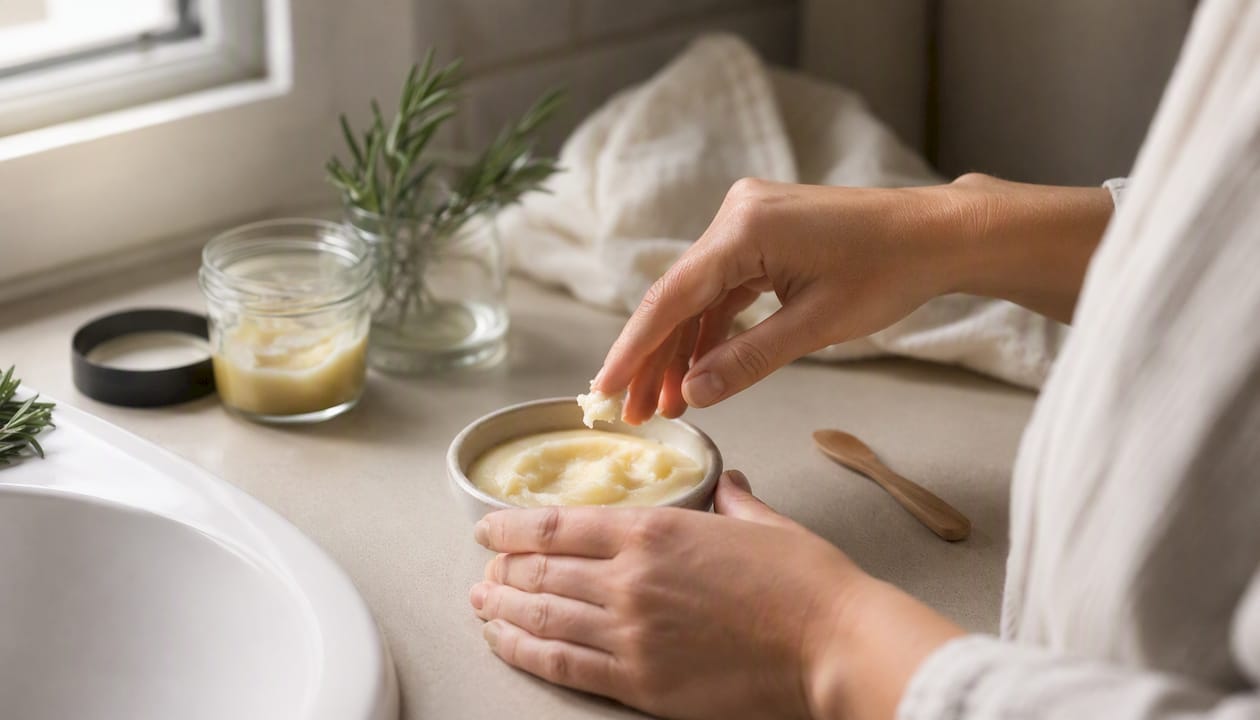
Tonight, your fastest move is to apply a thin layer of petroleum jelly or a grass-fed tallow balm to damp skin right after a lukewarm shower. That single step, sealing moisture into skin before it evaporates, is what clinical guidance consistently backs. If you have a humectant like honey or aloe vera on hand, layer it underneath the occlusive for even better results.
Here’s what to do right now: wash with lukewarm (not hot) water, pat your skin until it’s just slightly damp, then apply your chosen occlusive to the driest areas. For rough hands or feet, a 15-minute colloidal oatmeal soak before sealing works well. One safety note before you start: patch-test any new ingredient on your inner forearm for 24 hours, skip anything you’re allergic to, and see a clinician if you have deep cracks, bleeding, or signs of infection.
Key Takeaways
The most effective natural approach to dry skin combines a humectant, an emollient, and an occlusive applied in that order to damp skin immediately after a lukewarm shower.
| Point | Details |
|---|---|
| Apply to damp skin | Seal in moisture right after bathing, before water evaporates from the surface. |
| Layer your products | Use a humectant (honey, aloe) first, then an emollient (jojoba, shea), then an occlusive (tallow, petroleum jelly). |
| Patch-test everything | Apply any new ingredient to your inner forearm for 24 hours before wider use. |
| See a doctor for severe dryness | Deep cracks, bleeding, spreading redness, or fever require medical evaluation, not more DIY. |
| Rose Petal Glam tallow butters | Small-batch, grass-fed tallow body butters offer a ready-made occlusive with no synthetic fillers. |
Table of Contents
- What are the best natural moisturizers for dry skin?
- Simple DIY moisturizer recipes you can make tonight
- How do moisturizers actually work?
- Action plan for very or extremely dry skin
- Precautions, patch testing, and safe storage
- Evidence-backed note on tallow and jojoba: why they work
- Interactions between natural moisturizers and skincare products or medications
- Why I favor ingredient-forward routines
- Ready-made occlusives from Rose Petal Glam
- Sources
- FAQ
What are the best natural moisturizers for dry skin?
Nine ingredients show up repeatedly in both clinical guidance and home remedy traditions. Here’s what each one does, who it suits, and where to be careful.
| Ingredient | Best for | Texture | How to use | Safety notes | Cost |
|---|---|---|---|---|---|
| Colloidal oatmeal | Sensitive, eczema-prone | Light, powdery | Dissolve in bath or mix into cream | Very low allergy risk | Low |
| Petroleum jelly | Severely dry, cracked skin | Heavy, greasy | Apply thin layer to damp skin | Non-comedogenic; avoid open wounds | Very low |
| Jojoba oil | Dry and oily/combination | Lightweight, non-greasy | Apply 2–3 drops to damp face or body | Very low comedogenic risk | Moderate |
| Olive oil | Dry body skin | Medium, slightly greasy | Massage into damp skin; avoid face | Higher oleic acid; may irritate some | Low |
| Coconut oil | Dry body skin, rough patches | Medium, melts on contact | Apply to damp skin; avoid acne-prone areas | Comedogenic for some; patch-test | Low |
| Shea butter | Very dry, mature skin | Rich, creamy | Apply to damp skin; use as overnight mask | Rare latex cross-reaction | Low–moderate |
| Honey | Dry, inflamed, or irritated skin | Sticky, thin | Apply as mask for 20 minutes; rinse | Avoid on broken skin unless medical-grade | Low |
| Aloe vera | Mild dryness, sunburn | Watery, fast-absorbing | Apply as first layer before an occlusive | Rare contact allergy; patch-test | Low |
| Grass-fed beef tallow | Very dry, sensitive, all-over body | Rich, semi-solid | Warm between palms; apply to damp skin | Not suitable for those avoiding animal products | Moderate |
Colloidal oatmeal
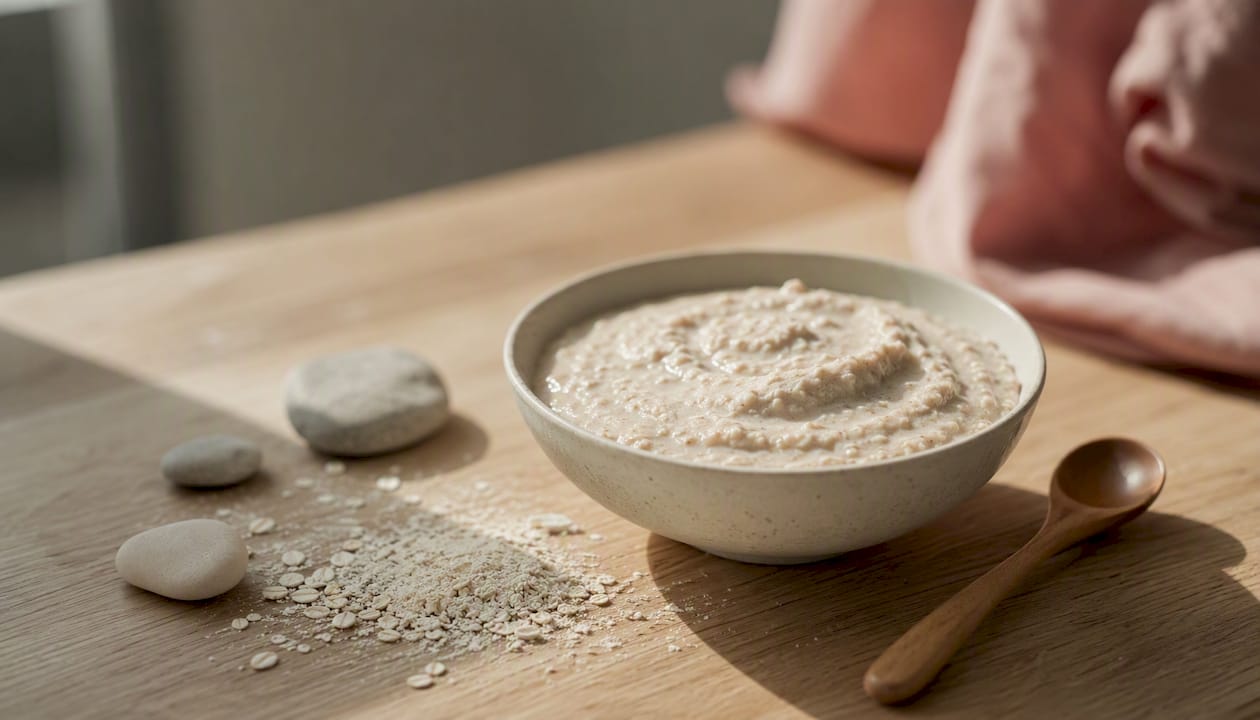
Ground into a fine powder and suspended in water or cream, colloidal oatmeal soothes inflammation and forms a light protective film on the skin. It’s particularly effective for eczema and psoriasis, and research supports its role in calming irritated, dry skin. It won’t clog pores and is safe for nearly everyone, including children.
Petroleum jelly
Cheap, effective, and backed by decades of clinical use, petroleum jelly is a pure occlusive. It doesn’t add moisture on its own; it locks in whatever moisture is already there. According to NCBI clinical guidance, petrolatum reduces transepidermal water loss and is recommended for dry, cracked skin and many inflammatory conditions. Apply it thin, on damp skin, and it punches well above its price point.
Jojoba oil
Technically a liquid wax, jojoba is biochemically similar to human sebum, which is why it absorbs without leaving a heavy residue. It’s one of the few oils with a very low comedogenic rating, making it a reasonable choice even for people who usually avoid oils on their face. Two to three drops on damp skin is enough.
Olive oil
Olive oil is accessible and genuinely moisturizing, but it’s worth knowing that it’s high in oleic acid. A 2022 research review found that oils higher in linoleic acid tend to be gentler on the skin barrier, while oleic-acid-heavy oils can sometimes disrupt it for sensitive users. Use olive oil on the body, not the face, and avoid it if your skin is already inflamed.
Coconut oil
Studies show coconut oil can improve skin hydration and reduce water loss, thanks to its saturated fatty acid profile. The catch: it’s moderately comedogenic. Fine for elbows, knees, and body use; less ideal for acne-prone facial skin.
Shea butter
Rich in fatty acids and vitamin E, shea butter is one of the most nourishing options for very dry or mature skin. It absorbs slowly, making it better as an overnight treatment than a quick daytime layer. People with latex allergies occasionally react to shea, so patch-test first.
Honey
Raw honey is a humectant, meaning it draws water toward the skin, and it carries anti-inflammatory and antibacterial compounds. Research reviews confirm its multiple bioactive properties for skin hydration and healing, though product grade matters. For a simple mask, raw or Manuka honey works well. Avoid applying it to broken skin unless you’re using medical-grade honey.
Aloe vera
Fresh aloe gel is mostly water, which makes it a fast-absorbing humectant rather than a barrier ingredient. It’s best used as the first layer in a routine, under something occlusive, to deliver hydration before you seal it in. A small percentage of people develop contact dermatitis from aloe, so test it first.
Grass-fed beef tallow
Tallow from grass-fed cattle contains fatty acids, including palmitic, stearic, and oleic acid, that closely mirror the lipid profile of human skin. It’s an occlusive with emollient properties, meaning it both seals and softens. For very dry or sensitive skin, it’s one of the most compatible options available. More on the clinical rationale in the evidence section below.
Simple DIY moisturizer recipes you can make tonight
Each recipe below is small-batch by design. Make what you’ll use within a week or two, store in a clean glass jar, and always patch-test before applying to your face.
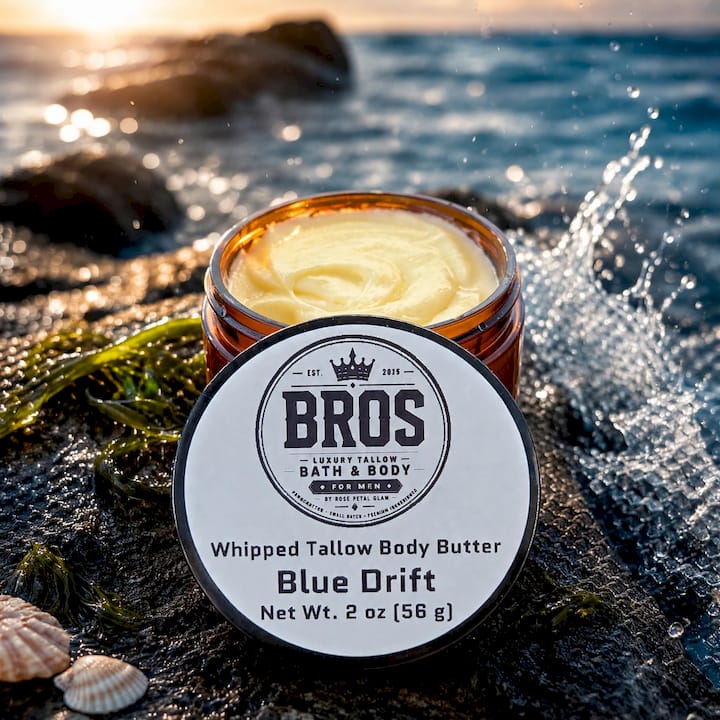
1. Whipped tallow body butter
Purpose: Deep occlusive moisture for very dry body skin.
- Warm 2 tablespoons of grass-fed beef tallow in a double boiler until just melted.
- Add 1 teaspoon of jojoba oil and stir to combine.
- Let cool to room temperature, then refrigerate for 20 minutes until semi-solid.
- Whip with a hand mixer for 2–3 minutes until fluffy.
- Transfer to a clean glass jar. Apply a small amount to damp skin after showering.
Timing: leave-on; use nightly for best results. Shelf life: 4–6 weeks at room temperature, longer refrigerated.
2. Jojoba and aloe face oil blend
Purpose: Lightweight daily hydration for dry or combination facial skin.
- Combine 1 tablespoon of jojoba oil with 1 teaspoon of pure aloe vera gel in a small bottle.
- Shake well before each use (oil and gel will separate).
- Apply 3–4 drops to clean, damp skin and press in gently.
Timing: morning or evening, leave-on. Use within 2 weeks; refrigerate to extend.
Pro Tip: Add one drop of vitamin E oil to this blend as a natural preservative and antioxidant boost.
3. Colloidal oatmeal soak
Purpose: Soothe itchy, inflamed dry skin on hands, feet, or full body.
- Grind 1 cup of plain rolled oats in a blender until it becomes a fine powder.
- Run a lukewarm bath and stir in the oat powder until the water turns milky.
- Soak for 15–20 minutes.
- Pat skin dry (do not rub) and apply an occlusive immediately while skin is still slightly damp.
Timing: 15–20 minutes; follow with a moisturizer right after. Colloidal oatmeal is well-supported for eczema and general dryness.
4. Raw honey hydration mask
Purpose: Humectant treatment for dry, dull, or irritated skin.
- Apply 1 teaspoon of raw or Manuka honey directly to clean, dry skin.
- Leave on for 20 minutes.
- Rinse with lukewarm water and follow with a light oil or tallow balm.
Timing: 20 minutes, rinse off. Do not use on broken or cracked skin.
5. Shea and coconut overnight body mask
Purpose: Intensive overnight repair for very dry legs, arms, or rough patches.
- Melt 1 tablespoon of shea butter and 1 teaspoon of coconut oil together.
- Cool until semi-solid, then apply a generous layer to dry areas.
- Cover with cotton socks or a light layer of clothing to avoid transfer.
Timing: overnight. Wash off in the morning. Avoid on acne-prone skin.
Pro Tip: For a safe aromatic addition to any of these recipes, check essential oil safety guidelines before adding any fragrance, especially for sensitive skin.
How do moisturizers actually work?
Understanding the three functional classes helps you build a routine that does more than just feel good in the moment.
- Humectants draw water from the environment or deeper skin layers toward the surface. Natural examples: honey, aloe vera, glycerin.
- Emollients fill the gaps between skin cells, softening and smoothing the surface. Natural examples: jojoba oil, shea butter, coconut oil.
- Occlusives form a physical barrier over the skin to slow water evaporation. Natural examples: petroleum jelly, grass-fed tallow, beeswax.
The most effective routines combine all three. Apply a humectant first to attract water, an emollient to soften, then an occlusive to seal everything in. The order matters because an occlusive applied first can block the humectant from reaching the skin.
Timing matters just as much as order. Mayo Clinic guidance recommends applying moisturizer immediately after bathing, while skin is still slightly damp, to lock in that surface moisture before it evaporates. Hot showers strip the skin’s natural oils, so keeping water lukewarm protects the barrier you’re trying to rebuild. For a full routine walkthrough, the clean skincare routine guide at Rose Petal Glam covers the layering sequence in practical detail.
Action plan for very or extremely dry skin
When dryness crosses into tightness, flaking, or visible cracking, a basic lotion won’t cut it. Here’s a prioritized approach:
- Switch to lukewarm, short showers. Hot water and long soaks deplete the skin’s lipid barrier faster than almost anything else. Cap showers at 5–10 minutes and use a fragrance-free tallow soap or another gentle, non-stripping cleanser.
- Apply an occlusive immediately after patting dry. Petroleum jelly or a whipped tallow balm on damp skin is the single highest-impact step for severely dry skin, per Harvard Health guidance.
- Layer, don’t just slather. Humectant first (aloe or honey), emollient second (jojoba or shea), occlusive last (tallow or petroleum jelly). Repeat morning and night.
- Add a humidifier. Indoor air, especially in winter, pulls moisture from your skin continuously. Running a humidifier in your bedroom overnight makes a measurable difference for winter xerosis.
- Exfoliate gently, once a week. Dead skin buildup blocks moisturizers from penetrating. A gentle sugar scrub on damp skin, once weekly, helps without damaging the barrier further.
When to see a doctor
Stop self-treating and get medical attention if you notice:
- Deep cracks that bleed or show signs of infection (pus, spreading redness, warmth)
- Fever alongside a skin flare
- Rash that spreads rapidly or doesn’t respond to moisturizing within a week
- Severe itching that disrupts sleep
A dermatologist may prescribe topical corticosteroids for short-term use, or recommend prescription barrier creams for conditions like severe eczema or ichthyosis. Over-the-counter natural remedies are appropriate for routine dryness, not for compromised or infected skin.
Precautions, patch testing, and safe storage
How to patch-test
- Apply a small amount of the ingredient or blend to your inner forearm.
- Leave it uncovered for 24 hours.
- Check for redness, itching, swelling, or small bumps.
- If any reaction appears, wash the area and avoid that ingredient. If no reaction occurs, it’s generally safe to use on a larger area.
Comedogenic and allergy cautions
- Coconut oil: moderate comedogenic rating; avoid on acne-prone facial skin.
- Olive oil: high oleic acid content; can disrupt the barrier for sensitive users and may worsen eczema on the face.
- Shea butter: rare cross-reaction with latex allergy; patch-test before widespread use.
- Honey: avoid on broken skin unless medical-grade; not suitable for infants under 12 months topically if there’s any risk of ingestion.
- Aloe vera: occasional contact dermatitis; always patch-test, especially with fresh-cut gel.
- Tallow: not suitable for those with beef or lanolin sensitivities; patch-test first.
For acne-prone skin, jojoba oil and colloidal oatmeal are the lowest-risk options. Both have minimal comedogenic potential and are well-tolerated by most skin types. For a deeper look at which natural ingredients suit sensitive skin, Rose Petal Glam’s ingredient guide covers the specifics.
Storage and contamination
- Make small batches: 1–2 weeks’ worth at a time for water-free recipes, less for anything containing aloe or honey.
- Use clean, dry utensils every time you scoop from a jar. Introducing water into an oil-based product creates conditions for mold.
- Label jars with the date made and ingredients.
- Refrigerate any recipe containing fresh aloe vera or honey.
- Discard anything that smells off, changes color, or shows visible separation beyond normal.
Evidence-backed note on tallow and jojoba: why they work
Grass-fed beef tallow and jojoba oil aren’t trending because of marketing. There’s a mechanistic reason both work well on dry skin.
Tallow’s fatty acid profile, primarily palmitic, stearic, and oleic acid, closely mirrors the lipid composition of the human stratum corneum. That structural similarity means the skin can integrate these lipids more readily than it can process some synthetic alternatives. Research into lipid-based traditional remedies shows potential for barrier support based on this lipid compatibility, though large-scale randomized clinical trials remain limited. The mechanistic and empirical evidence is coherent; the high-powered trial data is still catching up.
Jojoba is different in structure but equally well-matched. Its wax esters closely resemble human sebum, which is why it absorbs without the greasy residue typical of heavier oils. It’s also stable, with a long shelf life compared to many plant oils, which matters for small-batch formulation.
Rose Petal Glam’s approach to both ingredients reflects these properties directly:
- Grass-fed sourcing for tallow, which affects the fatty acid ratio and overall purity
- Small-batch production to avoid the oxidation that degrades oil quality over time
- Fragrance-free options for sensitive skin, where added fragrance is a common irritant trigger
- Transparent ingredient lists with no synthetic fillers
Grass-fed beef tallow contains skin-compatible lipids that support the barrier in a way few synthetic alternatives replicate. Paired with jojoba’s sebum-like wax esters, the combination addresses both occlusion and emolliency in a single, simple formulation. For very dry or sensitive skin, that simplicity is the point.
For more on why tallow-based skincare has gained traction, the Rose Petal Glam blog on grass-fed tallow covers the sourcing and formulation rationale in detail.
Interactions between natural moisturizers and skincare products or medications
Natural doesn’t mean inert. A few combinations are worth knowing before you layer products.
Retinoids (tretinoin, retinol): Heavy occlusives like petroleum jelly or tallow applied immediately before a retinoid can increase penetration and amplify irritation. If you use a prescription retinoid, apply it first on dry skin, wait 20–30 minutes, then apply your moisturizer on top.
Topical steroids: Applying an occlusive over a topical corticosteroid increases absorption, which can be intentional in clinical settings but risky at home. Follow your prescriber’s instructions exactly; don’t add an occlusive layer unless directed.
AHAs and BHAs (glycolic acid, salicylic acid): These exfoliants lower skin pH. Layering a heavy oil or butter directly on top can trap the acid against the skin and increase irritation. Apply acids first, let them absorb fully, then moisturize.
Benzoyl peroxide: This acne treatment can oxidize and deactivate some plant oils, reducing the effectiveness of both products. Keep them in separate steps with a gap between application.
Oral medications: Some systemic drugs, including certain blood pressure medications and diuretics, cause or worsen dry skin as a side effect. If your dryness appeared or worsened after starting a new medication, mention it to your prescriber before adding topical treatments. Natural moisturizers are generally safe to use alongside oral medications, but the underlying cause may need to be addressed at the prescription level.
For a broader look at body care from shower to moisture, including how to sequence your routine around active ingredients, that guide covers the step-by-step logic clearly.
Why I favor ingredient-forward routines
The skincare industry has a habit of making simple problems complicated. Dry skin, in most cases, responds to a handful of well-chosen ingredients applied consistently. The most effective routines tend to be the shortest ones: a gentle cleanser, a humectant, an occlusive, and time.
What I’ve come to appreciate about Rose Petal Glam’s philosophy is that it starts with the ingredient, not the marketing claim. Grass-fed tallow and jojoba aren’t in these formulations because they’re trendy; they’re there because the lipid science supports them for sensitive and very dry skin. Small-batch production and fragrance-free options aren’t upsells; they’re the baseline for anyone whose skin reacts to synthetic additives. That kind of ingredient transparency is what makes a product worth recommending to someone who’s already tried the standard options and found them lacking.
Ready-made occlusives from Rose Petal Glam
If you’d rather skip the DIY and reach for something already formulated, Rose Petal Glam’s whipped tallow body butters are built around the same principles covered in this article: grass-fed beef tallow as the occlusive base, jojoba oil for emolliency, and no synthetic fillers.
The fragrance-free options are specifically suited to sensitive or reactive skin, and the small-batch production means you’re getting a fresh product without the preservative load that comes with mass-manufactured alternatives. Both the Gentle Clean Whipped Tallow Body Butter and the broader tallow skincare collection are worth browsing if you want a ready-made version of what this article recommends. Browse the collection and pick the option that fits your skin type.
Sources
- Home remedies for dry skin
- 9 ways to banish dry skin - Harvard Health
- PMC article on skin lipids and topical oils
- PMC review on natural oils and skin compatibility
- Skin care: Do’s and don’ts - Mayo Clinic
This article is general information, not a substitute for advice from a qualified doctor. Consult a qualified healthcare professional about your own circumstances before acting on anything here.
FAQ
What is the best natural moisturizer for very dry skin?
For very dry skin, an occlusive applied to damp skin works best. Petroleum jelly and grass-fed beef tallow are the strongest options because they physically seal moisture in rather than just adding it. Layering a humectant like aloe vera or honey underneath increases the effect.
How do you treat extremely dry skin naturally?
Start with a short, lukewarm shower using a gentle cleanser, then apply a humectant while skin is still damp, followed immediately by an occlusive like tallow or petroleum jelly. Running a humidifier overnight and repeating this routine twice daily typically produces visible improvement within a few days for routine xerosis.
Is coconut oil or jojoba oil better for dry skin?
Jojoba is the safer all-around choice, especially for facial skin, because its low comedogenic rating and sebum-like structure make it well-tolerated by most skin types. Coconut oil is effective for dry body areas but carries a moderate comedogenic risk that makes it less suitable for acne-prone skin.
Can you use honey as a moisturizer?
Yes, as a short-term humectant mask. Apply raw or Manuka honey to clean skin for 20 minutes, then rinse and follow with an emollient or occlusive. Avoid applying honey to broken or cracked skin unless you’re using medical-grade honey, and don’t use it as a leave-on moisturizer without sealing it in with something occlusive.
When should you stop using DIY moisturizers and see a doctor?
If your skin shows deep cracks that bleed, signs of infection (spreading redness, warmth, pus), or a rash that doesn’t improve within a week of consistent moisturizing, see a dermatologist. Natural remedies are appropriate for routine dryness; compromised or infected skin needs clinical evaluation.
Recommended
- The Ultimate Guide to Natural Ingredients for Sensitive Skin | Rose Petal Glam Blog
- How to Build a Simple, Clean Skincare Routine with Natural Products | Rose Petal Glam Blog
- What Is Whipped Body Butter and Why Your Skin Needs It | Rose Petal Glam Blog
- Cold Process Soap vs. Store-Bought: What You’re Really Putting on Your Skin | Rose Petal Glam Blog