For Sensitive Skin: Spot SLS, Choose Small-Batch Sulfate-Free Soap in 3 Minutes
Published 2026-08-31 by Rose Petal Glam
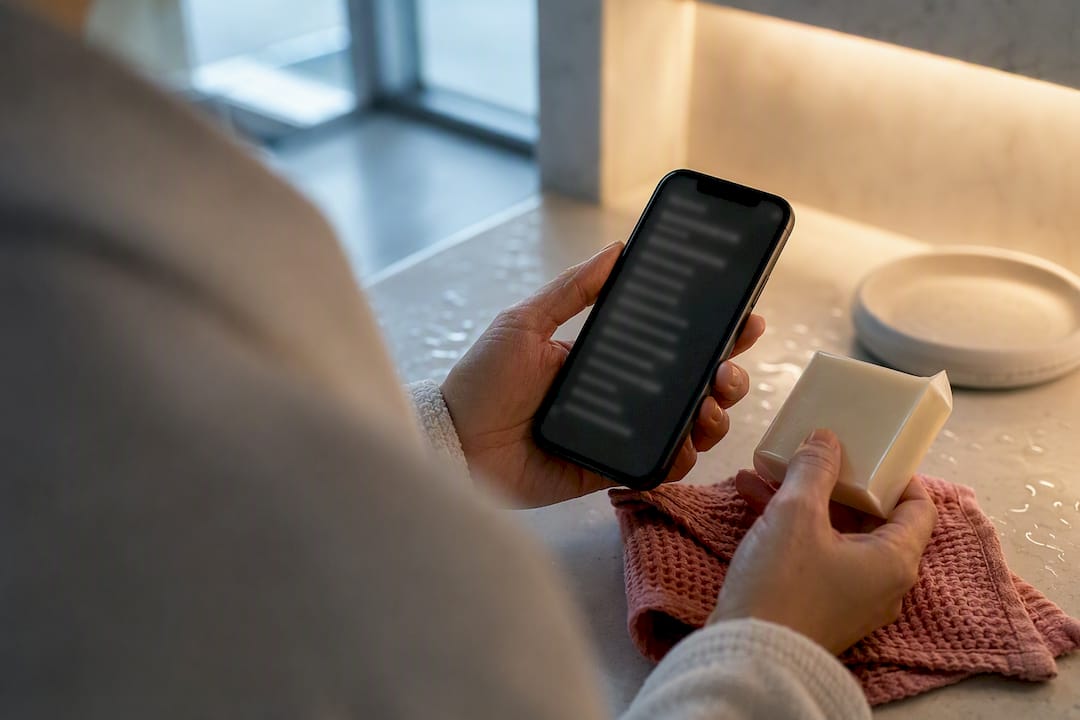
Sulfate-free soap skips harsh detergents like SLS (sodium lauryl sulfate) and SLES (sodium laureth sulfate) in favor of gentler surfactants or traditional soap oils. For dry, sensitive, or eczema-prone skin, it’s usually the smarter first choice because it cleans without stripping the skin’s natural oils. Rose Petal Glam’s gentle clean fragrance-free tallow soap fits that category well, built from grass-fed tallow with no added fragrance to trigger a reaction.
TL;DR:
- Sulfate-free soaps are generally better for dry, sensitive, or eczema-prone skin because they avoid harsh detergents like SLS and SLES that strip natural oils.
- Look for plant-derived surfactants such as decyl glucoside, coconut-based cleansers, or traditional soap oils like olive, coconut, or tallow in the ingredient list to ensure genuine mildness.
- Skin benefits are most noticeable for those managing eczema or chronic dryness, while heavy grease, outdoor work grime, or certain hair cleansing needs may still require stronger surfactants.
- Confirm sulfate-free status by checking the ingredient list for SLS or SLES, as marketing claims alone can be misleading or incomplete.
- Choose product formats wisely: cold-process or tallow soaps with glycerin tend to be gentler, but water hardness and personal sensitivities can influence how well they rinse and feel on skin.
Table of Contents
- What Sulfate-Free Actually Means on an Ingredient List
- Who Actually Benefits From Skipping Sulfates
- How to Choose Sulfate-Free Soap in Three Minutes or Less
- Bar, Castile, or Tallow: Matching Product Type to Skin Needs
- Switching Without Wrecking Your Skin’s Balance
- Environmental Impact: Sulfate-Free vs. Conventional Soap
- Sulfate-Free Soap in Hard Water vs. Soft Water
- Why We Make Small-Batch, Sulfate-Free Soap
- Try the Gentle Clean Fragrance-Free Tallow Soap
- Sources
- FAQ
What Sulfate-Free Actually Means on an Ingredient List
“Sulfate-free” is a label claim, but the real answer sits in the ingredient list, not the front of the bottle. SLS and SLES are the two sulfates you’ll see most often. Both are cheap, powerful foaming agents that manufacturers love because they create that thick lather people associate with “clean.” The problem is that they’re aggressive enough to strip the skin’s protective lipid barrier along with the dirt.
Gentler alternatives do the same cleaning job with less collateral damage. Look for these on a label:
- Decyl glucoside and decyl oligosaccharide, plant-derived surfactants with mild foaming action
- Sodium cocoyl isethionate, a coconut-derived cleanser common in syndet bars
- Cocamidopropyl betaine, often paired with gentler surfactants to boost lather without harshness
- Traditional cold-process soap made from saponified oils like olive, coconut, or tallow, which cleans through the soap-making reaction itself rather than added detergents
Skip the front-of-package promises and read the ingredient panel, ideally near the top of the list where the primary cleansing agents show up. A bar that says “sulfate-free” in bold but lists a sulfate derivative buried in smaller type isn’t telling you the whole story.
Who Actually Benefits From Skipping Sulfates
Sensitive, dry, and eczema-prone skin types see the clearest benefit from sulfate-free formulas, as described in this guide to natural baby eczema remedies and sensitive-skin guidance. Board-certified dermatologist Dr. Kim Nichols notes that sulfates aren’t inherently bad for everyone, but they often trigger or worsen irritation in people with chronic sensitivity, and switching to sulfate-free options can help preserve the skin’s natural pH balance. The National Eczema Association points to the same conclusion, recommending gentler, hydrating cleansers for eczema-prone patients.
That doesn’t mean sulfates are villains in every context. A few situations call for stronger surfactants:
- Heavy grease, sap, or grime removal (mechanics, gardeners, outdoor workers)
- Some hair-cleansing formulas where a stronger detergent lifts oil more efficiently
- Occasional deep-clean needs where mildness isn’t the priority
Skin type callout: People managing eczema flares, post-procedure recovery, or chronic dryness are the group most likely to notice a real difference within days of switching, since repeated exposure to harsh detergents contributes to long-term barrier breakdown.
How to Choose Sulfate-Free Soap in Three Minutes or Less
Standing in front of a shelf full of “gentle” and “natural” claims is confusing on purpose. Marketing language sells; ingredient lists tell the truth. Here’s a fast way to cut through it.
- Scan for SLS and SLES first. If either appears anywhere in the ingredient list, it’s not a sulfate-free product, regardless of what the label says.
- Look for plant-derived surfactants or glycerin-rich bases. Decyl glucoside, sodium cocoyl isethionate, and high-glycerin melt-and-pour bases tend to clean without over-drying.
- Favor fragrance-free or short ingredient lists for reactive skin. Fewer ingredients means fewer chances for a flare-up.
- Check the format. Bar soaps often skip preservatives entirely because they’re low-moisture, while liquid body washes need preservative systems to stay shelf-stable. Neither is automatically better; it depends on whether you’re more sensitive to fragrance and preservatives or prefer the convenience of a pump bottle.
Before you buy, answer three questions: Is it fragrance-free? Are the surfactants plant-derived rather than petroleum-based sulfates? And does it claim to be pH-balanced or dermatologist-recommended? A “yes” on two out of three is a solid sign you’re looking at a genuinely gentle cleanser.
Pro Tip: Keep a photo of your current soap’s ingredient list on your phone. When you’re comparing options at a store or online, you can check side by side instead of relying on memory or marketing copy.
Bar, Castile, or Tallow: Matching Product Type to Skin Needs
Sulfate-free doesn’t mean one product. The category covers several distinct formats, and each suits a slightly different skin need.
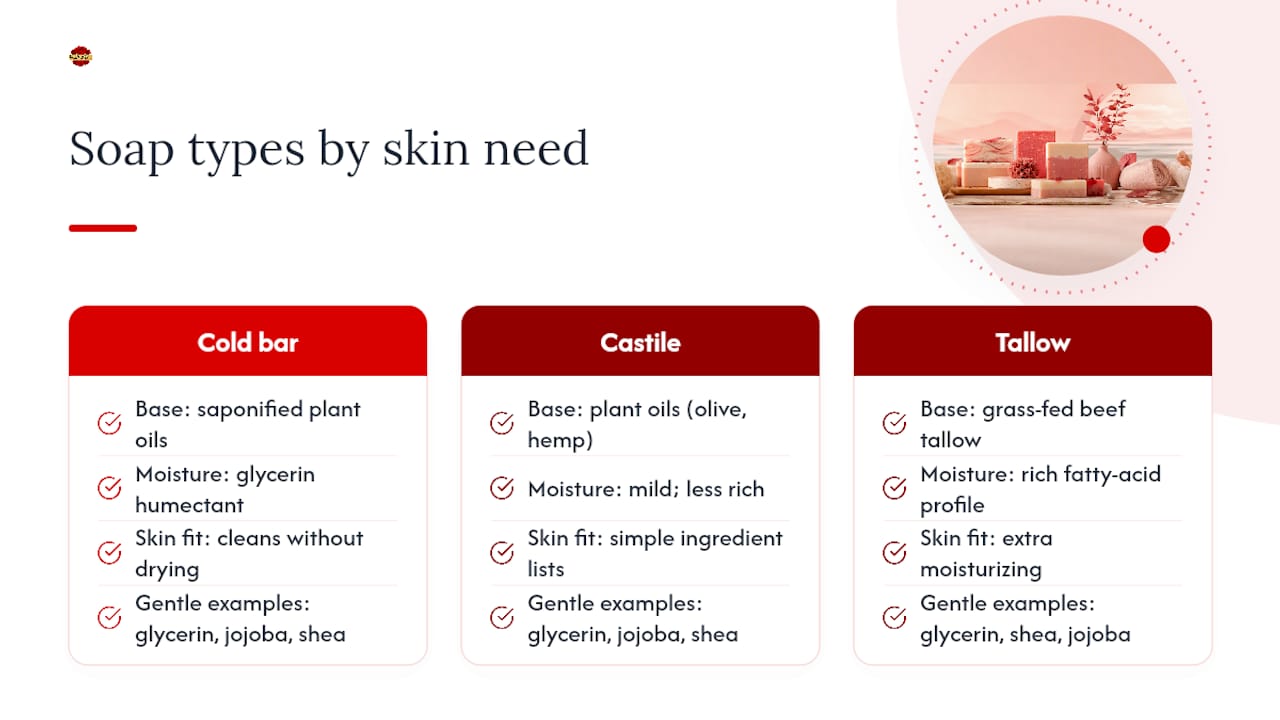
Cold-process bar soaps rely on saponified oils, olive, coconut, and similar bases, that naturally produce glycerin as a byproduct. That glycerin acts as a humectant, pulling moisture into the skin rather than away from it. This is the traditional soap-making method, and when it’s done with a balanced oil ratio, it cleans effectively without the drying effect of detergent-based bars.
Castile soap, made from plant oils like olive or hemp, is a liquid or bar option favored by people who want a short, recognizable ingredient list. It’s mild but can feel less luxurious on very dry skin without an added moisturizing step afterward.
Tallow-based handmade soaps bring a different moisturizing profile. Grass-fed beef tallow is rich in fatty acids similar to those found in human skin, which is part of why small-batch soap makers use it. Rose Petal Glam’s handcrafted cold process soap collection leans on this approach, small batches, natural oils, no synthetic filler.
When scanning any of these formats, look for decyl glucoside, cocamidopropyl betaine, glycerin, jojoba, or shea listed among the ingredients. Those are the names that consistently show up in genuinely gentle formulas, as clinician-curated recommendations for sulfate-free body washes confirm.
Switching Without Wrecking Your Skin’s Balance
Don’t swap your entire routine overnight. A gradual switch gives your skin time to adjust and gives you a clear read on whether a new product is actually working for you.
- Patch test first. Apply a small amount to your inner forearm and wait 24 to 48 hours before using it anywhere else.
- Introduce it gradually. Use the new soap two to three times a week for the first couple weeks rather than replacing your entire routine immediately.
- Monitor for two to four weeks. Real skin changes, both good and bad, usually show up in that window, not after one wash.
- Moisturize right after bathing. A fragrance-free body butter applied to damp skin locks in moisture while your barrier adjusts to the new formula.
If irritation worsens or a rash persists past a week, stop and talk to a dermatologist rather than pushing through it.
Pro Tip: Transitional dryness is common in the first week, even with gentle formulas, simply because your skin is recalibrating. Don’t mistake that adjustment period for a sign the product is wrong for you.
Environmental Impact: Sulfate-Free vs. Conventional Soap
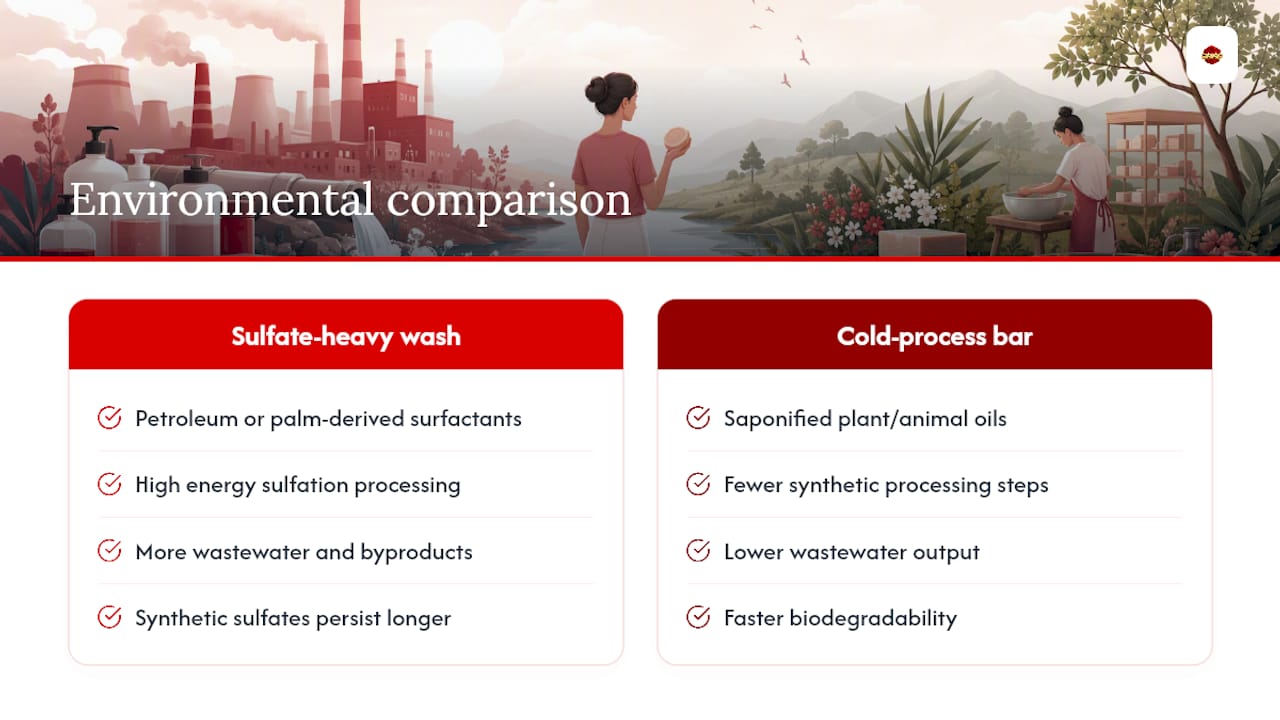
Sulfate production carries a heavier environmental footprint than most people realize. SLS and SLES are typically manufactured from petroleum or from palm oil processed through sulfation, a chemical process that requires significant energy input and generates wastewater byproducts. Large-scale palm oil sourcing for sulfate production has also been tied to deforestation pressure in some growing regions.
Sulfate-free alternatives don’t automatically win on every environmental metric. Some plant-derived surfactants like decyl glucoside still require processing and agricultural land. But traditional cold-process soap making, saponifying oils and fats into soap through a straightforward chemical reaction, generally involves fewer synthetic processing steps and less wastewater output than sulfate manufacturing.
Biodegradability is where the gap widens further. Plant-oil-based soaps and gentle surfactants like sodium cocoyl isethionate tend to break down faster in wastewater systems than synthetic sulfates, which can persist longer and contribute more to aquatic ecosystem stress. Packaging matters too. Bar soaps, especially unwrapped or minimally packaged ones, generate less plastic waste than bottled liquid body washes, most of which rely on single-use plastic containers even when the formula inside is sulfate-free.
None of this makes sulfate-free products a perfect environmental solution. But choosing a cold-process bar over a sulfate-heavy bottled body wash generally reduces both the manufacturing footprint and the packaging waste tied to a daily hygiene habit, a small but consistent choice that adds up over a year of showers.
Sulfate-Free Soap in Hard Water vs. Soft Water
Water hardness changes how any soap performs, and sulfate-free formulas react to that difference more noticeably than detergent-based cleansers do.
Hard water contains higher concentrations of calcium and magnesium. When true soap, the saponified-oil kind found in cold-process bars, meets those minerals, it can react to form a slightly less soluble compound often called soap scum. This shows up as a filmy residue on skin or in the tub and can occasionally leave skin feeling less thoroughly rinsed, even though the soap itself hasn’t lost its cleaning ability.
Soft water, by contrast, lets true soap rinse cleanly and lather more easily, since there’s less mineral interference. People in soft-water regions often notice cold-process bars feel silkier and rinse with less residue than the same bar used in a hard-water area.
Detergent-based sulfate-free surfactants, like decyl glucoside or sodium cocoyl isethionate, behave more consistently across water types because they don’t rely on the same fatty-acid chemistry that reacts with hard-water minerals. If you’re in a notably hard-water area and prefer traditional cold-process bars, a quick rinse with slightly warmer water can help minimize residue, and following with a light moisturizer offsets any extra dryness the mineral content leaves behind.
Neither water type makes sulfate-free soap ineffective. It just changes what “rinsed clean” feels like, and that’s worth knowing before you assume a soap isn’t working the way it should.
Why We Make Small-Batch, Sulfate-Free Soap
Formulating soap without sulfates isn’t a marketing angle for us, it’s the whole premise. We build every bar around what actually nourishes skin: grass-fed tallow, plant oils, and ingredient lists you can read in ten seconds flat.
Rose Petal Glam specializes in handcrafted bath and body products because mass production and gentle formulation rarely coexist well. Our products are made in small batches, which lets us control the oil ratios that determine how a bar rinses and how it feels afterward. The range includes cold process soaps, whipped body butters, and tallow deodorants, each built on the same principle: real ingredients over synthetic fillers.
Even with a natural formula, patch test first. Every skin reacts differently, tallow included.
— Brent
Try the Gentle Clean Fragrance-Free Tallow Soap
If you’ve read this far because your skin has been fighting back against harsh cleansers, the fastest way to see the difference is to try a bar built specifically for that problem. Rose Petal Glam’s gentle clean fragrance-free tallow soap is formulated with grass-fed beef tallow and skips added fragrance entirely, so there’s one less variable to worry about if your skin reacts easily.
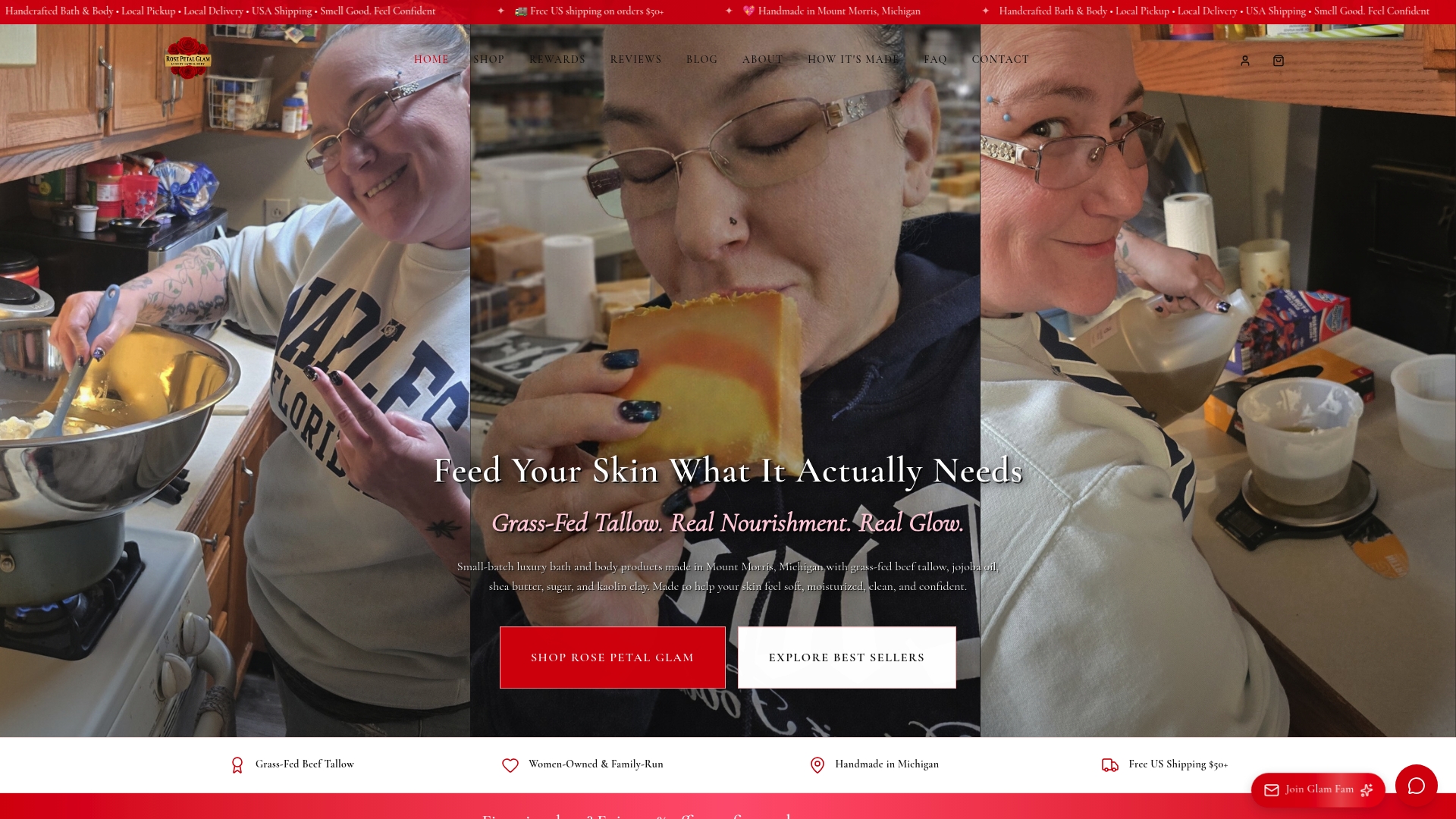
Each bar is cold-processed in small batches in Mount Morris, Michigan, which means the oil ratios stay consistent and the ingredient list stays short. If you’re switching from a sulfate-heavy bar or body wash, start with a single bar rather than a bulk order, patch test it, and give your skin the two-to-four-week window to adjust. Pair it with a fragrance-free option from the whipped body butter collection to handle any transitional dryness while your skin recalibrates.
Browse the full tallow skincare collection to see the soap alongside matching butters and scrubs, or start with the single bar if you’re not ready to commit to a bundle. Either way, the next step is simple: add it to your cart and give your skin a few weeks with a formula that isn’t fighting against it.
Sources
FAQ
Is Dove Soap Sulfate Free?
Some Dove bars, like the Sensitive Skin line, are formulated without sulfate cleansers and marketed as pH-balanced, though it’s worth checking the specific ingredient list since formulas vary across the product line.
What Is a Good Sulfate-Free Bath Soap?
A good sulfate-free bath soap uses cold-process oils or plant-derived surfactants like decyl glucoside instead of SLS or SLES. Rose Petal Glam’s gentle clean fragrance-free tallow soap fits that description with a short, natural ingredient list.
Why Avoid Sulfates in Body Washes?
Sulfates like SLS and SLES can strip the skin’s natural oils and disrupt its protective barrier, which often leads to dryness or irritation with repeated use, especially for sensitive or eczema-prone skin.
Do All Soaps Contain Sulfates?
No. Traditional cold-process soap made through saponification doesn’t rely on added sulfate detergents at all, while many commercial liquid body washes and some bars do include SLS or SLES for extra lather.
How Do I Know if a Soap Is Truly Sulfate Free?
Check the ingredient list for SLS or SLES by name rather than trusting a front-label claim, since “sulfate-free” marketing sometimes appears alongside milder sulfate derivatives buried further down the list.