Exfoliating Body Scrub for Soft, Smooth Skin
Published 2026-08-05 by Rose Petal Glam
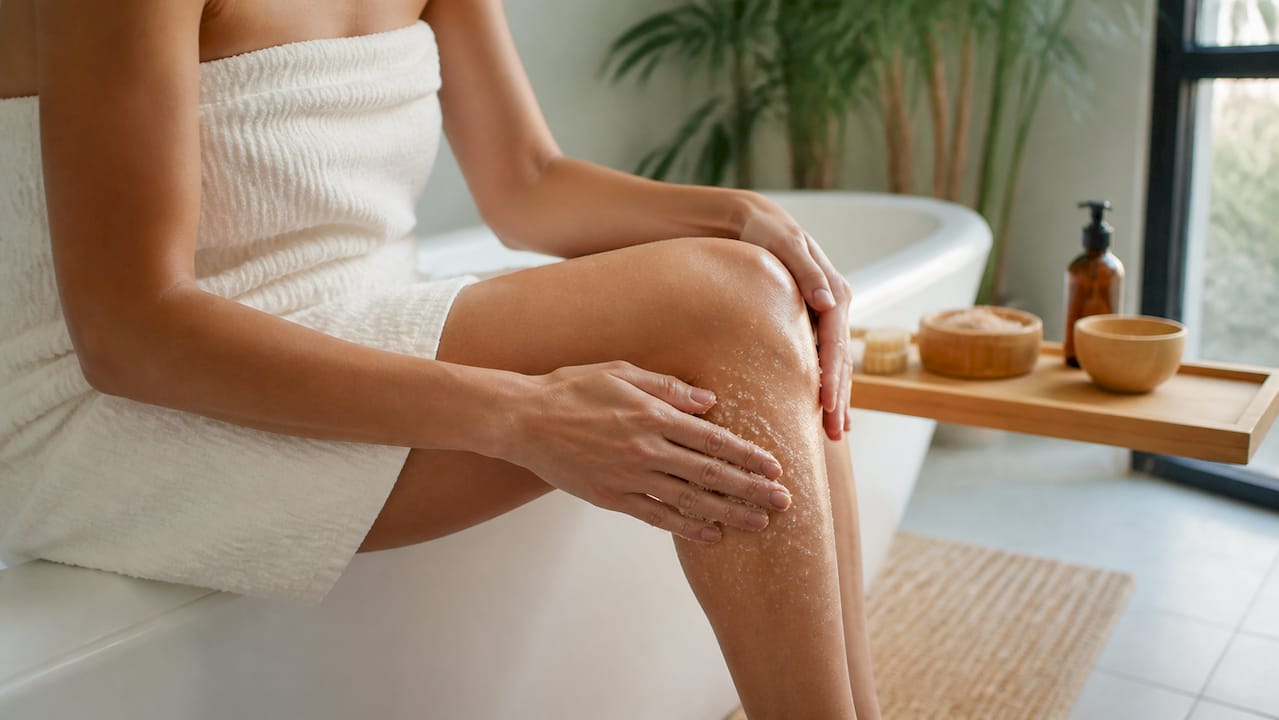
For most people, the best all-purpose choice is a gentle sugar-based exfoliating body scrub with nourishing carrier oils like jojoba or grass-fed tallow. Rosepetalglam’s Whipped Tallow Sugar Scrub is the standout pick for sensitive and dry skin: it pairs fine sugar granules with deeply moisturizing tallow and jojoba oil, so you get real exfoliation without stripping your skin barrier. The result is smoother, softer skin in a single shower, with no harsh residue.
- Best for sensitive/dry skin: Rosepetalglam Whipped Tallow Sugar Scrub (Gentle Clean, fragrance-free)
- Best for regular use: Any scented whipped tallow sugar scrub variant from Rosepetalglam
- Best DIY option: 2-ingredient brown sugar and jojoba oil scrub (recipe below)
- Best post-scrub step: Follow immediately with a whipped tallow body butter to lock in moisture
Table of Contents
- How to pick the right exfoliating body scrub for your skin type
- Three DIY exfoliating body scrub recipes you can make at home
- When should you avoid a body scrub?
- Why Rosepetalglam’s handcrafted scrubs are worth trying
- Key Takeaways
- The ingredient choice that most people overlook
- Rosepetalglam’s scrubs: where to start and what to pair
- Useful sources
- FAQ
How to pick the right exfoliating body scrub for your skin type
Match scrub abrasiveness and base oils to your skin type first, then consider fragrance and format.
What to look for:
- Fine, rounded granules (sugar dissolves as you scrub, reducing abrasion risk)
- Moisturizing base oils: jojoba, grass-fed tallow, shea butter, or coconut oil
- Humectants like glycerin to draw moisture into skin after rinsing
- Fragrance-free options if you have reactive or sensitive skin
- Preservatives in any water-containing formula (water-free scrubs like oil-and-sugar mixes are naturally more shelf-stable)
What to avoid:
- Plastic microbeads (banned in the U.S. for rinse-off products since 2017, but still appear in some imports)
- Overly coarse salts or walnut shell powder on sensitive or inflamed skin
- High-concentration AHAs or BHAs in body scrubs used daily
- Certain essential oils (cinnamon, clove, citrus) on broken or reactive skin
Clinical data on physical exfoliant granule size and carrier oils confirms that finer granules with emollient carriers produce better outcomes for sensitive skin than coarse particles in water-based formulas.
| Skin Type | Scrub Texture | Preferred Ingredients | Frequency |
|---|---|---|---|
| Sensitive | Fine sugar or oat | Jojoba, tallow, shea, fragrance-free | 1×/week |
| Dry | Fine sugar | Tallow, shea, glycerin | 1–2×/week |
| Normal | Sugar or light salt | Coconut oil, jojoba | 2–3×/week |
| Oily/acne-prone | Sugar or BHA-based | Salicylic acid, lightweight oils | 2×/week |
| Very rough patches | Coarse salt or pumice | Coconut oil, olive oil | 1×/week on affected areas only |

Price ranges run from about $6–$12 for drugstore scrubs (often water-based with synthetic fragrance) to $18–$35 for handcrafted small-batch options. The price gap usually reflects ingredient quality: a $30 tallow-and-jojoba scrub contains ingredients that also moisturize, while a $7 drugstore scrub may leave skin feeling tight after rinsing. For dry or sensitive skin, the extra cost often pays off in fewer products needed afterward.
Pro Tip: If you have sensitive skin, choose a scrub where the oil content is visible in the formula, not just listed last on the ingredient deck. A scrub that leaves your skin feeling soft even before you moisturize is doing double duty.
Three DIY exfoliating body scrub recipes you can make at home
The one rule for all DIY scrubs: use clean, dry containers, choose stable carrier oils, and patch-test any essential oil before full-body use. These DIY recipes are straightforward and cost-effective.
Recipe 1: Classic sugar scrub (all skin types)
- 1 cup fine white or brown sugar
- ½ cup jojoba oil (or melted coconut oil)
- 1 tsp vanilla extract or 5–10 drops of your preferred essential oil (optional)
Mix well. Use within 4–6 weeks. Store in a sealed glass jar away from water.
Recipe 2: Sea-salt scrub for rough patches
- 1 cup coarse sea salt
- ½ cup olive oil
- Zest of one lemon (optional, for scent)
Use only on very rough areas like heels and elbows. Rinse thoroughly. Shelf life: up to 8 weeks in a sealed container.
Recipe 3: Gentle oat scrub for sensitive skin
- ½ cup finely ground rolled oats (pulse in a blender)
- ¼ cup plain full-fat yogurt or aloe vera gel
- 2 tbsp honey
This one contains water-based ingredients (yogurt/aloe), so make it fresh and use within 3–5 days refrigerated. Do not add essential oils to this formula if your skin is reactive.
| Recipe | Shelf Life | Best For | Storage |
|---|---|---|---|
| Sugar + jojoba oil | 4–6 weeks | All skin types, full body | Sealed glass jar, cool dry place |
| Sea salt + olive oil | 6–8 weeks | Rough patches only | Sealed glass jar, cool dry place |
| Oat + yogurt/aloe | 3–5 days | Sensitive, reactive skin | Refrigerator, airtight container |
Any DIY mix containing water (aloe, yogurt, floral waters) needs either refrigeration or a broad-spectrum preservative to prevent bacterial growth. Oil-only mixes are naturally more stable. When in doubt about shelf life or preservation, a quality store-bought scrub with tested formulation is the safer choice.
When should you avoid a body scrub?
Skip the scrub on broken, sunburned, actively inflamed, or post-procedure skin. Those situations call for barrier repair, not abrasion.
The AAD’s guidance on safe at-home exfoliation is clear: stop exfoliating if you notice redness, peeling, or increased sensitivity, and give your skin at least a week to recover before trying again. Peer-reviewed literature on skin barrier effects from exfoliation confirms that over-exfoliation disrupts the lipid barrier, leading to transepidermal water loss and increased sensitivity.
Patch-test any new scrub or DIY mix before full-body use. Apply a small amount to your inner forearm, wait 24–48 hours, and check for redness, itching, or swelling. If you see any of those signs, do not use the product on larger skin areas. This step matters most for essential-oil-containing formulas and for anyone with a history of contact dermatitis.
Signs you’re over-exfoliating:
- Skin feels tight, raw, or stings after rinsing
- Redness that doesn’t fade within 30 minutes
- Increased breakouts or small bumps
- Skin looks shiny or waxy (a sign the barrier is compromised)
Who should see a dermatologist before scrubbing:
- Anyone with active eczema, rosacea, or psoriasis
- People using prescription retinoids or acids (exfoliation on top of these can cause serious irritation)
- Anyone with persistent skin irritation that doesn’t resolve after stopping exfoliation
This article is general skincare information, not medical advice. Consult a dermatologist for personalized guidance, especially if you have a diagnosed skin condition.
Why Rosepetalglam’s handcrafted scrubs are worth trying
Rosepetalglam’s Whipped Tallow Sugar Scrubs hit the balance that derm-backed editorial testing consistently identifies as the mark of a well-formulated scrub: fine granules that exfoliate evenly, combined with emollients that offset dryness rather than cause it.
What’s in them and why it matters:
- Grass-fed beef tallow: — A lipid profile close to human sebum, which means it absorbs without clogging pores and genuinely nourishes dry skin rather than sitting on the surface
The Gentle Clean fragrance-free option is the right starting point for sensitive skin. For regular use with a scent, the Citrus Volt variant is a popular choice. There’s also a men’s/unisex line, BRO’S Fresh Gentleman, for anyone who wants a cleaner, less floral scent profile.
All products are made in small batches in Mount Morris, Michigan, which means fresher ingredients and no synthetic fillers added to extend shelf life. Allure’s roundups of top-performing body scrubs consistently highlight ingredient transparency and emollient content as key differentiators, and that’s exactly where handcrafted tallow-based formulas have an edge over mass-market options.
The recommended routine: Scrub with a whipped tallow sugar scrub, rinse, pat dry, then apply a whipped tallow body butter while skin is still slightly damp. The butter seals in the moisture the scrub just unlocked.
Pro Tip: Start with the 4 oz size to test texture and scent before committing to a larger quantity. The whipped texture means a little goes further than you’d expect.
Key Takeaways
A gentle sugar-based exfoliating body scrub with nourishing carrier oils like tallow or jojoba delivers smoother skin, better moisturizer absorption, and fewer ingrown hairs without compromising your skin barrier.
| Point | Details |
|---|---|
| Match scrub to skin type | Fine sugar scrubs suit sensitive and dry skin; coarse salt is for rough patches only. |
| Frequency matters | Exfoliate periodically each week depending on skin type; over-exfoliation damages the barrier. |
| Always moisturize after | Apply body butter or lotion immediately after rinsing to lock in hydration. |
| DIY is viable but has limits | Oil-only DIY scrubs last 4–6 weeks; water-based mixes need refrigeration or preservatives. |
| Rosepetalglam’s recommendation | The Gentle Clean Whipped Tallow Sugar Scrub is the top pick for sensitive and dry skin. |
The ingredient choice that most people overlook
Most people shopping for a body scrub focus on scent and price. The ingredient that actually determines whether your skin feels better or worse after a week of use is the carrier oil, not the exfoliant itself.
Sugar versus salt is a real distinction, and it matters. But a sugar scrub in a water-based gel formula will leave dry skin feeling tighter than a salt scrub in a rich oil base. The oil is doing more work than the granule. That’s why tallow-based formulas are worth paying attention to: tallow’s fatty acid profile is genuinely close to the skin’s own lipids, which is why it absorbs differently than coconut oil or a synthetic emollient.
Small-batch production can mean fresher oils and potentially a more stable product, as rancid oils may irritate skin. That’s a real quality difference that doesn’t show up on a label but does show up on your skin over time.
If you’re going to spend money on one body care product this year, a well-formulated scrub with a good oil base is a better investment than a separate exfoliator and a separate moisturizer. The right scrub does both.
Rosepetalglam’s scrubs: where to start and what to pair
Real skin results come from pairing the right scrub with the right follow-up. Rosepetalglam’s tallow skincare collection gives you both in one place: a whipped tallow sugar scrub for exfoliation and a whipped tallow body butter for post-scrub moisture, all made from the same small-batch, natural-ingredient philosophy.
For sensitive skin, start with the Gentle Clean fragrance-free scrub and pair it with the whipped body butter in your preferred scent. For regular use, any scented variant works well. The men’s line covers unisex and masculine scent preferences. All products ship across the United States, and the 4 oz scrub size is the best entry point to test texture before buying more. Browse the full collection and add a scrub-and-butter bundle to your cart at rosepetalglam.com.
Useful sources
These are the primary sources used in this article, selected for authority and relevance to safe exfoliation practice.
| Source | What It Covers |
|---|---|
| NCBI — Skin Barrier & Exfoliation Safety | Peer-reviewed data on how physical and chemical exfoliants affect the skin barrier and over-exfoliation risks |
| NCBI — Chemical Exfoliation Modalities | AHA/BHA/PHA review and guidance on body vs. facial use |
| NCBI — Physical Exfoliant Granule Size & Carrier Oils | Clinical data on granule size, carrier oil selection, and skin response |
| AAD — Safe At-Home Exfoliation | Dermatologist-backed guidance on frequency, patch-testing, and when to stop |
| Byrdie — Best Body Scrubs, Tested & Derm-Backed | Editorial testing and dermatologist evaluation criteria for top-performing scrubs |
| Allure — Best Body Scrubs | Curated market roundup of effective exfoliators and formulation highlights |
| Healthline — DIY Body Scrub Recipes | Safe, tested DIY recipes with ingredient guidance and safety notes |
| Dove Tropical Coconut & Lime Body Scrub | Commercial formulation example pairing exfoliating granules with moisturizing cream content |
FAQ
Is an exfoliating body scrub good for your skin?
Yes, when used at the right frequency and with appropriate granules. Regular exfoliation removes dead surface cells, improves skin texture, and helps moisturizers absorb more effectively, according to AAD guidance.
What is the best body scrub for sensitive skin?
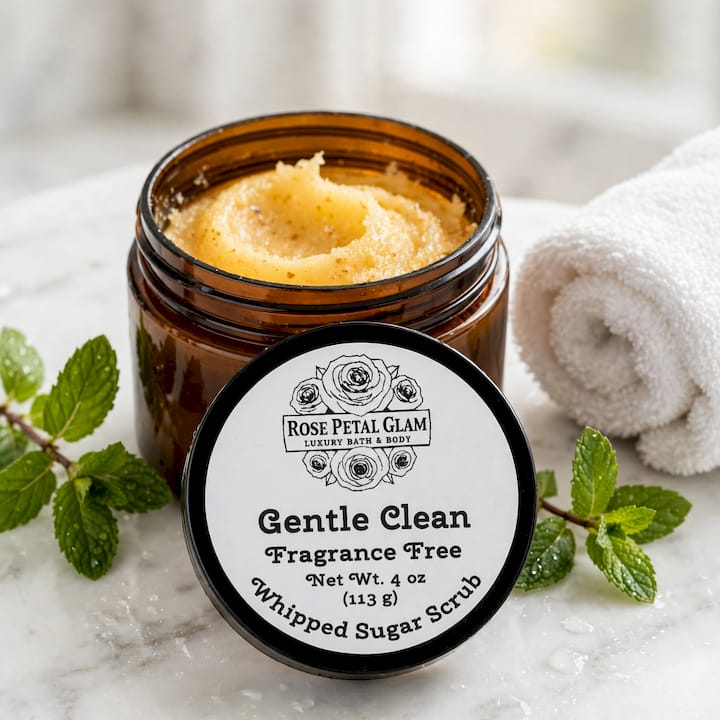
A fine sugar scrub with a nourishing oil base, such as Rosepetalglam’s Gentle Clean Whipped Tallow Sugar Scrub, is the best fit. Sugar granules dissolve as you scrub, limiting abrasion, and tallow provides moisture without synthetic fillers.
Should you scrub before or after bathing?
Scrub during your shower on warm, wet skin. Scrubbing before shaving reduces ingrown hairs; scrubbing after a long soak maximizes softness. Either works depending on your goal.
Do dermatologists recommend body scrubs?
Dermatologists generally support physical exfoliation when done gently and at the right frequency, typically 1–3 times per week. The AAD advises avoiding scrubs on broken, sunburned, or inflamed skin and always following with a moisturizer.
How long before you see results from a body scrub?
Most people notice smoother texture after the first use. Consistent exfoliation 2–3 times per week typically produces visible improvement in skin tone and texture within 2–3 weeks.
Recommended
- Whipped Sugar Scrub | Tallow Sugar Body Scrub | Rose Petal Glam
- Gentle Clean - Whipped Tallow Sugar Scrub - Net Wt. 4 oz (Fragrance-Free) | Handmade Sugar Scrub | Rose Petal Glam
- BRO’S Fresh Gentleman- Whipped Tallow Sugar Scrub - Net Wt. 4 oz | Handmade Sugar Scrub | Rose Petal Glam
- Citrus Volt - Whipped Tallow Sugar Scrub - Net Wt. 4oz | Handmade Sugar Scrub | Rose Petal Glam