The Best Baking Soda Free Deodorants for Sensitive Skin
Published 2026-08-15 by Rose Petal Glam
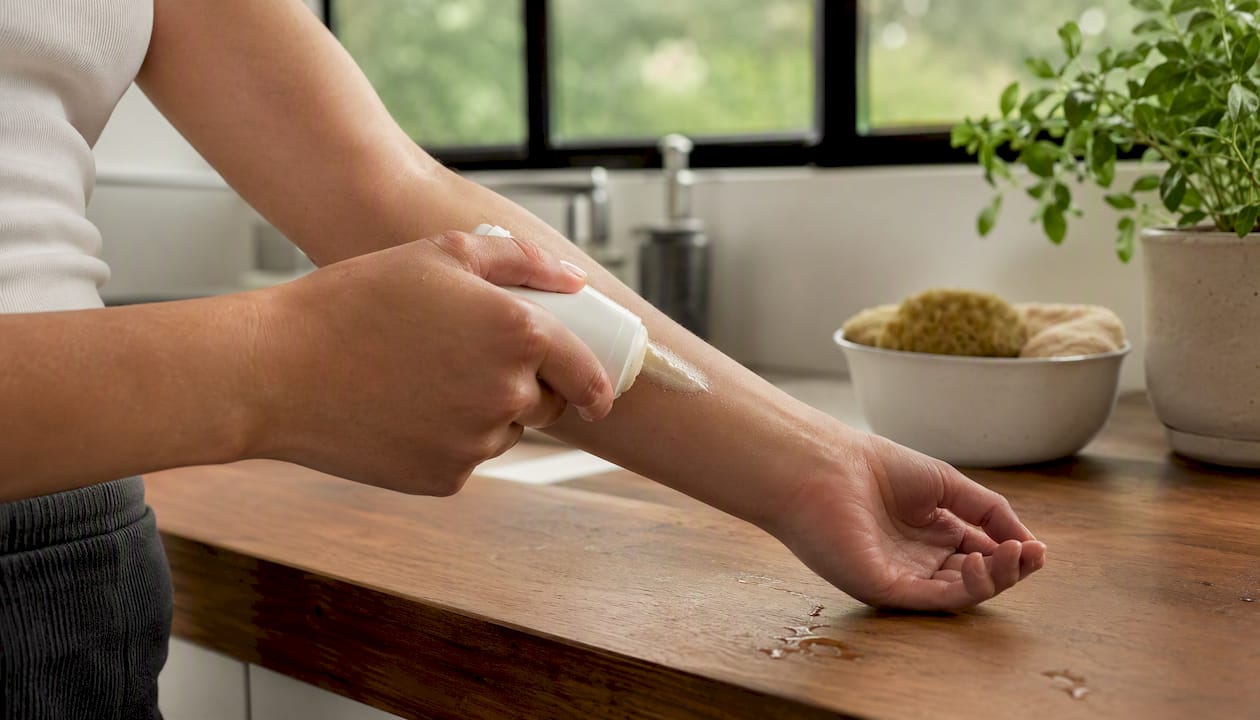
If baking soda leaves your underarms red, itchy, or raw, switch to a formula built on magnesium hydroxide, kaolin clay, arrowroot, or zinc ricinoleate instead. Rose Petal Glam’s Halo Vanilla Tallow Deodorant is our top pick for sensitive skin because it swaps sodium bicarbonate for grass-fed tallow and kaolin clay, both known for calming rather than irritating skin. For a dermatologist-facing drugstore backup, Dove’s Aluminum Free Deodorant Stick in Cucumber & Green Tea is labeled free of baking soda, aluminum, and parabens. If you want a cream format, Credo Beauty’s baking-soda-free cream deodorant is worth a look.
Here is the shortlist, and why each one made the cut:
- Halo Vanilla Tallow Deodorant (Rose Petal Glam): best for sensitive skin that reacts to sodium bicarbonate
- Dove 0% Aluminum Deodorant (Cucumber & Green Tea): best for an easy, widely stocked drugstore fallback
- Kopari Original Coconut Deodorant: best for a light coconut scent in a familiar stick format
- Credo Beauty Cream Deodorant: best cream format for targeted application
You can buy the Rose Petal Glam pick directly through the Halo Vanilla Tallow Deodorant product page, while Dove and Kopari are sold at most major drugstores and retailers like Target and Ulta.
Key Takeaways
Baking-soda-free deodorants work by replacing sodium bicarbonate with gentler odor-control ingredients like magnesium hydroxide, kaolin clay, and zinc ricinoleate that suit sensitive underarm skin.
| Point | Details |
|---|---|
| Substitute ingredients matter most | Magnesium hydroxide, kaolin, arrowroot, and zinc ricinoleate each replace baking soda differently. |
| Patch test before full use | Test on your forearm for 24 to 48 hours, then use nights-only for a week before daily wear. |
| Give it two to three weeks | Odor control often feels weaker at first before stabilizing as skin adjusts. |
| Check full ingredient lists | Look for “sodium bicarbonate” specifically, not just front-label marketing claims. |
| Rose Petal Glam leads for sensitive skin | The Halo Vanilla Tallow Deodorant pairs kaolin clay with grass-fed tallow for a gentle, baking-soda-free option. |
Table of Contents
- Comparing the Best Baking Soda Free Deodorants
- How to Choose a Deodorant Without Baking Soda or Aluminum
- How to Switch to a Baking Soda Free Deodorant Without Irritation
- Why Rose Petal Glam’s Tallow Deodorant Works for Sensitive Skin
- What Real Users Report About Baking Soda Free Deodorants
- How to Spot Baking Soda on an Ingredient Label
- Staying Fresh and Clean While You Transition
- What Actually Matters When You Switch Formulas
- A Different Route to Fresher, Calmer Underarms
- Sources
- FAQ
Comparing the Best Baking Soda Free Deodorants
Not every baking-soda-free deodorant treats sensitive skin the same way. Some rely on absorbent clays, some lean on plant starches, and a few use tallow or coconut oil as the whole base. The table below lines up the shortlist against the factors that actually decide whether a formula works for you.
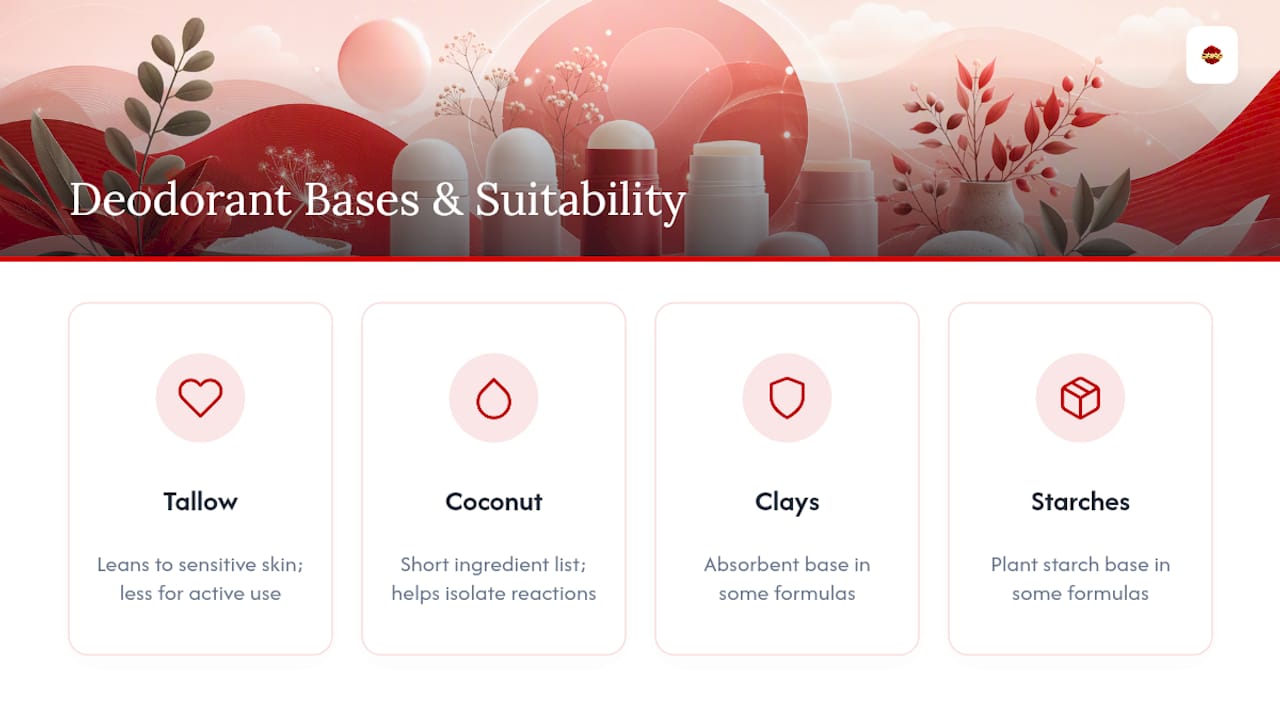
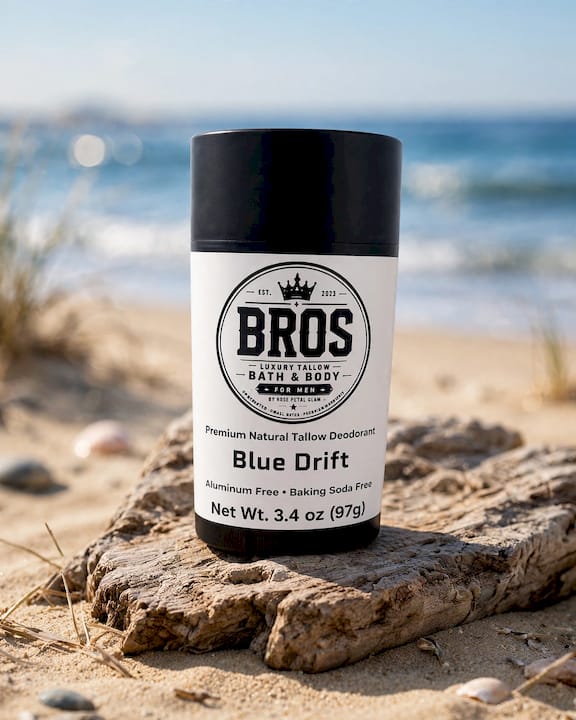
Rose Petal Glam’s stick uses tallow as its moisturizing base rather than a starch or clay alone, which is why it leans toward sensitive-skin buyers rather than the active-day crowd. Dove’s version, confirmed on its own product page, claims up to 72 hours of odor protection and is sold at retailers like Target, so it is the one to grab if you just want something familiar off a shelf. Kopari’s coconut formula, listed on Ulta’s site, keeps its ingredient list short, which matters if you are trying to isolate what your skin reacts to.
The cream and paste formats, like Kinkō’s and Routine’s cream option, tend to sit closer to the skin and can feel tacky for the first minute after application. Sticks glide on drier and are easier to reapply midday without needing your fingers.
Pro Tip: Buy travel-size or single sticks before committing to a full-size tallow or cream deodorant. Underarm skin reacts differently to fatty bases than it does to gel or spray formulas, and a $5 to $8 trial size saves you from a $15 mistake.
Availability splits into two lanes: publisher-direct (Rose Petal Glam ships from its own shop) and retail (Dove, Kopari, and Schmidt’s show up at Target, Ulta, and most drugstore chains). Meow Meow Tweet, Ursa Major, and Kinkō skew toward specialty natural retailers and their own online stores.
How to Choose a Deodorant Without Baking Soda or Aluminum
Reading an ingredient panel matters more than reading a marketing claim. Editorial roundups like Allure’s baking-soda-free guide point out that no single substitute works for every underarm, since tolerance depends on your own skin chemistry and how much you sweat.
Four ingredients show up again and again as sodium bicarbonate replacements:
- Magnesium hydroxide neutralizes odor-causing bacteria without the abrasive pH swing baking soda causes.
- Kaolin clay absorbs moisture gently and is common in formulas, including Rose Petal Glam’s tallow stick, aimed at reactive skin.
- Arrowroot powder absorbs wetness with a texture close to cornstarch, useful in stick and powder-based formulas.
- Zinc ricinoleate binds odor molecules directly rather than masking them, which is why it shows up in formulas marketed for active days.
Watch for red flags on the label, too. Heavy fragrance blends, alcohol denat., and concentrated essential oil mixes can irritate skin that is already sensitized from baking soda. Sodium bicarbonate sometimes hides under synonyms like “bicarbonate of soda,” so check twice if a product claims to be natural without stating “baking soda free” outright.
Pricing tracks format. Stick deodorants from brands like Dove or Schmidt’s typically run $8 to $13. Cream and paste formats, including Credo Beauty’s option, often cost more per ounce because of hands-on application and shorter shelf runs, generally $14 to $20. Tallow-based sticks fall in a similar range and tend to last longer per application because a little goes a long way.
How to Switch to a Baking Soda Free Deodorant Without Irritation
Switching cold turkey is how most people end up disappointed. Give your skin a real transition window instead.
- Patch test first. Apply a small amount to the inside of your forearm and wait 24 to 48 hours before trying it under your arm.
- Start nights-only for 3 to 7 days. Apply before bed so any reaction shows up while you can watch for it, not mid-workday.
- Ramp to daily use gradually. Once nights are clear, move to morning application and track how long odor control actually lasts.
- Monitor odor versus irritation separately. A little odor breakthrough in week one is normal; redness or itching is not.
If irritation shows up, stop use immediately and let the skin calm down for a few days before trying a different period underwear vs. pads comparison for intimate care formula. Persistent redness beyond a week deserves a conversation with a dermatologist rather than another product swap. If odor control feels weak but skin stays calm, the formula is likely fine. Give it another week before judging it a failure.
Why Rose Petal Glam’s Tallow Deodorant Works for Sensitive Skin
Rose Petal Glam built the Halo Vanilla Tallow Deodorant around grass-fed beef tallow and jojoba oil instead of a starch-and-clay base alone, pairing that with kaolin clay for gentle absorption. It is labeled baking-soda-free and aluminum-free, made in small batches in Mount Morris, Michigan, with a light vanilla scent rather than a heavy fragrance load.
- Grass-fed tallow and jojoba oil for skin nourishment alongside odor control
- Kaolin clay in place of sodium bicarbonate for gentler absorption
- Small-batch production with visible ingredient sourcing
- 3.4 oz net weight stick format
A deodorant that only masks odor is doing half the job. Underarm skin gets shaved, sweats daily, and rarely gets the same care as the rest of the face. Tallow-based formulas treat that skin as skin, not just a smell problem.
Patch-test it the same way you would any new formula, then check the Halo Vanilla Tallow Deodorant page for current availability.
What Real Users Report About Baking Soda Free Deodorants
Sensitivity complaints about baking soda deodorants follow a consistent pattern in user reviews and forum posts: a rash or dark, itchy patches appear a few weeks into daily use, often after the skin has already tolerated the product for a while. That delayed reaction is exactly why brands reformulate around magnesium hydroxide, kaolin, or tallow bases instead.
Once users switch, the most common feedback splits into two camps. One group reports that odor control feels weaker for the first week or two, then stabilizes as their skin’s bacterial balance adjusts. The other group notices almost no difference in performance, particularly with formulas that use zinc ricinoleate, which binds odor rather than relying on an alkaline environment the way baking soda does.
Reviewers of cream and paste formats mention needing less product per application than they expected. A pea-sized amount usually covers both underarms, though the tradeoff is a slightly longer absorption time compared to a stick. Stick users, meanwhile, tend to report better convenience for reapplication during the day, especially with tallow-based sticks that glide on without residue once warmed by body heat.
The consistent thread across formats: give any new formula at least two to three weeks before judging it a failure. Odor-control performance during the adjustment period does not always predict how well a formula performs once your skin settles in.
How to Spot Baking Soda on an Ingredient Label
Sodium bicarbonate is the scientific name for baking soda, and it is what you are actually scanning for, not the words “baking soda” alone. Some labels list it plainly; others bury it mid-list under its full chemical name.
Check the ingredient panel for these terms specifically: sodium bicarbonate, bicarbonate of soda, or baking soda listed outright. If none of those appear, look for what replaced it. Magnesium hydroxide, kaolin (or “kaolin clay”), arrowroot powder (sometimes listed as arrowroot starch), and zinc ricinoleate are the four substitutes that show up most often across the brands in this comparison.
Retailer and brand product pages are more reliable than marketing copy for this check. Dove’s own product listing states plainly that its cucumber and green tea formula is free of baking soda, aluminum, parabens, and dyes, which is the level of specificity worth looking for. A front-label claim like “natural” or “gentle” means nothing on its own. Always flip to the full ingredient list before buying, especially if you are shopping for a child’s sensitive skin or your own eczema-prone underarms.
Staying Fresh and Clean While You Transition
Switching formulas is as much about supporting your skin barrier as it is about picking the right deodorant. Wash underarms with a gentle, fragrance-free cleanser during the adjustment period. Harsh soaps combined with a new deodorant formula make it harder to tell which product caused any irritation you notice.
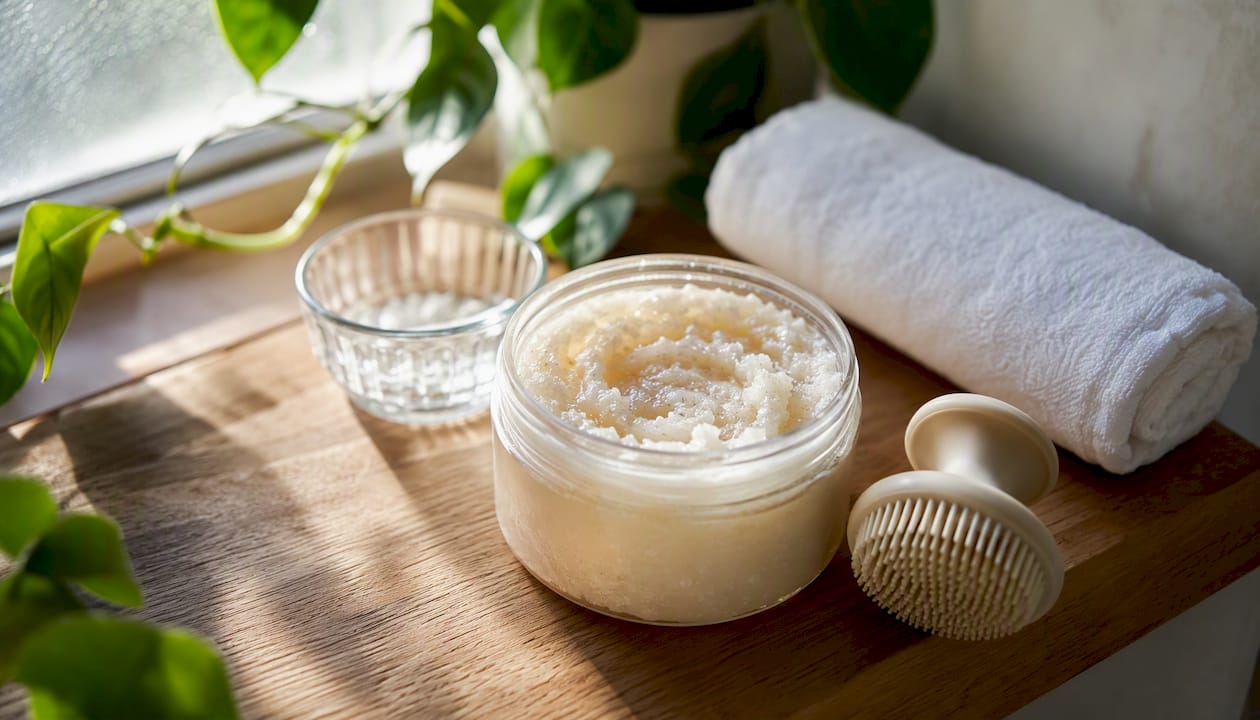
Exfoliate lightly once or twice a week, not daily, to prevent buildup without over-stripping skin that is already adjusting to a new formula. A fragrance-free option like Rose Petal Glam’s Gentle Clean Whipped Tallow Sugar Scrub works well here since it will not introduce a second fragrance variable while you are troubleshooting a new deodorant.
Let deodorant dry fully before dressing, and avoid layering a new formula over leftover residue from your old one for at least a few days. Mixing an old baking-soda formula with a new one muddies your ability to tell which is causing a reaction.
Wash towels and shirts that touched irritated skin more frequently than usual. Residue from an irritating deodorant can linger in fabric and reintroduce the irritant even after you have switched products.
What Actually Matters When You Switch Formulas
Most advice on this topic treats every baking-soda-free ingredient as interchangeable, and that is where the conventional wisdom falls apart. Magnesium hydroxide, kaolin, arrowroot, and zinc ricinoleate do not perform the same job. Magnesium hydroxide adjusts your skin’s surface chemistry to slow bacterial growth. Zinc ricinoleate binds odor molecules directly. Kaolin and arrowroot mainly absorb moisture. Treating them as one category is why so many people give up on natural deodorant after a single bad experience with the wrong substitute.
The bigger issue is timeline expectations. People expect an immediate upgrade and quit after three days when odor control feels inconsistent. That window is normal adjustment, not failure. What the reader should prioritize first is matching the ingredient to the actual problem: irritation calls for a clay or tallow base, while odor breakthrough on active days calls for zinc ricinoleate. Buy the smallest size available and give it two weeks before deciding anything.
A Different Route to Fresher, Calmer Underarms
Drugstore sticks and specialty natural brands cover a lot of ground, but most of them ask you to choose between gentle and effective. Rose Petal Glam built the Halo Vanilla Tallow Deodorant around grass-fed tallow instead of a starch-only base, so it moisturizes reactive skin while it works rather than treating skin care as an afterthought.

Every deodorant, soap, and body butter Rose Petal Glam sells is made in small batches in Mount Morris, Michigan, with ingredients you can actually pronounce, no synthetic fillers standing in for real moisture. If fragrance is part of what triggered your original sensitivity, pair the deodorant with the Gentle Clean Fragrance-Free Tallow Soap to keep every product touching your underarms free of added scent. Patch-test the stick on your forearm first, then visit the Halo Vanilla Tallow Deodorant product page to order your first stick and see how your skin responds over the next two weeks.
Sources
- Best Baking Soda-Free Deodorants for Sensitive Underarm …
- Aluminum Free Deodorant Stick Cucumber & Green Tea | Dove | Dove
- Ulta
FAQ
What deodorants have no baking soda?
Why use a baking soda free deodorant?
Baking soda’s high pH can irritate sensitive underarm skin, causing rashes or dark, itchy patches; swapping to magnesium hydroxide, kaolin, or zinc ricinoleate avoids that reaction while still controlling odor.
Does natural deodorant without baking soda actually work?
Yes, though it often takes two to three weeks for your skin’s bacterial balance to adjust before odor control feels as reliable as a baking-soda formula.
What is the best non-toxic baking soda free deodorant?
For sensitive skin, Rose Petal Glam’s Halo Vanilla Tallow Deodorant pairs kaolin clay with grass-fed tallow; for a widely available drugstore option, Dove’s Aluminum Free Deodorant lists baking soda, aluminum, and parabens as excluded on its own product label.
Recommended
- The Ultimate Guide to Natural Ingredients for Sensitive Skin | Rose Petal Glam Blog
- Gentle Clean - Whipped Tallow Sugar Scrub - Net Wt. 4 oz (Fragrance-Free) | Handmade Sugar Scrub | Rose Petal Glam
- Halo Vanilla Tallow Deodorant Net Wt. 3.4 oz | Handmade Deodorant | Rose Petal Glam
- Sour Watermelon Candy Tallow Deodorant Net Wt. 3.4 oz | Handmade Deodorant | Rose Petal Glam