Rough & Bumpy Skin? When to Exfoliate, When to Moisturize & When to Stop Scrubbing
Published 2026-09-19 by Roseann Zelenka
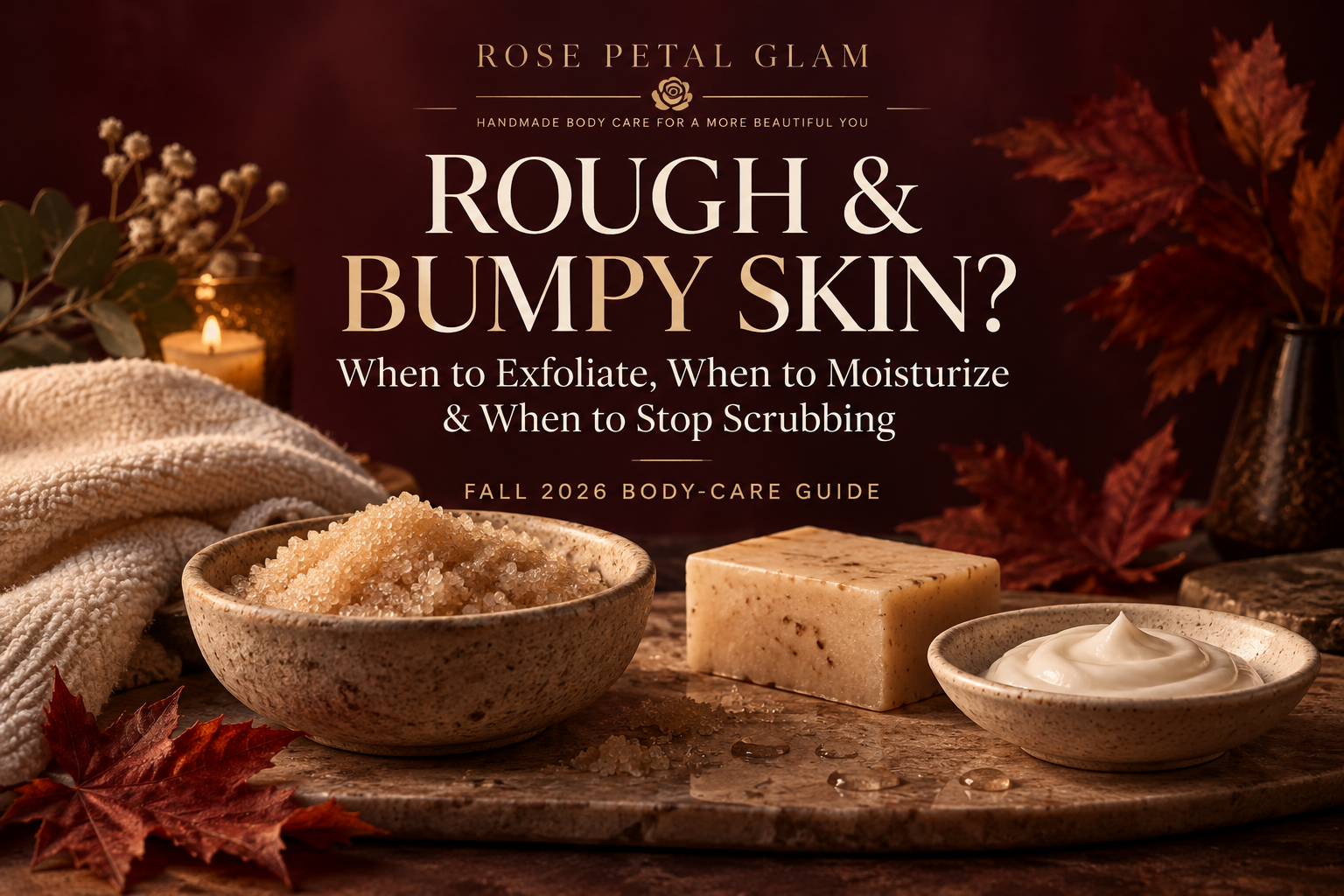
If your arms, legs, elbows or knees feel rough, the obvious solution seems simple: scrub harder.
But rough skin and bumpy skin are not always the same problem—and more exfoliation is not always the answer.
Sometimes skin feels rough because loose surface cells have accumulated.
Sometimes it is simply very dry.
Sometimes tiny bumps around hair follicles may be related to a common condition called keratosis pilaris.
And sometimes the roughness you're trying to scrub away is actually being made worse by too much friction, hot water or an overly aggressive body-care routine.
So before reaching for another exfoliator, it helps to answer a more useful question:
Does your skin need exfoliation, moisture—or a break?
Quick Answer: Should You Exfoliate Rough or Bumpy Skin?
It depends on why the skin feels rough.
Gentle physical exfoliation can help remove loose surface skin cells and make ordinary rough-feeling areas feel smoother. But persistent follicular bumps, inflamed skin, irritation, cracking or a condition such as keratosis pilaris should not simply be scrubbed harder.
Moisturizing is particularly important when dryness is contributing to rough texture.
| What You Notice | What May Help | What to Avoid |
|---|---|---|
| Ordinary dry, flaky surface texture | Gentle exfoliation + moisturizer | Aggressive scrubbing |
| Skin feels tight after showering | Gentler bathing + moisturizer | More cleansing and hotter water |
| Small persistent follicular bumps | Gentle care; consider dermatologist-recommended KP approaches | Trying to physically scrape bumps away |
| Red, burning or irritated skin | Stop exfoliating and simplify the routine | Adding more friction or new actives |
| Rough elbows, knees or heels | Appropriate exfoliation + richer moisturizer | Over-scrubbing until skin becomes tender |
Why Is Rough Body Skin Getting So Much Attention?
Body care has become considerably more sophisticated.
Consumers who once focused almost entirely on facial skincare are now paying closer attention to texture, dryness and appearance below the neck.
That means more interest in exfoliating body treatments, scrubs, moisturizers and routines targeting rough-feeling skin.
But there's a downside.
When every texture concern becomes something to “fix,” it's easy to assume the solution is more products and stronger exfoliation.
Skin doesn't always agree.
What Causes Rough-Feeling Skin?
There isn't one universal cause.
Common possibilities include:
- Dry skin
- Accumulated loose surface skin cells
- Environmental dryness
- Friction
- Over-cleansing
- Over-exfoliation
- Keratosis pilaris
- Other skin conditions
That's why texture alone isn't enough to diagnose what's happening.
Why Fall Can Make Rough Skin More Noticeable
September marks the beginning of an important environmental shift in many parts of the United States—including Michigan.
Humidity starts changing.
Temperatures fall.
Eventually indoor heating begins running.
Skin that felt comfortable during humid summer weather may start feeling tighter or rougher.
Mayo Clinic specifically notes that keratosis pilaris may worsen when seasonal changes create low humidity and dry skin.
Even people without KP can notice increased dryness as weather changes.
What Is Keratosis Pilaris?
Keratosis pilaris, often called “chicken skin,” is a common harmless skin condition that creates small rough bumps, frequently on the upper arms, thighs, cheeks or buttocks.
According to Mayo Clinic, it occurs when keratin forms plugs that block hair-follicle openings.
The bumps are typically painless and often resemble goosebumps or a sandpaper-like texture.
Dry skin can make the condition more noticeable.
Is Every Bump Keratosis Pilaris?
No.
Bumps can have many causes.
Body acne, folliculitis, irritation, ingrown hairs, allergic reactions and other skin conditions can create bumps that may look similar to an untrained eye.
A blog article or product description cannot diagnose them.
If bumps are painful, intensely itchy, spreading, inflamed, producing discharge, suddenly appearing or otherwise concerning, seek appropriate medical advice rather than assuming they are KP.
Can a Sugar Scrub Treat Keratosis Pilaris?
Rose Petal Glam does not claim that a cosmetic sugar scrub treats or cures keratosis pilaris.
This distinction matters.
The American Academy of Dermatology notes that dermatologists may recommend exfoliation as part of managing KP, but treatment often involves specific ingredients such as lactic acid, glycolic acid, salicylic acid, urea or retinoids depending on the individual.
A physical sugar scrub is not equivalent to those treatments.
And scrubbing aggressively can irritate skin.
Physical vs. Chemical Exfoliation
| Type | How It Works | Examples |
|---|---|---|
| Physical exfoliation | Uses mechanical friction to remove loose surface cells | Sugar scrub, washcloth, some exfoliating tools |
| Chemical exfoliation | Uses ingredients that help loosen bonds between surface cells | Lactic acid, glycolic acid, salicylic acid |
Neither category should automatically be considered “better.”
The appropriate choice depends on the skin concern, formulation, frequency and individual tolerance.
What Does a Sugar Scrub Actually Do?
A sugar scrub is a physical exfoliant.
The sugar crystals create gentle friction as they're massaged across damp skin, helping remove loose surface cells and leaving ordinary rough-feeling areas feeling smoother.
Rose Petal Glam's Whipped Tallow Sugar Scrubs combine sugar with grass-fed beef tallow and jojoba oil.
They're designed as cosmetic body exfoliators—not medical treatments.
When Can a Body Scrub Make Sense?
A scrub may fit your routine when you're dealing with ordinary rough or dull-feeling body skin and your skin tolerates physical exfoliation comfortably.
Common areas include:
- Elbows
- Knees
- Legs
- Arms
- Feet
The key word is gentle.
You should not need to grind the scrub into your skin to make it work.
When Should You Stop Scrubbing?
Stop exfoliating if you notice:
- Burning
- Persistent redness
- Rawness
- Tenderness
- Cracking
- Worsening irritation
- Skin becoming increasingly uncomfortable
Those are not signs that you need to “push through.”
They're signs that the routine needs to change.
Can You Exfoliate Too Much?
Yes.
Over-exfoliation can leave skin irritated and uncomfortable.
The risk increases when multiple forms of exfoliation are stacked together—for example, using an exfoliating acid, rough washcloth and body scrub in the same routine.
More exfoliation does not equal smoother skin indefinitely.
Why Moisturizing Matters
Sometimes the answer to rough-feeling skin isn't removing more.
It's adding moisture protection.
The American Academy of Dermatology recommends applying moisturizer after bathing while skin is still slightly damp when managing dry skin.
That timing helps moisturizer trap water that remains on the skin's surface.
What Does Body Butter Do?
Body butter is a leave-on moisturizer—not an exfoliator.
Rose Petal Glam's Whipped Tallow Body Butter is a water-free moisturizer built around grass-fed beef tallow and other ingredients according to the individual formula.
It is intended to help leave body skin feeling soft, conditioned and moisturized.
It does not remove bumps or diagnose skin conditions.
Should You Apply Body Butter to Damp Skin?
Applying an oil-rich or water-free moisturizer after bathing while the skin still retains a little water can be useful because the moisturizer can help reduce that water's escape from the skin surface.
A practical routine is:
- Shower with warm—not excessively hot—water.
- Gently pat your skin with a towel rather than rubbing aggressively.
- Leave the skin slightly damp.
- Apply a small amount of moisturizer.
- Add more only where needed.
Exfoliate First or Moisturize First?
If you're using both during the same body-care session, exfoliation normally happens during the shower and leave-on moisturizing happens afterward.
A simple routine could look like:
Cleanse → gently exfoliate if needed → rinse → pat dry → moisturize.
But exfoliation does not need to happen every time you shower.
Do You Need to Exfoliate Every Day?
No.
Daily physical exfoliation is unnecessary for many people and may be too much for some skin.
Frequency should depend on:
- Your skin
- The product
- How much pressure you use
- Whether you use other exfoliating products
- How your skin responds afterward
Follow the directions for the specific product you're using and reduce frequency if your skin becomes irritated.
Does Hot Water Make Dryness Worse?
It can.
Mayo Clinic recommends limiting long baths or showers and using warm rather than hot water when managing keratosis pilaris because long, hot bathing can remove oils from the skin.
The same practical lesson is useful for anyone whose skin feels increasingly dry after showering.
What About Soap?
Soap's primary job is cleansing.
Rose Petal Glam makes small-batch cold-process tallow soap that is cured before sale.
But even a handcrafted cleanser is still a cleanser.
If your skin feels tight or uncomfortable after bathing, pay attention to the entire routine:
- Water temperature
- Shower length
- How frequently you're cleansing
- How much friction you're using
- Whether you're exfoliating
- Whether you moisturize afterward
What If Fragrance Bothers Your Skin?
If you know fragrance causes irritation for you, adding a heavily scented routine simply because it smells good doesn't make sense.
The American Academy of Dermatology commonly recommends fragrance-free products for people dealing with sensitive or irritated skin.
Rose Petal Glam's Gentle Clean fragrance-free collection exists for customers who prefer body care without added fragrance.
Fragrance-Free vs. Unscented: Are They the Same?
Not necessarily.
A product labeled “unscented” may still contain ingredients used to mask another smell.
If avoiding fragrance is important to you, look specifically for fragrance-free labeling.
Rough Skin Decision Guide
| If Your Skin... | Consider... | Don't Automatically... |
|---|---|---|
| Feels dry and tight | Gentler bathing + moisturizer | Scrub harder |
| Has ordinary flaky surface texture | Gentle occasional exfoliation + moisturizer | Exfoliate several times a day |
| Has persistent tiny follicular bumps | Learning whether KP or another condition may be involved | Assume sugar scrub will cure it |
| Burns or looks irritated | Stop exfoliating and simplify | Add another exfoliant |
| Has rough elbows or knees | Gentle exfoliation + richer moisturizer | Scrub until tender |
| Has unexplained painful or spreading bumps | Appropriate medical evaluation | Self-diagnose from social media |
The 3-Part Rough-Skin Routine
1. Cleanse Without Turning the Shower Into a Scrubbing Contest
Use an appropriate cleanser and comfortable water temperature.
Longer and hotter does not automatically mean cleaner.
2. Exfoliate Only When Exfoliation Makes Sense
If ordinary body skin tolerates physical exfoliation, a whipped sugar scrub can be incorporated according to its directions.
Use light pressure.
Your skin should not hurt afterward.
3. Moisturize
After bathing, apply a leave-on moisturizer where your skin needs it.
Rose Petal Glam's whipped tallow body butter provides a water-free option for customers who enjoy richer body moisturizers.
Where Rose Petal Glam Fits—and Where It Doesn't
Good body-care education means being clear about what products can and cannot do.
| Rose Petal Glam Product | What It Is For | What We Don't Claim |
|---|---|---|
| Cold-process soap | Cleansing | Treating a skin disease |
| Whipped sugar scrub | Physical body exfoliation | Curing keratosis pilaris |
| Whipped body butter | Moisturizing and conditioning body skin | Treating eczema or another medical condition |
| Tallow deodorant | Helping manage body odor | Stopping perspiration like an antiperspirant |
| Premium Body Spray | Fragrance | Skin treatment or moisturization |
This distinction isn't a weakness.
It's what responsible body-care information should look like.
Does Rose Petal Glam Premium Body Spray Contain Tallow?
No.
Rose Petal Glam's soap, body butter, sugar scrub and deodorant categories use grass-fed beef tallow.
Premium Body Spray is a fragrance product and does not contain grass-fed beef tallow.
When Should Rough Skin Be Checked by a Professional?
Consider speaking with an appropriate healthcare professional if your skin problem is persistent, painful, severely itchy, inflamed, bleeding, infected-looking, rapidly changing or not improving with reasonable self-care.
It's also worth getting professional guidance before trying to treat what you believe is keratosis pilaris if you aren't sure that's actually what the bumps are.
The Biggest Mistake: Treating Every Texture Like Something to Scrub Off
Social media makes skin texture look abnormal.
Real skin has texture.
Hair follicles exist.
Goosebumps happen.
Elbows aren't supposed to look airbrushed.
The goal of body care shouldn't be to sand your skin until it looks filtered.
A better goal is skin that feels comfortable and cared for.
The Bottom Line
Rough or bumpy skin doesn't automatically need more exfoliation.
Ordinary surface roughness may respond well to gentle physical exfoliation.
Dry skin often needs moisturization and gentler bathing habits.
Persistent follicular bumps may have a cause that a sugar scrub cannot treat.
And irritated skin often needs less—not more.
The simplest rule is also the most useful:
Exfoliate gently when it makes sense. Moisturize when your skin needs moisture. Stop when your skin tells you the routine is becoming too much.
Explore Rose Petal Glam's handcrafted body-care collection to build a routine around cleansing, exfoliating, moisturizing and fragrance products that actually fit your needs.
Smell Good. Feel Confident.
Frequently Asked Questions
Should I exfoliate rough skin?
Gentle exfoliation can help ordinary rough-feeling body skin by removing loose surface cells. It should not be painful or aggressive, and not every type of roughness requires exfoliation.
Should I exfoliate bumpy skin?
It depends on the cause. Persistent bumps may be related to keratosis pilaris, folliculitis, acne, irritation or another issue. Avoid trying to scrub unexplained bumps away aggressively.
What is keratosis pilaris?
Keratosis pilaris is a common harmless condition in which keratin plugs hair-follicle openings, creating small rough bumps commonly found on the upper arms, thighs, cheeks or buttocks.
Can sugar scrub cure keratosis pilaris?
No. Rose Petal Glam does not claim its cosmetic sugar scrubs cure or treat keratosis pilaris.
Is physical exfoliation the same as chemical exfoliation?
No. Physical exfoliation uses friction, while chemical exfoliants use ingredients such as lactic, glycolic or salicylic acid to help loosen surface cells.
Can you exfoliate too much?
Yes. Excessive friction or overly frequent exfoliation can cause redness, tenderness, burning and irritation.
Should I moisturize after exfoliating?
Moisturizing after bathing can help manage dryness. The American Academy of Dermatology recommends applying moisturizer while skin is still slightly damp when dealing with dry skin.
Does Rose Petal Glam body butter contain tallow?
Yes. Rose Petal Glam's whipped body butter is a tallow-based body moisturizer. Check the individual product page for its exact ingredient list.
Does Rose Petal Glam body spray contain tallow?
No. Premium Body Spray is a fragrance product and does not contain grass-fed beef tallow.
What should I use if I avoid fragrance?
Rose Petal Glam offers its Gentle Clean fragrance-free collection for customers who prefer body care without added fragrance.
Sources & Further Reading
- Allure — Rough & Bumpy Skin Body-Care Guide, September 19, 2026
- American Academy of Dermatology — Keratosis Pilaris: Diagnosis and Treatment
- American Academy of Dermatology — Dermatologists' Tips for Relieving Dry Skin
- Mayo Clinic — Keratosis Pilaris: Diagnosis and Treatment
- Mayo Clinic — Keratosis Pilaris: Symptoms and Causes
This article provides general body-care education and is not medical advice. Persistent or concerning skin changes should be evaluated by an appropriate healthcare professional.