Weekly Sugar Scrub and Tallow Butter Smooths Keratosis Pilaris Bumps
Published 2026-08-31 by Rose Petal Glam
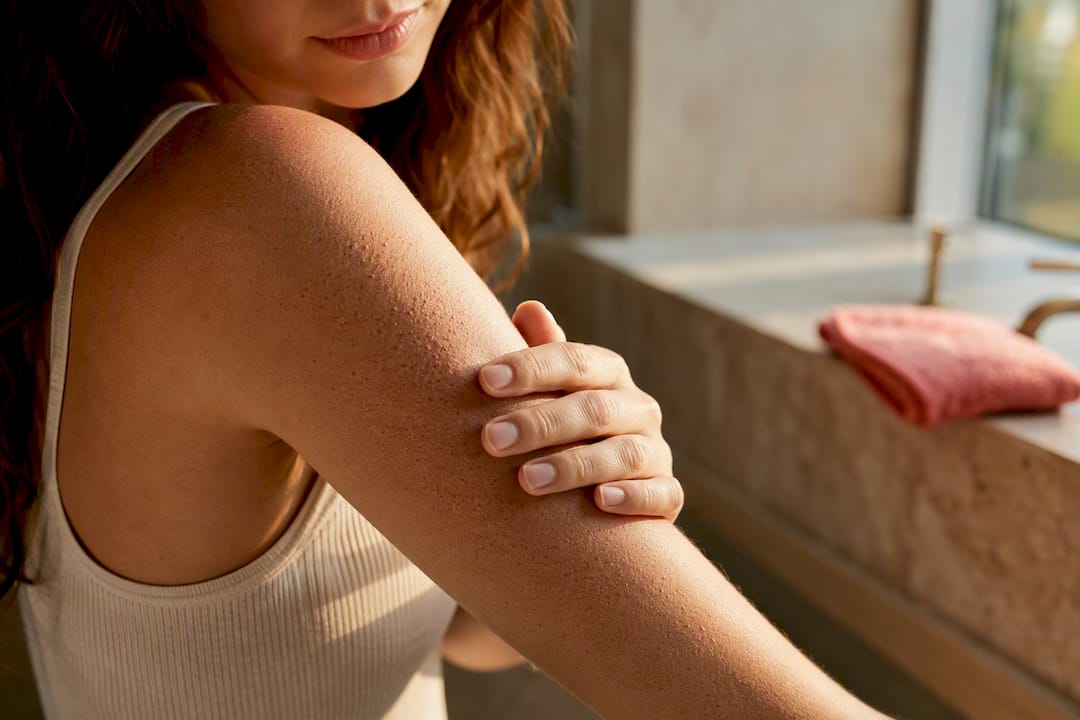
A keratosis pilaris scrub can soften rough patches and make bumps less visible within a few weeks of gentle use, but it will not cure the condition. The American Academy of Dermatology frames keratosis pilaris (KP) as something you manage, not something you eliminate. The safest path combines light, limited exfoliation with a heavy dose of barrier-repairing moisture right after. If your skin is inflamed, cracked, or not improving after weeks of gentle care, see a dermatologist rather than scrubbing harder.
TL;DR:
- Gentle mechanical exfoliation with a sugar scrub can improve skin texture but cannot eliminate keratosis pilaris, which is caused by keratin buildup inside follicles.
- Use a small amount of scrub on damp skin, moving in light circles for no more than 90 seconds, and always moisturize immediately afterward to prevent irritation.
- Chemical exfoliants like lactic or salicylic acid target the keratin plug directly and are often more effective for stubborn cases or sensitive skin types at risk of hyperpigmentation.
- Incorporate exfoliation only a few times per week and maintain daily moisturizing and sun protection to sustain long-term improvement.
- Seek dermatological advice if skin becomes inflamed, discolored, or shows no improvement after consistent gentle care.
Table of Contents
- What Causes Keratosis Pilaris and Why Scrubs Only Fix the Surface
- Who Should Use a Physical Scrub for KP (and Who Shouldn’t)
- How to Use a Sugar Scrub for Keratosis Pilaris Safely
- Physical Scrubs vs. Chemical Exfoliants: Which Works Better for KP?
- Building a Weekly Routine That Actually Keeps KP Under Control
- How Rose Petal Glam’s Scrubs and Tallow Butters Fit This Routine
- An Honest Note on Keeping Expectations Realistic
- Shop the Routine: Scrub, Moisturize, Repeat
- Sources
- FAQ
What Causes Keratosis Pilaris and Why Scrubs Only Fix the Surface
Those sandpaper-like bumps on the backs of your arms or thighs come from keratin, a protein your skin makes naturally, clogging up inside hair follicles. It’s mostly genetic, often shows up in childhood or the teen years, and tends to stick around for life, sometimes fading with age and sometimes not.
A physical scrub works on the surface only. It sloughs off dead skin cells sitting on top of the plug, which is why bumps look and feel smoother right after you use one. What it cannot do is stop your follicles from producing keratin in the first place. That’s the piece people misunderstand most: you’re managing a texture problem that keeps regenerating, not removing the root cause.
This is why Harvard Health describes consistent exfoliation, done a few times per week, as something that reduces visibility rather than resolves KP outright. Think of it less like fixing a leak and more like sweeping a floor that keeps collecting dust. Skip the sweeping, and the dust comes back.
Who Should Use a Physical Scrub for KP (and Who Shouldn’t)
A gentle sugar or physical scrub tends to work best on mild to moderate KP that isn’t red, itchy, or actively flaring. If your skin is generally resilient and tolerates mechanical exfoliation without protest, this is a reasonable place to start.
It’s a different story if your bumps are inflamed, if you have eczema-prone skin nearby, or if you’ve dealt with post-inflammatory hyperpigmentation (PIH) before. Clinicians note that darker skin tones carry a higher risk of PIH from over-exfoliation, which is one reason chemical keratolytics or milder polishing options often come recommended first in those cases.
Watch for these warning signs that a scrub is doing more harm than good:
- Redness or a burning sensation during or after use
- Bumps that look worse or more numerous a few days later
- Darkening or discoloration in the areas you’ve been scrubbing
- Skin that feels raw, tight, or unusually sensitive to touch
If any of that shows up, stop and switch to a chemical exfoliant or talk to a dermatologist.
How to Use a Sugar Scrub for Keratosis Pilaris Safely
The technique matters more than the product. Here’s how to use a sugar scrub without pushing your skin past its limit.
- Start on warm, damp skin. A few minutes into a warm shower softens the skin and lets the granules glide instead of drag.
- Use a small amount. A dollop about the size of a quarter is plenty for one forearm or thigh.
- Move in gentle circles for 30 to 90 seconds per area. No scrubbing back and forth like you’re cleaning a pan. Light pressure, small circles, done.
- Rinse thoroughly and pat, don’t rub, dry.
- Moisturize immediately. Apply a rich body butter or cream with both humectants and occlusives while skin is still slightly damp, which locks moisture into the freshly exfoliated surface.
On frequency, start once a week. If your skin tolerates it with no redness or tightness, you can gradually increase frequency while monitoring skin response, which lines up with what Healthline recommends as the outer limit before overuse starts causing dryness and irritation.
Skip loofahs, abrasive mitts, or anything with sharp, uneven particles. Sugar dissolves as it warms against skin, which makes it gentler than coarser scrubs that can create micro-tears. Always patch-test a new scrub on a small area of skin and wait 24 hours before using it more broadly, and never scrub over broken or actively inflamed skin.
Pro Tip: Apply your moisturizer within two minutes of stepping out of the shower. RealSimple’s guidance on sugar scrub technique notes that pairing a dissolvable exfoliant with an occlusive moisturizer right after gives you both the immediate smoothing and the lasting hydration KP-prone skin needs.
Physical Scrubs vs. Chemical Exfoliants: Which Works Better for KP?
Scrubs remove what’s already sitting on the surface. Chemical keratolytics, lactic acid, salicylic acid, and urea among them, work differently: they loosen the bond between dead skin cells and help break down the keratin plug itself, which is often why they deliver more consistent results for stubborn KP than mechanical exfoliation alone.
Here’s how the two approaches stack up:
- Physical scrubs: Immediate texture improvement, low cost, easy to layer with moisturizer, but limited effect on the keratin plug and higher irritation risk with overuse.
- Chemical keratolytics: Target the plug directly, generally gentler on sensitive or acne-prone skin, but can cause dryness or stinging if introduced too fast.
- Combination approach: Effective for some, but never use both in the same routine on the same day. Alternate them and watch closely for irritation.
If you have sensitive skin, a darker skin tone at higher risk for PIH, or KP that hasn’t budged after weeks of gentle scrubbing, a chemical exfoliant is worth trying next. For anything beyond over-the-counter strength, a dermatologist can prescribe higher-concentration keratolytics or discuss options like laser therapy for stubborn cases.
Building a Weekly Routine That Actually Keeps KP Under Control
A workable KP routine looks something like this: exfoliate a few times per week depending on how your skin responds, moisturize every single day (not just on scrub days), and apply sunscreen on any treated skin that sees sun exposure, since freshly exfoliated skin is more reactive to UV.
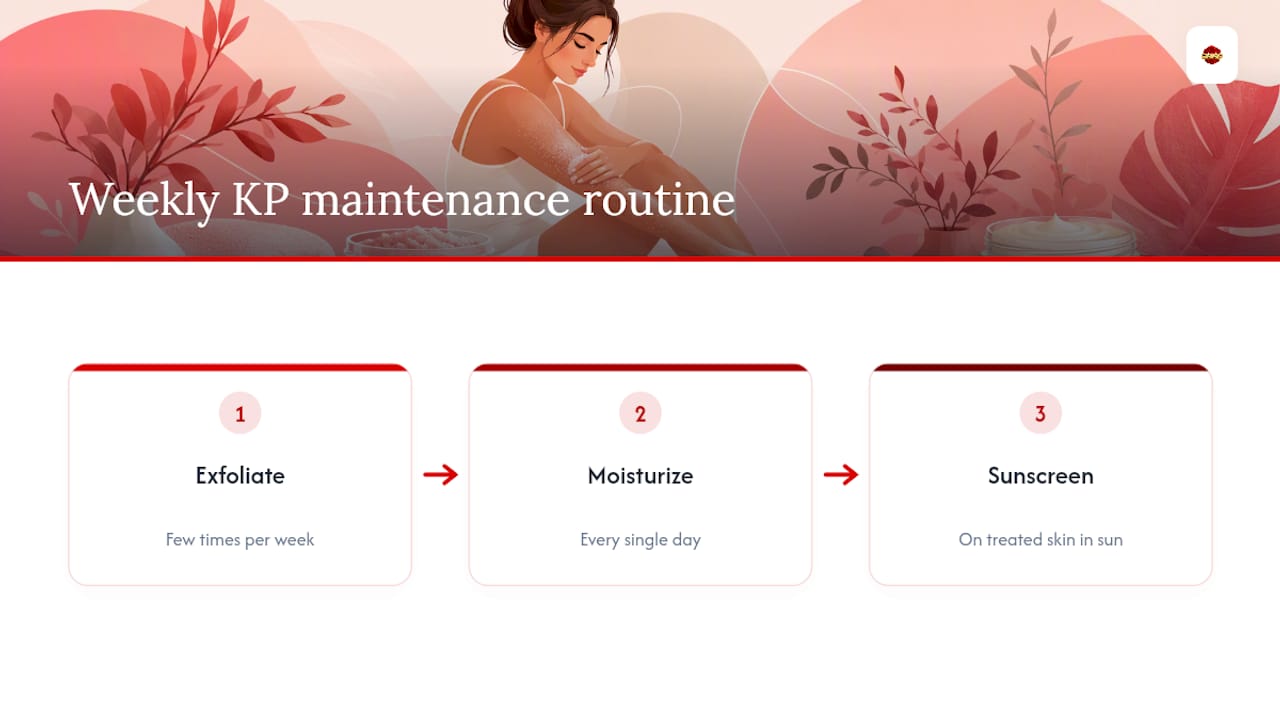
The bumps come back if you stop. That’s not a failure of the product, it’s how the condition works. Harvard Health points out that many people quit their routine right after seeing improvement, which is exactly when regression starts. Maintenance beats any aggressive short-term push, every time.
See a dermatologist if KP persists or worsens despite weeks of consistent gentle care, if discoloration is spreading, or if the cosmetic impact is affecting your confidence more than home care can fix. That’s not a sign you did something wrong. It’s a sign you’ve hit the ceiling of what a scrub and moisturizer combo can offer on its own.
How Rose Petal Glam’s Scrubs and Tallow Butters Fit This Routine
Everything in this article points toward one combination: gentle mechanical exfoliation followed immediately by rich, barrier-repairing hydration. That’s exactly the gap Rose Petal Glam’s handcrafted sugar scrubs were built to fill, made in small batches with grass-fed tallow and jojoba oil instead of synthetic fillers that leave skin feeling stripped.
For KP-prone skin, start with a fragrance-free formula once a week on damp skin, then follow immediately with a tallow-based body butter while skin is still slightly damp. The tallow’s fatty acid profile is close to what your skin already produces, which makes it an effective occlusive for locking in moisture after exfoliation.
Patch-test any new scrub first, and back off frequency the moment you notice redness or tightness. Your skin will tell you what it can handle.
An Honest Note on Keeping Expectations Realistic
Managing keratosis pilaris is a marathon, not a sprint. The people who see the best long-term results aren’t the ones scrubbing aggressively twice a day. They’re the ones who found a gentle rhythm and stuck with it for months, not weeks.
Small changes matter more than dramatic ones here. Swapping a harsh loofah for a dissolvable sugar scrub, or actually moisturizing every day instead of just after showers, does more for your skin barrier than any single “miracle” product ever will. And if home care genuinely isn’t moving the needle, a dermatologist has tools you don’t.
— Brent
Shop the Routine: Scrub, Moisturize, Repeat
Rose Petal Glam built its scrub and body butter line around exactly the routine this article describes, so you’re not guessing which products actually pair well together. Unlike mass-market lines packed with synthetic fillers, these are handcrafted in small batches in Mount Morris, Michigan, with ingredients your skin recognizes.
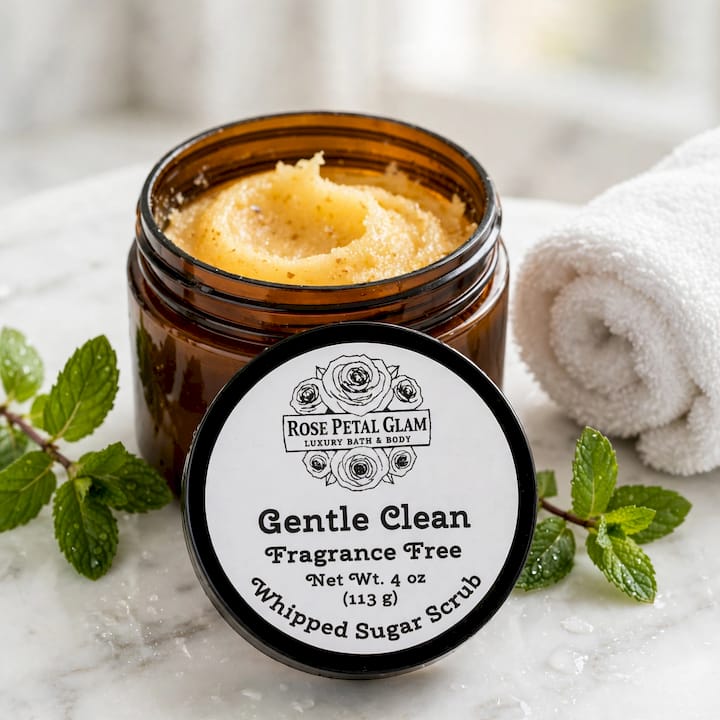
Start with the Gentle Clean Whipped Tallow Sugar Scrub, a fragrance-free option built for sensitive, KP-prone skin. Use it once a week on damp skin with light, circular pressure, then move straight into a whipped tallow body butter while your skin is still damp to seal in hydration. If your skin runs on the reactive side, the Gentle Clean Fragrance-Free Tallow Soap makes a solid daily cleanser between scrub days, keeping your barrier intact instead of stripped.
Browse the full tallow skincare collection to build out a routine suited to your skin, and place your order today to start the gentle, consistent care your skin actually responds to.
This article is general information, not a substitute for advice from a qualified doctor. Consult a qualified healthcare professional about your own circumstances before acting on anything here.
Sources
- Keratosis pilaris treatment and self-care for this common skin condition — Harvard Health
- Keratosis pilaris: Self-care — American Academy of Dermatology (AAD)
- How to Use a Sugar Scrub the Right Way for Softer, Smoother Skin — RealSimple
- Benefits of body scrubs — Healthline
FAQ
What is the best scrub for keratosis pilaris?
The best scrub for KP is a gentle, dissolvable one like a sugar scrub used on damp skin, since sugar breaks down as it warms and lowers the risk of micro-tears compared to coarser abrasives.
Can you scrub off keratosis pilaris?
No. You can reduce the visibility of bumps through gentle, consistent exfoliation, but keratosis pilaris comes from keratin production inside the follicle, which a scrub cannot change permanently.
How do people typically manage keratosis pilaris day to day?
Most effective routines combine limited, gentle exfoliation (one to three times weekly) with daily moisturizing using rich, occlusive creams or body butters to repair the skin barrier between sessions.
Does exfoliation remove keratosis pilaris?
Exfoliation smooths texture and clears surface buildup temporarily, but it does not remove KP at the source, which is why dermatologists frame it as ongoing maintenance rather than a one-time fix.