How to Use Body Butter for Soft, Hydrated Skin
Published 2026-08-14 by Rose Petal Glam
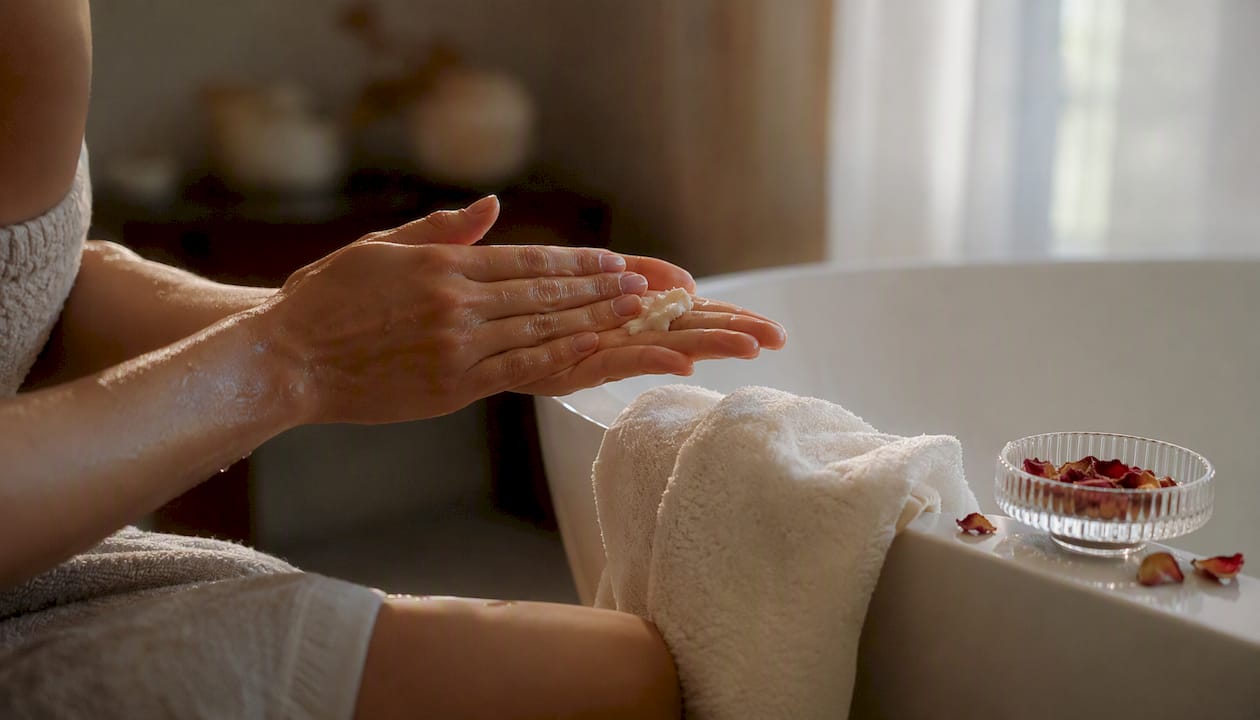
Apply body butter to warm, slightly damp skin right after your shower, working a small amount between your palms before massaging it into dry-prone areas. That single habit determines whether the product sinks in as rich hydration or sits on top as a greasy film.
A few rules make the difference:
- Timing: apply within a few minutes of stepping out of the shower, while skin is still warm and holds moisture.
- Amount: start with a dime-sized scoop per limb. You can always add more.
- Technique: warm the butter between your hands until it softens, then massage it in with circular strokes.
- Exception one: for cracked heels or rough elbows, layer on a thicker coat overnight, and cover with socks or cotton gloves.
- Exception two: if you’re acne-prone through the chest or back, skip heavy butters there and stick to a lighter lotion instead.
Key Takeaways
The most effective way to use body butter is applying a small, warmed amount to damp skin right after showering, then targeting dry zones with a heavier layer as needed.
| Point | Details |
|---|---|
| Apply in the golden window | Use body butter within minutes of finishing your shower while skin is still damp. |
| Warm before applying | Rub product between palms until it softens for smoother, less greasy coverage. |
| Start small | A dime-sized amount per limb is enough; add more only if needed. |
| Target overnight treatments | Use a thicker layer on feet or elbows overnight, covered with socks or gloves. |
| Match ingredients to skin | Rose Petal Glam’s tallow and jojoba blends suit dry to normal skin, with a fragrance-free option for sensitive types. |
Table of Contents
- How to Use Body Butter: What Makes It Different From Lotion
- When to Use Body Butter for the Best Results
- Steps to Apply Body Butter the Right Way
- [Fixing the Most Common Body Butter Mistakes often benefits from consulting a professional for persistent or severe skin texture issues, as described in Skin Texture Issues Treatment — Smooth, Refined Skin.](#fixing-the-most-common-body-butter-mistakes-often-benefits-from-consulting-a-professional-for-persistent-or-severe-skin-texture-issues-as-described-in-skin-texture-issues-treatment-smooth-refined-skinhttpsunitybymdcomconcernsskin-texture)
- Choosing Body Butter Ingredients for Your Skin Type
- The Science Behind Why Body Butter Works
- A Maker’s Take on Getting the Most From Body Butter
- Try Rose Petal Glam’s Whipped Body Butter Collection
- Sources
- FAQ
How to Use Body Butter: What Makes It Different From Lotion
Body butter is an anhydrous, oil-heavy product built to seal moisture in, not to deliver it through water. Lotion is mostly water with a smaller percentage of oil, so it spreads thin, absorbs fast, and needs reapplying often. Body butter works the opposite way. It’s mostly fat, usually a blend of shea, cocoa, or whipped tallow with lighter carrier oils like jojoba, and it acts as an occlusive layer that traps hydration already in your skin.
That concentration is exactly why technique matters more with butter than with lotion. Slather on too much and it sits on the surface, feeling heavy and slow to absorb. Use the right amount on the right skin and it melts in, leaving a soft finish instead of a slick one.
Butter and lotion solve different problems. Lotion is for quick, everyday hydration you barely think about. Butter is for skin that’s already dry, cracked, or exposed to harsh weather and needs a thicker seal to recover.
Think of lotion as a daily maintenance coat and butter as the intensive repair layer you reach for when your skin actually needs it.
When to Use Body Butter for the Best Results
The best window is immediately after a shower, while your skin is warm and still holds a layer of water. Applying to slightly damp skin, rather than bone dry skin, helps the product spread more evenly and absorb without leaving heavy residue. Some guides refer to this as the “golden window” for moisturizing, and it’s a real pattern, not marketing language. Warm, damp skin accepts oil-based products far better than cold, fully dry skin does.
Morning and evening call for different amounts. In the morning, most people do better with a lighter layer focused on elbows, knees, and shins so clothes don’t stick. At night, you can afford to go heavier since you’re not getting dressed afterward, and many people find nightly application in winter keeps skin from tightening up by morning.
Season changes the math too:
- Cold, dry months: apply regularly, as indoor heating and cold air both pull moisture out of skin.
- Humid or summer conditions: cut back to targeted spots like elbows and heels, since full-body application in heat often feels sticky and unnecessary.
- Transitional seasons: watch your skin, not the calendar. Flaking or tightness is the cue to increase frequency.
| Point | Details |
|---|---|
| Golden window | Apply within minutes of finishing your shower, while skin is warm and damp. |
| Winter frequency | Daily, sometimes twice, since indoor heat and cold air both dry skin out. |
| Summer frequency | Target dry spots only; full coverage often feels heavy in heat. |
| Evening advantage | Heavier layers at night absorb without interfering with clothing. |
Steps to Apply Body Butter the Right Way
Step 1: Start with clean, towel-dried skin. Pat yourself dry rather than rubbing, and leave a slight bit of dampness rather than drying completely. If you have flaky patches on elbows or knees, a quick gentle exfoliation before this step helps the butter absorb instead of sitting on dead skin.
Step 2: Scoop a small amount and warm it. Take a small portion per limb and rub it between your palms until it softens and becomes easier to apply. This single step is the biggest factor separating a smooth application from a greasy one, since warming the product before contact improves how evenly it spreads.
Step 3: Apply with broad strokes, then target trouble spots. Cover your arms and legs with long, even motions first. Then go back over elbows, knees, and heels with small circular massage motions, since these areas hold more dead skin and need more product contact.
Step 4: Let it absorb before dressing. Give it a minute or two, or throw on a robe if you’re short on time. For feet and hands specifically, a heavier overnight layer under socks or cotton gloves turns dry, cracked skin into a genuine overnight treatment.
Pro Tip: Keep your starting amount to a pea size for hands and a dime size for larger areas like legs. It’s far easier to add a second pass than to fix an oily film from overapplying the first time.
Fixing the Most Common Body Butter Mistakes often benefits from consulting a professional for persistent or severe skin texture issues, as described in Skin Texture Issues Treatment — Smooth, Refined Skin.
Greasiness is the number one complaint, and it almost always traces back to one of three habits: applying to fully dry skin, using too much product, or skipping the warming step. Fix those three and most of the slick, heavy feeling disappears.
- Apply to damp, not soaked or bone dry, skin for the best absorption.
- Use less than you think you need. You can layer again in a few minutes.
- Warm the product first instead of scooping it straight from a cold jar onto skin.
- Target dry zones rather than coating your entire body in a thick layer.
Patch test any new scented or richly formulated butter on your inner forearm and wait 24 hours before applying it broadly, especially if you have sensitive skin or a history of reactions to fragrance. If redness, itching, or bumps show up, stop using it and switch to a fragrance-free formula.
Layering order matters if you use serums or facial-style oils on your body. Apply thinner, water-based products like serums first, let them absorb for a minute, then seal everything in with body butter on top. Doing it backward blocks the serum from penetrating at all. If you’re prone to breakouts on your chest or back, skip heavy butter there entirely and reserve it for arms, legs, and feet where clogged pores aren’t a concern.
Pro Tip: If you overapply, don’t wash it off. Blot the excess with a paper towel and gently rub in what’s left. You’ll still get the hydration without the shine.
Choosing Body Butter Ingredients for Your Skin Type
Not every formula suits every skin type, and reading the ingredient list tells you more than any marketing claim on the jar. Shea and cocoa butter are the heaviest, best suited for very dry or rough skin. Mango butter and whipped tallow tend to feel a bit lighter while still delivering strong occlusive benefits. Carrier oils like jojoba mimic skin’s natural sebum, which is part of why they absorb without feeling waxy, while coconut and olive oil add extra richness for severely dry patches.
| Skin Type | Best Ingredients | Why It Works |
|---|---|---|
| Very dry or rough | Shea butter, cocoa butter, tallow | High fat content forms a strong seal against water loss. |
| Sensitive | Fragrance-free formulas, jojoba oil | Fewer irritants; jojoba closely matches natural skin oils. |
| Combination or normal | Whipped tallow with jojoba blends | Rich enough to hydrate without excess weight. |
| Acne-prone (body) | Lighter oils, avoid heavy application on breakout zones | Less pore-clogging risk while still targeting dry limbs. |
If you’re shopping for a formula, check for kaolin clay or vitamin E as supporting ingredients. Some botanical oils and butters carry mild anti-inflammatory properties that can calm irritated or wind-chapped skin, which is worth looking for if you deal with redness in winter.
The Science Behind Why Body Butter Works
Rich moisturizers work by combining two mechanisms: occlusion and emolliency. Occlusive ingredients like shea and cocoa butter form a physical layer on the skin’s surface that slows water evaporation. Emollients fill in the gaps between skin cells, making the surface feel smoother almost immediately.
A clinical review on moisturizer function explains that occlusive agents and emollients reduce transepidermal water loss and support barrier repair, which is the core mechanism behind why thick, oil-based products outperform thinner lotions on very dry skin.
That’s the actual reason technique matters so much. A thin, water-based lotion absorbs fast because it isn’t trying to build a barrier. Body butter is doing a different job entirely: it’s patching the barrier itself, which is why a small amount applied correctly outperforms a large amount applied carelessly.
A Maker’s Take on Getting the Most From Body Butter
Winter is where body butter earns its keep. On the coldest nights, a thick layer on the feet before bed, sealed under a pair of socks, does more for cracked heels than any lotion applied during the day. By morning, the difference is obvious: skin that was flaking the night before feels smooth again.
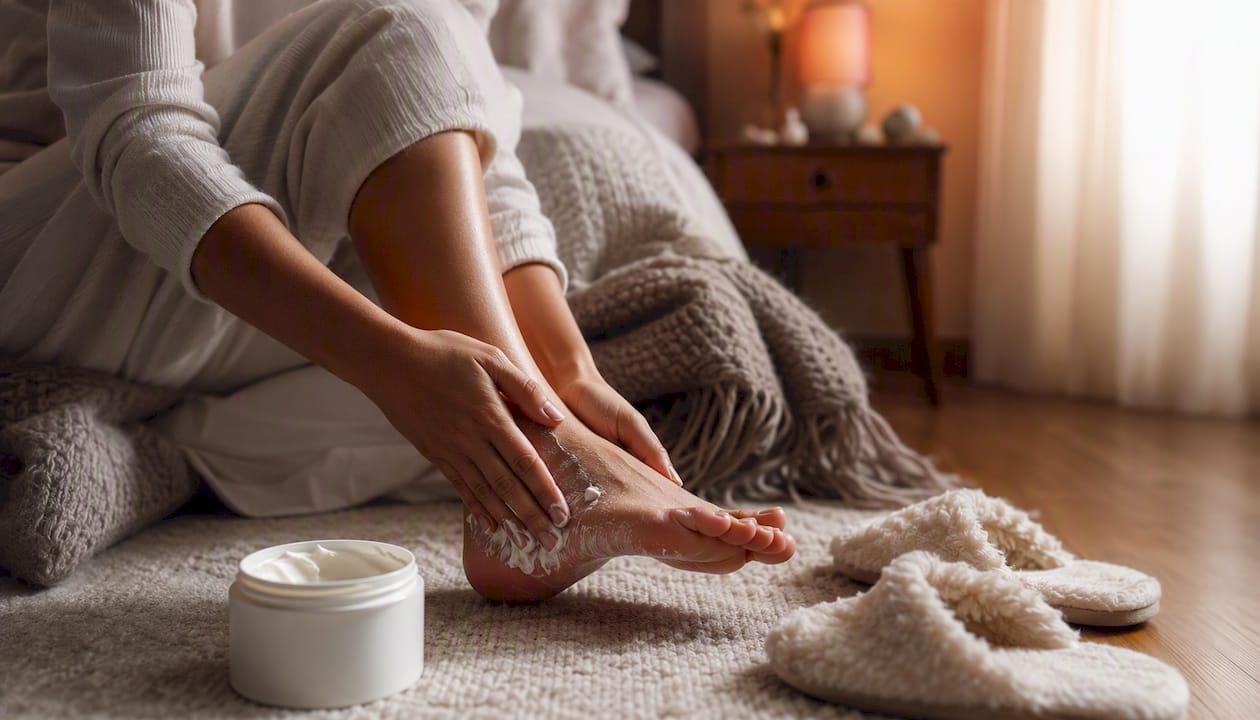
That’s the whole philosophy behind small-batch formulation: fewer fillers, more of the ingredients that actually do the work, so the technique you use matters more than the brand name on the jar.
Try Rose Petal Glam’s Whipped Body Butter Collection
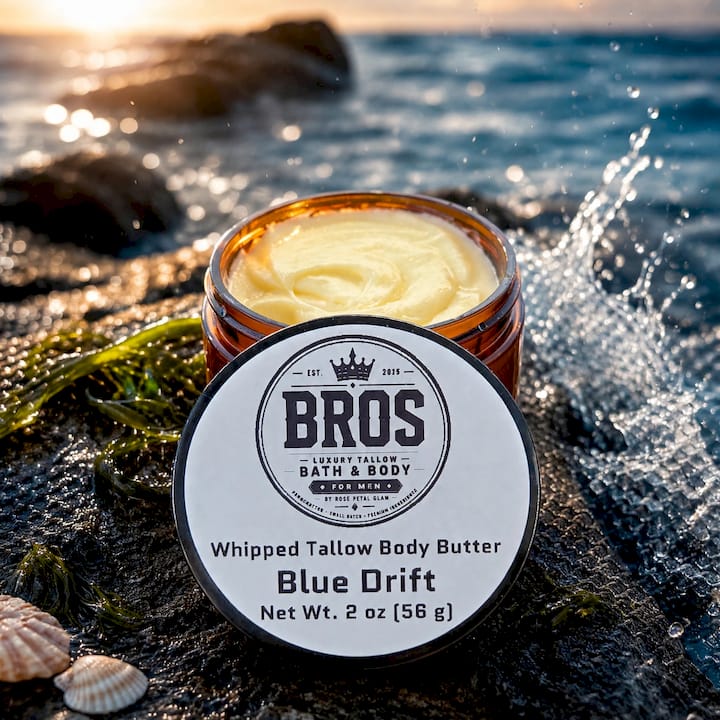
If you want a formula built around the ingredients this article talks about, Rose Petal Glam’s whipped body butters combine grass-fed tallow with jojoba oil in small batches, so you get real fat content instead of synthetic fillers that leave skin dry again within hours. The line includes both scented options and a fragrance-free formula for sensitive skin, plus a men’s option if you’re shopping for someone who wants something unscented and simple.

Each jar is small enough to test the warm-and-massage technique without committing to a huge tub you might not finish. Browse the whipped body butter collection and pick a formula that matches your skin type, then apply it the way this guide walks through, right after your next shower.
Sources
FAQ
Do you apply body butter on wet or dry skin?
Apply it to skin that’s slightly damp, not soaking wet or fully dry. Pat yourself dry after showering and apply within minutes, while a bit of moisture is still on your skin.
At what point in your shower routine should you use body butter?
Use it right after you finish showering and towel off, not while you’re still in the shower. This timing takes advantage of the warm, damp skin that helps the product absorb evenly.
Can body butter replace lotion entirely?
For most people, no. Body butter works better as a targeted, richer treatment for dry areas, while a lighter lotion still makes sense for daytime use or areas prone to breakouts.
How much body butter should I use per application?
Start with a dime-sized amount for larger areas like legs and a pea-sized amount for hands. You can always layer more if your skin still feels dry after a minute.
How often should I use body butter?
In cold, dry months, daily use, sometimes twice, is common. In summer or humid climates, targeted use on elbows and heels a few times a week is usually enough.
Does body butter cause breakouts?
It can, if applied to acne-prone areas like the chest or back, since the heavy oil content may contribute to clogged pores in those spots. Stick to lighter lotions there and save body butter for arms, legs, and feet.