Lasts 6–8 Weeks: Rose Petal Glam Grass Fed Tallow Soap for Sensitive Skin
Published 2026-08-29 by Rose Petal Glam
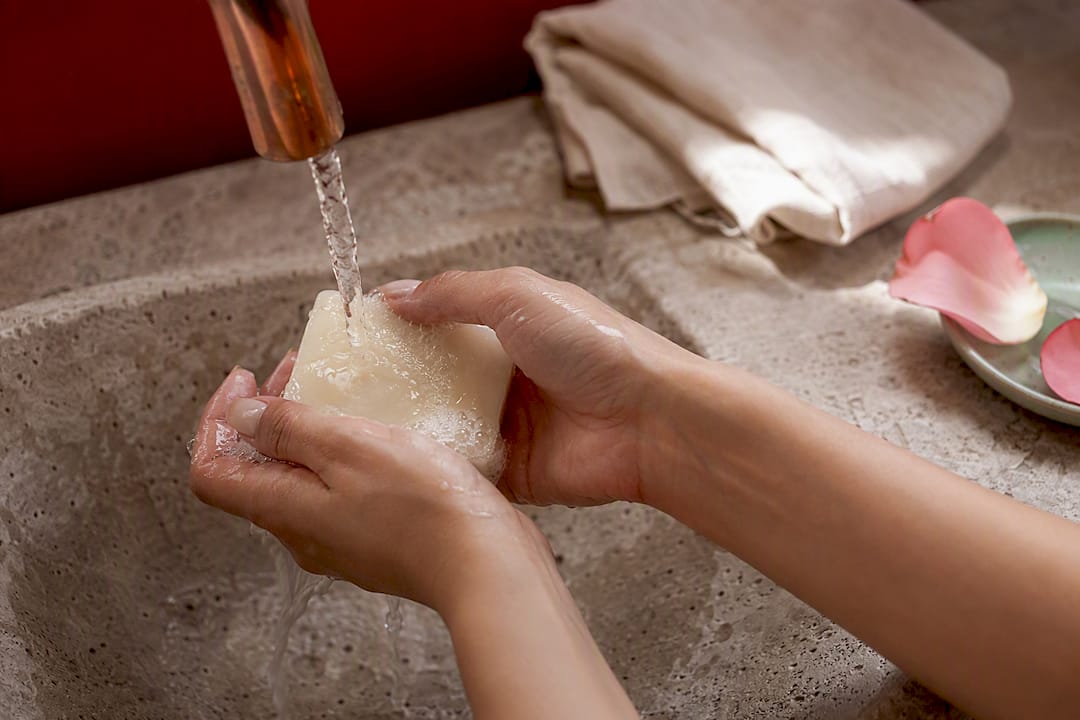
Rose Petal Glam’s grass-fed cold-process tallow soap is the best pick for anyone dealing with dry, reactive, or easily irritated skin. The fatty-acid profile in grass-fed tallow closely mirrors what your skin already produces, cold-process crafting keeps the natural glycerin intact instead of stripping it out, and the fragrance-free version removes the most common irritant in commercial soap. If you want a bar that cleans without leaving skin tight or flaky, start there.
TL;DR:
- Grass-fed tallow soap retains glycerin during cold-process manufacturing, making it less drying and more moisturizing than commercial soap bars.
- The fatty-acid profile supports skin barrier function and flexibility, particularly benefiting dry and sensitive skin types, but may be too heavy for oily or acne-prone skin.
- Look for full ingredient transparency, clear sourcing of grass-fed or grass-finished tallow, and minimal additives when choosing a reliable brand.
- Patch testing and used sparingly on the face are recommended, especially for reactive or acne-prone skin, with three to four uses per week as a starting point.
- Proper storage in a dry, well-drained area extends the bar’s life, with small-batch, handmade production offering better quality control and ingredient honesty.
Table of Contents
- What Is Grass-Fed Beef Tallow Soap, Exactly?
- Does Tallow Soap Actually Do Anything for Your Skin?
- What Should Be on the Label (and What Shouldn’t)
- How Do You Use Tallow Soap Without Irritating Your Skin?
- Where to Buy It and What It Should Cost
- Why Small-Batch Production Actually Matters Here
- How Do You Know a Tallow Soap Brand’s Reviews Are Trustworthy?
- What Ingredients Should You Watch Out For?
- Does Packaging Actually Affect How Long the Bar Lasts?
- Is Tallow Soap Actually Worth the Higher Price?
- The Case Against Overthinking This
- Ready to Try It? Here’s Where to Start
- Sources
- FAQ
What Is Grass-Fed Beef Tallow Soap, Exactly?
Tallow soap is rendered beef fat combined with lye through cold-process saponification, sometimes with jojoba oil, shea butter, or olive oil folded in for extra slip and moisture. When the source animal is grass-fed rather than grain-finished, the fat carries a different, generally more favorable fatty-acid balance, which is the whole reason the “grass-fed” label matters instead of just being a marketing flourish.
Rose Petal Glam’s tallow soap lineup keeps the ingredient list short on purpose. The core bar pairs grass-fed tallow with jojoba oil for a natural tallow bar soap that lathers without feeling greasy, and a fragrance-free version exists specifically for people who react to essential oils or synthetic scent blends. Beyond the soap itself, the brand sells whipped body butter and sugar scrubs made from the same base fat, so you can build a full routine around one ingredient philosophy.
What you’ll typically find across the line:
- Cold-process bars in fragrance-free and lightly scented options
- Bundles that pair a soap bar with a whipped tallow body butter for face-and-body coverage
- Small-batch production, meaning limited runs rather than mass manufacturing
- Full ingredient transparency listed directly on each product page
Pro Tip: If you’re new to tallow soap, start with the fragrance-free bar. It’s the easiest way to judge how your skin responds to the tallow itself before adding any botanical extras to the mix.
Bars generally run in the range typical of handmade small-batch soap, with bundle pricing that lowers the effective cost per bar when you buy body butter and soap together.
Does Tallow Soap Actually Do Anything for Your Skin?
Grass-fed tallow’s benefit claims rest on its fat composition, not marketing language. Tallow is rich in palmitic and stearic acids, which help form a protective layer on the skin’s surface, plus oleic acid, which supports flexibility and helps other lipids absorb more readily. That combination is part of why cold-process bars feel different on the skin than a detergent-based bar from the drugstore.
Sellers of tallow-based products also point to fat-soluble vitamins A, D, E, and K as a contributing factor in moisturizing and barrier-support claims, since these vitamins occur naturally in rendered fat. That’s a reasonable claim grounded in composition, though it’s worth being clear that these are product-level claims from sellers, not clinical trial results.
Cold-process saponification retains the soap’s natural glycerin instead of stripping it out, which is the main reason these bars tend to feel less drying than commercial bars that have glycerin removed and sold separately.
The flip side: tallow is a rich, occlusive fat, and richness isn’t universally good news. Some people, particularly those prone to clogged pores, find heavier fats like tallow can feel too heavy on the face. That’s why a patch test before regular use matters more with tallow soap than with a typical foaming cleanser.
What Should Be on the Label (and What Shouldn’t)
A trustworthy tallow bar has a short ingredient list you can actually read. Expect rendered tallow, sodium hydroxide (lye, which fully reacts during saponification and doesn’t remain in the finished bar), and supporting oils like jojoba, olive, or coconut. Some bars add kaolin clay for gentle exfoliation or botanical extracts for scent.
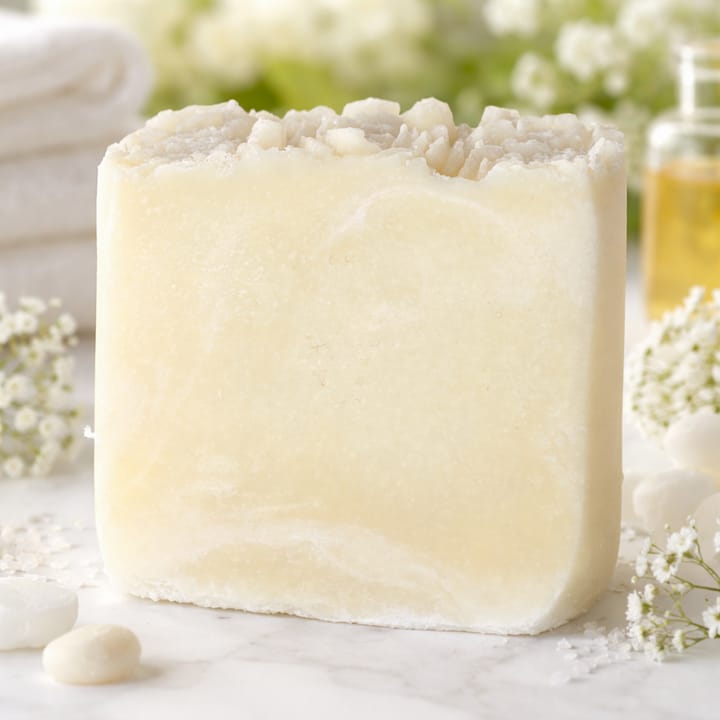
What shouldn’t be there: parabens, sulfates, synthetic fragrance listed vaguely as “fragrance” or “parfum,” and, on any bar marketed as fragrance-free, any fragrance at all hiding under a different name.
“Grass-fed” and “grass-finished” aren’t interchangeable, and the distinction matters if you’re paying a premium for it. Grass-fed can mean the animal ate grass for part of its life before finishing on grain. Grass-finished means grass through the entire life cycle, which is the stronger sourcing claim. If a seller doesn’t specify, ask.
Before buying from any small producer, it’s fair to ask a few direct questions:
- Where does the tallow come from, and is it grass-fed or grass-finished?
- How is the fat rendered, and is that process disclosed?
- Is the full ingredient list published on the product page, not just a marketing summary?
- Does the brand describe its production as small-batch, and where is it made?
Small-batch producers who answer these questions openly are generally more trustworthy than mass-market brands using vague “natural” language without specifics.
How Do You Use Tallow Soap Without Irritating Your Skin?
Tallow soap isn’t a swap-in-swap-out replacement for every cleanser in your routine. It rewards a little intention, especially at first.
- Patch test first. Apply a small amount to your inner forearm, wait 24 to 48 hours, and watch for redness, bumps, or itching before using it on your face.
- Lather in your hands, not directly on skin. This gives you more control over how much product touches your face versus your body.
- Use on the body daily; go easier on the face. Facial skin is thinner and more reactive, so 3 to 4 times a week is a reasonable starting frequency if you’re prone to breakouts.
- Try it as a shave soap. The fatty acids create a slick, cushioning lather that many people find reduces razor burn compared to canned shaving cream.
- Follow with a light moisturizer if your skin still feels tight, or pair it with a whipped tallow body butter on especially dry patches like elbows and heels.
Skip tallow soap during an active acne flare if you already know richer products worsen your breakouts, and talk to a dermatologist if a rash persists past a few uses.
Pro Tip: Rinse with lukewarm, not hot, water. Hot water strips even glycerin-rich soap faster and can leave skin drier than the soap itself would otherwise cause.
Where to Buy It and What It Should Cost
Tallow soap has become widely available across both mainstream marketplaces and specialty sellers, which is good news for comparison shopping but also means quality varies a lot from listing to listing.
Rose Petal Glam sells its tallow bars directly through its tallow skincare collection, including the fragrance-free bar for sensitive skin. A few things worth knowing before you buy anywhere:
- Price expectations: handmade cold-process bars typically cost more per unit than mass-market soap, but they also last longer per gram because glycerin-rich bars resist melting into mush in a wet shower dish.
- Bundles lower cost per use. Pairing a soap bar with a body butter or buying multiples at once usually beats buying single bars repeatedly.
- Shipping and satisfaction policies are worth checking before you buy from any small seller. A brand confident in its product will typically stand behind it with a clear return or satisfaction window.
- Cheaper isn’t automatically worse, but vague labeling is a red flag. A $6 bar with a full, transparent ingredient list can beat a $20 bar that just says “natural.”
Why Small-Batch Production Actually Matters Here
Small-batch and cold-process aren’t just words sellers use to justify price. They describe a real production choice with real consequences for what ends up in the bar.
Rose Petal Glam makes its soap, body butter, and deodorant lines in Mount Morris, Michigan, in limited runs rather than industrial-scale batches. That matters for two practical reasons: smaller batches make it easier to maintain consistent glycerin retention across a run, and they make full ingredient disclosure realistic, since a producer working in small quantities knows exactly what went into each batch.
A few things to look for as proof a producer takes this seriously:
- A full, unabbreviated ingredient list on every product page, not just a marketing blurb
- Clear statement of where the product is made
- Product line depth that shows real specialization, not a single flagship item padded with unrelated goods
- Direct contact availability for sourcing or formulation questions rather than a generic contact form buried three clicks deep
| What to check | Why it matters |
|---|---|
| Full ingredient list published | Confirms no undisclosed fillers or synthetic fragrance |
| Production location stated | Signals accountability and traceability |
| Small-batch claim explained, not just stated | Distinguishes real craft production from marketing language |
| Direct contact for questions | Shows a brand willing to stand behind its sourcing claims |
Customers who want to verify batch details or sourcing questions can reach out directly rather than relying on secondhand claims.
How Do You Know a Tallow Soap Brand’s Reviews Are Trustworthy?
Reviews on a small brand’s own site tend to be more useful than marketplace star ratings, because they usually include specifics: skin type, what the reviewer used before switching, and how long they’ve used the product. A flood of five-star reviews with no detail, all posted in a short window, is a weaker signal than a smaller number of reviews that mention specific skin concerns like eczema or post-shave irritation.
Look for reviews that mention texture over time, not just first impressions. Tallow bars behave differently in week one than in week three, once your skin adjusts to a richer cleanser. A reviewer who mentions “still using this a month later” is telling you more than one who reviewed the day it arrived.
Response patterns matter too. Brands that reply to negative reviews with specific troubleshooting, rather than a generic thank-you, are usually the ones with real quality control behind their claims. If a seller has zero negative reviews at all across hundreds of ratings, that’s less reassuring than it sounds. No skincare product works for everyone, and total review uniformity often means reviews are curated or incentivized rather than organic.
Third-party mentions help round out the picture. A brand referenced in independent roundups or general skincare guides covering tallow-based products, rather than only in its own marketing, has more corroborating evidence behind its claims than one that only exists in its own promotional content.
What Ingredients Should You Watch Out For?
Tallow soap is generally low-risk for common irritants compared to conventional bars loaded with sulfates and synthetic fragrance, but it isn’t automatically risk-free.
The tallow itself is a rare but real allergen for people with beef or mammalian meat allergies, including a specific condition called alpha-gal syndrome, triggered by tick bites, that causes a delayed allergic reaction to red meat and its derivatives. If you’ve ever had an unexplained reaction to beef, patch-test before regular use.
Added botanicals and essential oils are the more common culprits. Lavender, tea tree, and citrus oils show up often in scented artisanal soap and are known sensitizers for people with already-reactive skin. This is exactly why fragrance-free formulations exist as their own category, not just a stripped-down version of the “real” product.
Kaolin clay, when included for gentle exfoliation, is generally well tolerated but can feel drying on already-compromised skin if used too frequently. Lye residue is a non-issue in a properly cured cold-process bar. Saponification converts it fully, and any reputable small-batch producer cures bars for four to six weeks before selling them, which is part of why patience with a new bar’s texture pays off.
If a product lists “fragrance” or “parfum” without specifying the source, treat that as a caution flag rather than a dealbreaker, since it could be synthetic or a proprietary essential oil blend, and there’s no way to know which from the label alone.
Does Packaging Actually Affect How Long the Bar Lasts?
Yes, more than most people expect. Tallow soap’s glycerin content, the same thing that makes it hydrating, also makes it more sensitive to moisture than a stripped commercial bar.
Store bars on a slotted or raised soap dish that drains water away between uses rather than letting the bar sit in standing water. A bar left in a puddle in a shower caddy will soften, crack, and burn through twice as fast as one that’s allowed to dry between uses.
For bars not yet in rotation, keep them in their original packaging in a cool, dry spot away from direct sunlight and away from bathroom humidity if possible. A linen closet or bathroom cabinet works better than an open shower shelf. Unopened, cured cold-process tallow soap holds up well for a year or more if stored properly, since the fat has already gone through saponification and isn’t prone to rancidity the way raw tallow would be.
Cardboard or paper packaging, common with small-batch producers trying to reduce plastic waste, is fine for shelf storage but should be removed once a bar goes into daily bathroom use. Damp cardboard against a wet bar defeats the purpose and can introduce mold in humid climates. A small wire rack that lets air circulate on all sides extends bar life the most reliably, regardless of what packaging it originally shipped in.
Is Tallow Soap Actually Worth the Higher Price?
Sticker shock is real the first time you compare a handmade tallow bar to a three-pack of drugstore soap. The math changes once you account for how each bar actually performs over its life.
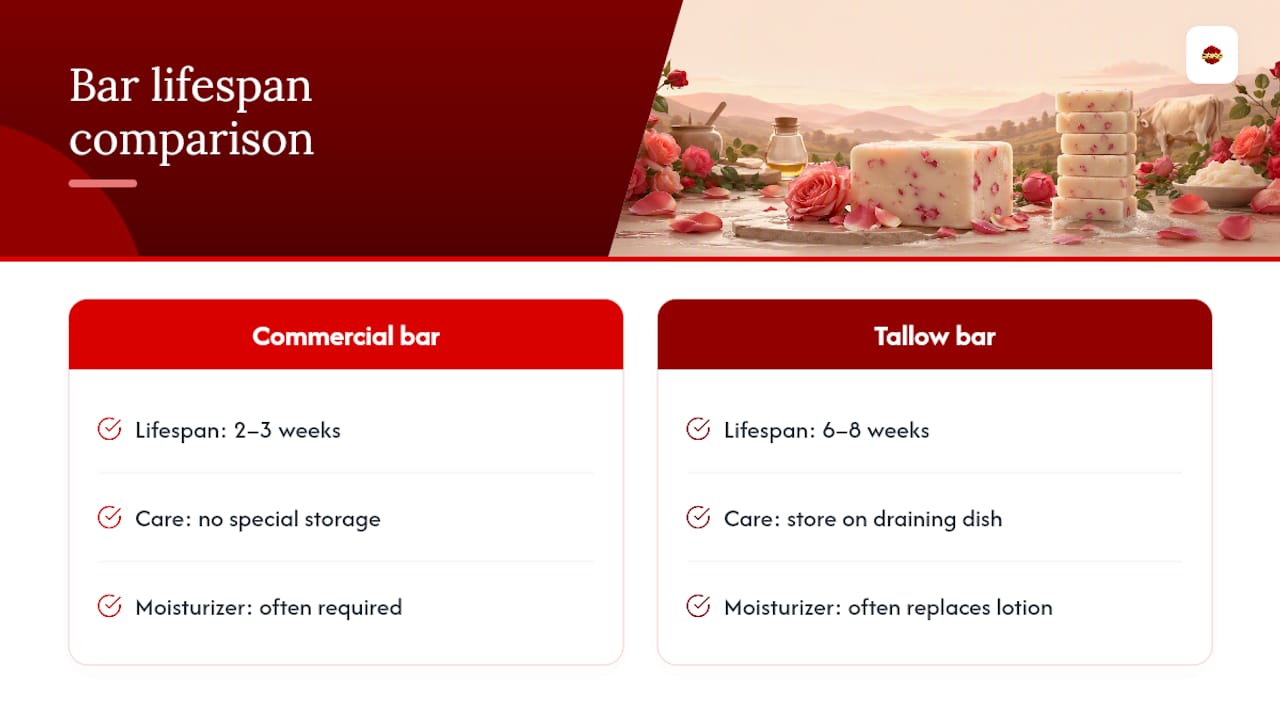
A glycerin-stripped commercial bar dissolves fast, often lasting two to three weeks of daily use before it’s gone. A well-cured cold-process tallow bar, stored properly on a draining dish, commonly lasts six to eight weeks under the same daily use because the denser fat structure and retained glycerin resist breaking down as quickly. Run that math per use and the cost gap narrows considerably, sometimes closing entirely once you factor in that you’re not also buying a separate body lotion to compensate for what the soap stripped away.
Bundle pricing narrows the gap further. Buying a soap bar paired with a whipped tallow body butter typically costs less per item than buying each separately, and it replaces two categories of product, cleanser and moisturizer, with ingredients from the same source fat.
The honest comparison isn’t tallow soap versus the cheapest bar at the store. It’s tallow soap versus a cheap bar plus the moisturizer most dry-skin users end up buying anyway to undo what that cheap bar did in the first place.
The Case Against Overthinking This
Most of the skepticism around tallow soap comes from people conflating “animal fat” with “unhealthy” or “greasy,” without actually looking at the fatty-acid data. Dermatologists who dismiss it outright are often reacting to the novelty and the “beef” association rather than the composition, which, on paper, isn’t wildly different from other lipid-rich ingredients already accepted in mainstream skincare.
That said, the tallow-soap conversation has a blind spot: people treat “grass-fed” as a guarantee of quality when it’s really a starting point. A grass-fed bar with a vague ingredient list and no disclosed rendering process isn’t automatically better than a conventional bar with full transparency. The sourcing claim matters, but only alongside genuine label honesty.
What actually moves the needle for sensitive or dry skin isn’t the marketing term on the front of the package. It’s the absence of synthetic fragrance, the presence of a short and legible ingredient list, and a production process that retains glycerin instead of stripping it. Readers chasing the “grass-fed” label alone, without checking those three things, are optimizing for the wrong variable.
Start with a fragrance-free bar, patch-test it properly, and give it a full month before judging. That’s the whole strategy. Everything else is refinement.
— Brent
Ready to Try It? Here’s Where to Start
Rose Petal Glam makes the switch to tallow soap simple because everything ships from one small-batch producer instead of you piecing together a routine from five different brands. You get a fragrance-free bar built for reactive skin, a scented option if your skin tolerates botanicals fine, and body butter made from the same base fat so your face, hands, and body routine can pull from one ingredient philosophy instead of three.
If you’re dealing with dry patches on top of general sensitivity, pairing a bar with whipped body butter targets both problems without adding a fourth product to your shelf. Everyone else can start with the tallow skincare collection and pick based on scent preference alone, since the fragrance-free and lightly scented bars share the same core formulation. Browse the collection, pick a bar that matches your skin’s sensitivity level, and give it the same month-long trial any new skincare product deserves before deciding whether it earns a permanent spot in your shower.
Sources
FAQ
Why don’t some dermatologists recommend beef tallow soap?
Skepticism usually stems from tallow’s animal-fat origin and its comedogenic potential for acne-prone skin, not from disproven safety concerns. Many dermatologists simply have more clinical familiarity with plant-oil-based formulations, so the caution reflects unfamiliarity as much as evidence.
Is grass-fed beef tallow soap actually good for your skin?
For dry or sensitive skin, the fatty-acid profile and glycerin retention from cold-process crafting generally support better moisture retention than stripped commercial bars. People with acne-prone or highly oily skin may find it too rich and should patch-test before regular use.
What are the downsides of using tallow soap?
The main downsides are potential comedogenic effects for oily or acne-prone skin, the small risk of a beef-based allergy in people with mammalian meat sensitivities, and a higher price point per bar compared to mass-market soap. Bar life and cost-per-use narrow that price gap considerably.
Which brand of tallow soap is considered reliable?
Rose Petal Glam’s cold-process tallow soap stands out for full ingredient transparency, small-batch production in Mount Morris, Michigan, and a dedicated fragrance-free option for sensitive skin. Any brand you choose should publish its full ingredient list and disclose its sourcing.
Can I use tallow soap on my face every day?
Body use daily is generally fine, but facial skin is thinner and more reactive, so starting at three to four uses a week is a safer baseline. Watch for clogged pores or breakouts and scale back if they appear.