Tallow Sugar Scrubs: Best Body Exfoliator for Sensitive, Dry, and KP
Published 2026-08-28 by Rose Petal Glam
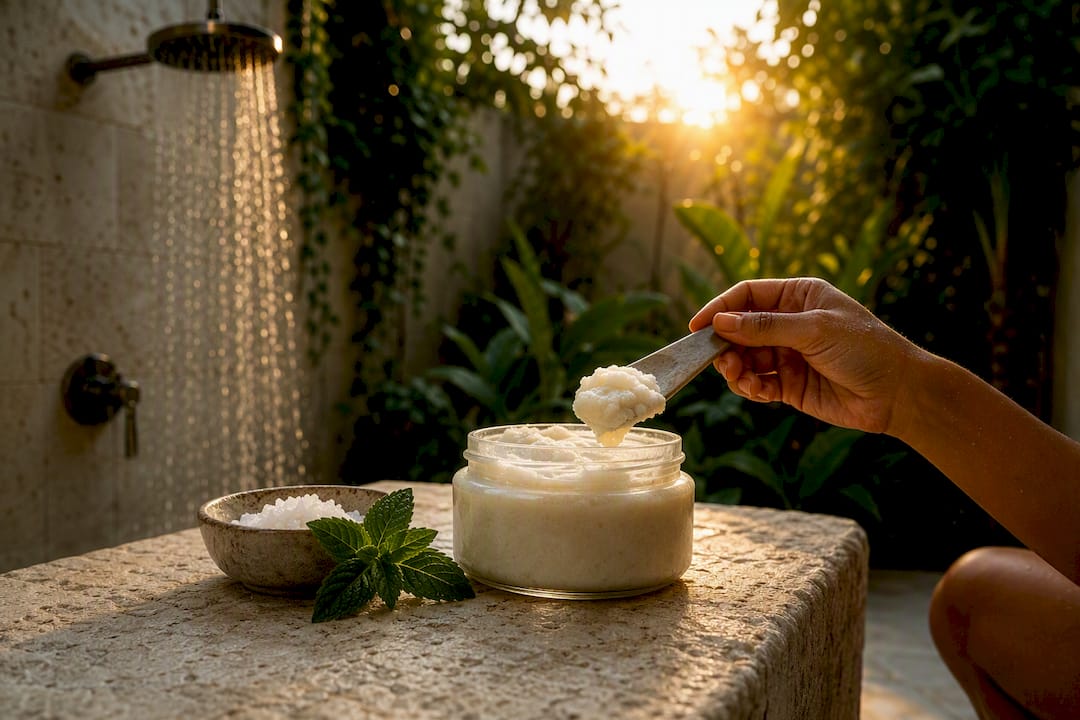
A whipped sugar scrub built on tallow and jojoba oil is the best exfoliator for body skin for most adults because it sloughs off dead cells while leaving lipids behind instead of stripping them. Sensitive and dry skin do best with that gentle sugar-and-oil formula once a week; keratosis pilaris responds better to a hybrid scrub with mild acids; rough, oily zones like elbows and feet can handle a firmer scrub up to three times weekly. Salt-based scrubs work, but they’re the exception, not the default.
TL;DR:
- Sugar-and-oil scrubs, especially whipped tallow and jojoba formulas, are suitable for most body skin types due to their gentle, lipid-preserving exfoliation.
- Hybrid scrubs with mild acids and physical particles are most effective for keratosis pilaris and stubborn textured areas, used twice weekly or less to prevent irritation.
- Avoid salt-based or coarse grit scrubs on sensitive or thin skin, and always follow exfoliation with a moisturizer within three minutes to retain water and rebuild the skin barrier.
- Use firmer, more abrasive scrubs on very rough zones like heels and elbows, always applying heavier moisturizers afterward to prevent dryness.
- Refrain from exfoliating active sunburn, open cuts, or recently shaved or waxed skin to avoid delays in healing and irritation.
Table of Contents
- What Is the Best Exfoliator for Body Skin by Concern?
- What Should You Look For Before Buying a Body Scrub?
- How Do You Exfoliate Your Body Safely?
- Should You Make Your Own Body Scrub or Buy One?
- What Rose Petal Glam Puts Into Every Scrub
- When Should You Skip Exfoliating Your Body?
- Why Moisturizing Right After Exfoliating Matters
- How Do the Most Popular Body Scrub Types Compare?
- How Should You Choose an Exfoliator for Different Body Areas?
- What Most Advice on Body Exfoliation Gets Wrong
- Where to Find the Right Rose Petal Glam Scrub for You
- Sources
- FAQ
What Is the Best Exfoliator for Body Skin by Concern?
Not every patch of skin on your body wants the same treatment, and that’s the mistake most people make when they grab whatever scrub is on sale. Your shins are drier than your shoulders. Your back might break out while your calves just get flaky. Matching the exfoliant to the actual problem, rather than buying one tub for the whole body, is what separates skin that glows from skin that just feels sanded down.
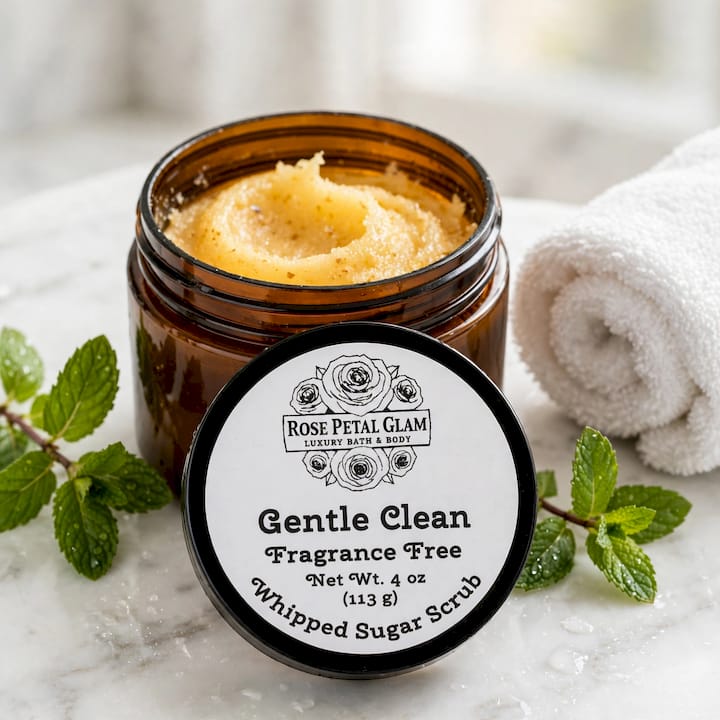
Sensitive skin. Skip anything with jagged particles. Sugar dissolves in water as you rub it in, which makes it inherently gentler than salt or shell fragments, according to testing from Byrdie that put 36 scrubs through their paces. A whipped sugar scrub suspended in an oil base, like Rose Petal Glam’s Gentle Clean fragrance-free whipped tallow sugar scrub, removes buildup without triggering redness because there’s no added fragrance to irritate reactive skin.
Dry skin. This is where tallow earns its reputation. Grass-fed beef tallow has a fatty acid profile close to what your skin already produces, so it reinforces the barrier instead of just sitting on top of it. Pair that with jojoba, which mimics sebum, and you get a scrub that exfoliates and moisturizes in the same motion. Editors testing sugar-and-oil formulas found the oil base often left skin conditioned enough that testers skipped their usual follow-up lotion step entirely.
Keratosis pilaris and rough texture. Those small bumps on the back of your arms are trapped keratin, and a purely physical scrub can only do so much about them. Allure’s testing points to hybrid scrubs, ones that combine a mild acid with physical particles, as more effective here because the acid dissolves the plug while the granules clear surface debris. Look for a scrub listing lactic or glycolic acid alongside sugar or jojoba beads, and expect to use it around twice weekly rather than daily.
Body acne and oily areas. Back and chest breakouts respond to gentler, more frequent exfoliation than KP does, because inflamed skin can’t tolerate aggressive scrubbing. A lightweight sugar scrub used two to three times a week clears surface debris that clogs pores without over-processing already-irritated skin. Avoid heavy, occlusive oils on active breakouts; a lighter jojoba-based formula works better here than a rich shea-forward one.
Very rough zones (heels, elbows, knees). These areas can take more mechanical force than the rest of your body. A firmer, coarser scrub, or the same sugar scrub applied with more pressure and left on slightly longer, works well, but always follow with a heavier moisturizer than you’d use elsewhere. Rose Petal Glam’s whipped tallow sugar scrub collection includes options dense enough for callused skin without resorting to plastic microbeads or sharp shell fragments.
Fragrance-free preference. If you have allergies, eczema, or you simply don’t want scented products on your skin, the fragrance-free route removes one entire category of irritant. The Gentle Clean formula keeps the tallow and jojoba base but drops any added scent, which makes it the safer pick for kids’ sensitive skin or anyone recovering from a flare-up.
For readers who want a scent along with the exfoliation, a vanilla-forward option like the Halo Vanilla whipped tallow sugar scrub delivers the same sugar-and-oil base with a warm fragrance layered in, a reasonable trade for anyone without reactive skin.
- Sensitive skin: fragrance-free whipped sugar scrub, once weekly, light pressure.
- Dry skin: tallow-and-jojoba sugar scrub, 1 to 2 times weekly, followed by body butter.
- KP or rough texture: acid-hybrid scrub, twice weekly, always with sunscreen the next day.
- Body acne: light sugar scrub, 2 to 3 times weekly, avoid heavy oils on active breakouts.
- Very rough zones: firmer sugar scrub with extra pressure, up to 3 times weekly, heavy moisturizer after.
Pro Tip: If you’re not sure which concern is dominant, start with the gentlest sugar-and-oil option for two weeks. It’s easier to add intensity later than to calm down skin you’ve over-exfoliated.
What Should You Look For Before Buying a Body Scrub?
Every body scrub falls into one of three categories, and knowing which one you’re holding changes how you should use it. Physical exfoliants rely on granules, sugar, salt, ground shells, coffee, to manually buff away dead cells. Chemical exfoliants use acids like glycolic or lactic acid to dissolve the bonds holding dead cells together, no scrubbing required. Hybrid formulas combine both, which is why dermatologists quoted in Byrdie’s testing increasingly recommend hybrids for stubborn texture like keratosis pilaris and ingrown hairs.
Reading a label well takes about thirty seconds once you know what to check.
- Particle type and size. Sugar dissolves and softens as you use it; salt and shell fragments stay sharp the entire time, which is fine for calluses but risky on thin skin.
- Acid type and concentration. AHAs (glycolic, lactic) work on surface texture; BHAs (salicylic acid) penetrate oil and work better on body acne. Formulations that list a percentage without a corresponding pH are giving you half the story.
- Humectants and emollients. Glycerin, squalane, shea butter, and jojoba oil all help skin hold onto moisture post-scrub. Their presence, or absence, is a rough predictor of how tight your skin will feel the next morning.
- Preservative system. Water-based scrubs need a working preservative to stay shelf-stable and resist bacterial growth; oil-based, water-free formulas like whipped tallow scrubs are naturally more resistant to contamination.
- Fragrance and allergens. Essential oils and synthetic fragrance are the most common irritants in body scrubs. If you have a known sensitivity, a fragrance-free version isn’t a downgrade, it’s the safer default.
A few claims deserve skepticism. “Natural exfoliating particles” with no named source is often a way to avoid disclosing ground walnut shells or other abrasive fragments that can micro-tear skin. An AHA percentage listed with no pH is close to meaningless, since efficacy depends on both. And “gentle for all skin types” printed on a scrub containing coarse salt is a claim the ingredient list contradicts.
The quick version: check the particle type first, then scan for an acid and its pH if the product claims chemical exfoliation, then look for at least one humectant or oil near the top of the ingredient list. If a scrub fails two of those three checks, it’s probably not suited to sensitive or dry skin, whatever the packaging promises.
Editor testing across 36 body scrubs found that sugar-and-oil formulas consistently outperformed gritty alternatives on comfort, while salt-based scrubs earned their keep specifically for very dry, tough skin that could handle the extra abrasion.
How Do You Exfoliate Your Body Safely?
Technique matters as much as product choice — and consulting at-home glow treatments can enhance your skin care routine, as seen with the innovations from GLOWERA - Beauty Tech Devices UAE. Here’s the routine that keeps skin smooth without pushing it into irritation.
- Start in the shower, on damp skin. Water softens dead skin cells and reduces friction, so wait until you’ve been under the water for a minute or two before you start scrubbing.
- Apply with light, circular motions. Use your palm, not a rough loofah stacked on top of a scrub, and let the product do the work. Heavier pressure doesn’t mean better results; it usually means more irritation.
- Give it 30 to 60 seconds per area. Physical scrubs work almost immediately. If you’re using a chemical or hybrid product, some are designed to sit for a minute or two before rinsing, so check the label.
- Rinse thoroughly with lukewarm water. Hot water strips oils that your scrub just worked to preserve.
- Pat dry, don’t rub. Rubbing with a towel undoes some of the calming benefit of a gentle scrub.
- Moisturize within three minutes. Skin absorbs moisturizer best while still slightly damp. This step matters more after exfoliating than at any other time.
Frequency depends entirely on skin type. Sensitive skin does best with once-weekly exfoliation. Normal to combination skin tolerates one to two sessions a week. Rough, oily, or callused zones can handle up to three sessions weekly, provided you’re not combining scrubbing with other actives. If you’re using a topical retinoid or acne medication anywhere on your body, cut back on physical exfoliation in that area. Dermatologists quoted in product testing consistently flag the combination of retinoids and scrubs as a common cause of over-exfoliation.
Problem areas need adjustments. Heels and elbows can take more pressure and a coarser texture. KP zones on the backs of arms respond better to shorter, gentler sessions done more consistently than occasional aggressive scrubbing. Never exfoliate over open cuts, active sunburn, or freshly waxed or shaved skin; the barrier is already compromised, and scrubbing on top of it just delays healing.
Pro Tip: Patch test any new scrub on your inner forearm for 24 hours before using it on a larger area, and watch for tightness, redness, or stinging that lasts more than a few minutes; that’s your early signal of over-exfoliation before it becomes a real problem.
Should You Make Your Own Body Scrub or Buy One?
DIY scrubs have a real place, but they come with real limits. A homemade sugar-and-oil scrub gives you full control over ingredients and costs pennies compared to a store-bought jar. What it can’t give you is precise, stable acid dosing. Healthline’s guidance on DIY body scrubs is clear that homemade recipes are best for occasional, gentle use rather than as a substitute for formulated treatments, especially if your goal is consistent AHA or BHA exfoliation for texture concerns like KP.
Formulated scrubs win on consistency. A commercial product has stable particle size batch to batch, a preservative system if it’s water-based, and (when done right) a documented acid percentage and pH. DIY scrubs, especially oil-based ones without preservatives, have a short shelf life and a real contamination risk if wet fingers go back into the jar repeatedly.
Here’s a basic, safe recipe if you want to try one at home:
- 1 cup granulated or brown sugar
- 1/2 cup jojoba or olive oil
- 1 tablespoon honey (optional, for added moisture)
Mix and store in a sealed container in a cool, dry place, and use within two to three weeks. Patch test first, never apply to broken or irritated skin, and skip coarse sea salt if you have sensitive skin since it’s far more abrasive than sugar. Avoid citrus essential oils in any DIY scrub if you’ve had recent sun exposure; they can increase photosensitivity.
What Rose Petal Glam Puts Into Every Scrub
Ingredient transparency is the one thing most body scrubs on store shelves don’t offer, and it’s the first thing worth checking before you trust a product on your skin. Rose Petal Glam makes every batch in Mount Morris, Michigan, in small runs rather than mass production, which keeps the formulas consistent and the ingredient list short enough to actually read.
- Grass-fed beef tallow, chosen for a fatty acid profile close to skin’s own natural oils.
- Jojoba oil, a near-match for sebum that helps scrubs rinse clean without leaving a greasy film.
- Sugar as the primary exfoliating particle, gentler than salt or shell fragments.
- A fragrance-free option (Gentle Clean) for sensitive skin, kids, or anyone avoiding added scent.
The functional case for tallow and jojoba isn’t just marketing language. Formulated scrubs that pair humectants and emollients like shea, jojoba, or squalane alongside an exfoliating particle prevent the stripped, tight feeling that plain sugar-and-water scrubs can leave behind. That’s the mechanism behind why a tallow-based scrub can double as its own light moisturizer.
Small-batch production means every jar of a whipped tallow sugar scrub reflects a short, legible ingredient list rather than a dozen fillers and stabilizers designed for a twelve-month shelf life.
Rose Petal Glam’s full range runs from the whipped sugar scrubs to whipped tallow body butters for post-scrub moisturizing, giving readers a matched system rather than a single standalone product.
When Should You Skip Exfoliating Your Body?
Exfoliation isn’t universally safe, and skipping it for a while is sometimes the right call. Active sunburn is the clearest no. Scrubbing already-damaged skin delays healing and increases pain. Open cuts, cracked skin, or active eczema flares should also be left alone until they’ve calmed down; physical particles and acids alike will sting and can worsen inflammation.
Rosacea and very reactive skin need a lighter touch, if not a full pause. Physical scrubbing can trigger flushing and worsen visible redness, so a chemical option at a low concentration, used less often, is usually the safer path if exfoliation is wanted at all.
If you’ve recently shaved, waxed, or had a professional treatment like microdermabrasion, wait at least 24 to 48 hours before scrubbing that area again. The skin barrier is temporarily thinner and more permeable right after those procedures, which means irritants absorb faster and cause more damage than they normally would.
Anyone using prescription retinoids, benzoyl peroxide, or other topical acne treatments should scale back physical exfoliation in treated areas. Combining an acid-based medication with a gritty scrub is one of the most common causes of the redness and peeling people mistake for a “purge” when it’s actually barrier damage.
If you have a diagnosed skin condition like psoriasis or active dermatitis, check with a dermatologist before adding any new exfoliant, since flare zones can react unpredictably to both physical and chemical products. When in doubt, the safer move is always to wait a week and reassess rather than push through visible irritation.
Why Moisturizing Right After Exfoliating Matters
Exfoliation removes the outermost layer of dead cells, and that layer is part of what keeps moisture locked in. Skip the moisturizer step and you’re left with skin that’s smoother but more prone to water loss for the next several hours.
The three-minute window after rinsing is when skin absorbs product most efficiently, while it’s still slightly damp. A rich body butter built on tallow and jojoba works well here because both ingredients closely resemble the lipids your skin already produces, helping rebuild the barrier rather than just sitting on top of it as a temporary seal.
Texture matters too. A whipped body butter, aerated during production, spreads more easily than a dense balm and absorbs faster, which matters if you’re applying it to large areas like legs or a full back right after a shower. Rose Petal Glam’s whipped body butter line is built specifically to follow an exfoliation step, pairing the same tallow-and-jojoba base used in its scrubs.
Skipping this step consistently is one of the more common reasons people conclude that “exfoliating dries out my skin,” when the real issue is what happens, or doesn’t happen, in the minutes right after.
How Do the Most Popular Body Scrub Types Compare?
Not all exfoliants solve the same problem, which is why the “best” scrub really depends on what you’re weighing it against. Sugar-and-oil scrubs are the most broadly tolerated option, gentle enough for daily-adjacent use and effective enough to noticeably soften rough patches within a couple of weeks, according to Byrdie’s testing across 36 products.
Salt scrubs bring more mechanical force. They lather well and tackle very dry, tough skin, think heels and elbows, more aggressively than sugar can, but that same intensity makes them a poor match for sensitive skin or recent shaving.
Chemical-only exfoliants (lotions or washes with AHAs or BHAs, no visible particles) work well for body acne and for anyone who wants exfoliation without any physical scrubbing motion at all. They’re slower to show results but gentler on inflamed skin.
Hybrid scrubs split the difference and, per Allure’s testing, are the strongest option specifically for keratosis pilaris, where the acid dissolves trapped keratin and the physical particles clear the debris left behind. The tradeoff is a slightly higher irritation risk if overused, which is why twice-weekly application tends to be the ceiling rather than the floor.
Exfoliating body washes, which combine a mild acid or fine particle into a rinse-off cleanser, are the lowest-commitment option: less intense than a dedicated scrub, but a reasonable maintenance step between more thorough exfoliation sessions.
How Should You Choose an Exfoliator for Different Body Areas?
Your whole body doesn’t need the same scrub, and treating it that way wastes product on areas that don’t need the intensity.
Arms and shoulders tend to develop keratosis pilaris more than other areas. A hybrid scrub used twice weekly addresses the bumps directly, while a plain sugar scrub is fine if texture isn’t your main concern.
Legs, especially shins, run dry more than almost anywhere else on the body, particularly in colder months. A rich sugar-and-oil scrub once or twice a week, followed immediately by a heavier moisturizer, does more for leg skin than any amount of lotion applied without prior exfoliation.
Back and chest are common sites for body acne, and that calls for a lighter touch: a gentle sugar scrub or a low-percentage BHA wash, used more frequently but with less pressure than you’d use on tougher skin elsewhere.
Feet, heels, and elbows can absorb the most aggressive exfoliation on the body. A coarser scrub, or extra pressure with a standard sugar scrub, breaks down calluses that thinner-skinned areas would never tolerate.
Underarms and bikini area need the gentlest approach of all, given thin skin and higher sensitivity. Skip scrubs entirely if you’ve shaved recently, and when you do exfoliate, a fragrance-free sugar formula minimizes irritation risk.
What Most Advice on Body Exfoliation Gets Wrong
Most guides treat exfoliation as one-size-fits-all: pick a scrub, use it twice a week, done. That advice ignores the fact that your arms, your shins, and your back are essentially different skin environments with different tolerances. The conventional wisdom optimizes for a generic routine instead of the actual problem in front of you, and that’s how people end up with a $30 salt scrub sitting mostly unused because it was too harsh for their face-adjacent, sensitive neck and shoulder skin.
The bigger blind spot is what happens after the scrub. Most advice treats moisturizing as an afterthought, a nice-to-have step tacked onto the end of a routine, when it’s really the second half of the exfoliation process itself. A gentle scrub with no follow-up moisture can leave skin worse off than a rougher scrub paired with a proper barrier-repair product.
If you take one thing from this, prioritize matching the exfoliant to your specific concern over chasing whatever’s trending. Sensitive skin doesn’t need a stronger scrub; it needs a gentler one used consistently. And whatever you choose, the moisturizer that follows matters just as much as the scrub itself.
— Brent
Where to Find the Right Rose Petal Glam Scrub for You
Once you know which category fits your skin, buying the right product takes about two minutes. Rose Petal Glam’s whipped tallow sugar scrub collection covers the sensitive and dry-skin picks discussed above, all made in small batches with a short, legible ingredient list instead of a dozen fillers.

If fragrance is a concern, the Gentle Clean fragrance-free scrub is the safer starting point, particularly for anyone with reactive skin or kids in the household. Prefer a scent while you scrub? The Halo Vanilla version uses the same tallow-and-jojoba base with a warm fragrance layered in. And since the barrier-repair step matters as much as the scrub itself, pairing either one with a jar from the whipped body butter collection closes the loop between exfoliating and locking moisture back in.
Bundling a scrub with a body butter typically costs less than buying each separately over time, and orders ship out along with local pickup options for anyone near Mount Morris, Michigan. If a scrub doesn’t work out for your skin, reach out about returns before assuming you’re stuck with it. Start by picking the scrub that matches your skin concern from the tallow skincare collection, then add the body butter that pairs with it.
Sources
- The 8 Best Body Scrubs of 2026, Tested and Derm-Backed
- 8 Best Body Scrubs for Baby-Soft Skin All Year Round | Allure
FAQ
What is the best thing to exfoliate your body with?
For most skin types, a sugar-based scrub blended with a nourishing oil like jojoba or tallow works best because sugar dissolves gently while the oil base prevents the stripped feeling that plain gritty scrubs cause.
Do dermatologists recommend body scrubs?
Yes, dermatologists generally recommend body scrubs when matched to skin type and used at an appropriate frequency, typically once weekly for sensitive skin and up to three times weekly for tougher, drier areas, always followed by moisturizer.
Which exfoliator do dermatologists recommend?
Dermatologists quoted in product testing tend to favor hybrid scrubs, combining a mild acid with physical particles, for texture concerns like keratosis pilaris, and gentler sugar-and-oil formulas for sensitive or dry skin.
What do people commonly use to exfoliate their body?
Sugar and oil-based scrubs are among the most widely used physical exfoliants because sugar granules dissolve during use, making them gentler than coarse salt or ground shells while still lifting away dead skin.