Bar Soap vs. Body Wash: Which Is Actually Better for Your Skin?
Published 2026-09-20 by Roseann Zelenka
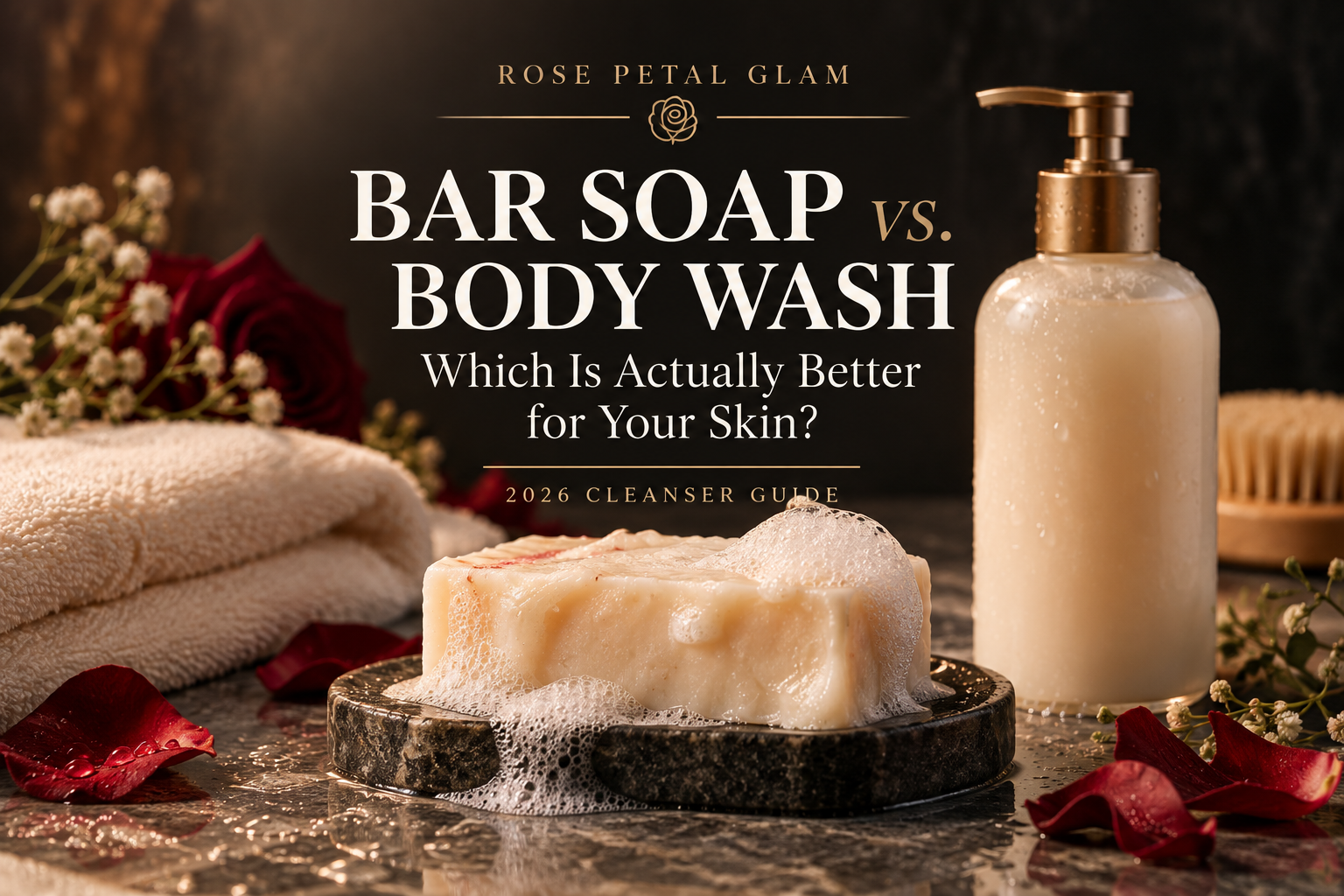
Bar soap and body wash can both clean your skin effectively. The better choice usually depends less on whether the cleanser is solid or liquid and more on its formulation, your skin, how you use it, and what you want from your shower routine.
For years, bar soap has carried an unfortunate reputation.
Ask someone why they switched to body wash and you may hear the same answer: “Bar soap dries out my skin.”
That experience can absolutely happen.
But it doesn't mean every bar behaves the same way.
Body washes vary enormously, too.
Some are designed to be mild and moisturizing. Others contain fragrance, exfoliating ingredients or stronger cleansing systems that may not agree with every person's skin.
So instead of declaring one format the universal winner, let's compare what actually matters.
Quick Answer: Is Bar Soap or Body Wash Better?
Neither bar soap nor body wash is automatically better for everyone.
Both can remove sweat, oil and everyday grime. The experience depends on the cleanser's ingredients and formulation, how frequently you wash, water temperature, your skin and what else you use in your routine.
| Consideration | Bar Soap | Body Wash |
|---|---|---|
| Form | Solid | Liquid or gel |
| Cleansing | Can cleanse effectively | Can cleanse effectively |
| Packaging | Often minimal | Usually requires a bottle or pouch |
| Travel | No liquid restriction or leak risk | Can leak and counts as liquid for air travel |
| Application | Bar, hands or washcloth | Hands, washcloth, sponge or similar tool |
| Skin feel | Highly formulation-dependent | Highly formulation-dependent |
| Fragrance options | Widely available | Widely available |
| Fragrance-free options | Available | Available |
Why Are People Talking About Bar Soap Again?
Body care is having a much larger beauty moment in 2026.
Vogue has described body care as having its “skin-care moment,” with consumers paying more attention to cleansers, exfoliation, moisturizers and fragrance below the neck.
And this month, bar soap itself has received renewed attention.
A September 2026 NBC Select feature consulted dermatologists specifically about whether modern bar soaps deserve their drying reputation.
That renewed interest makes sense.
Consumers increasingly want to understand ingredients, reduce unnecessary steps and choose products according to their actual needs rather than assuming a bottle is automatically more sophisticated than a bar.
Do Bar Soap and Body Wash Do the Same Thing?
At their most basic level, both are used to cleanse the body.
Cleansing products help loosen and remove oils, sweat, dirt and other material so it can be rinsed away with water.
But bar soap and body wash are not necessarily the same chemistry packaged in different shapes.
That distinction is important.
What Is “Real” Soap?
The word soap gets used casually for almost anything that cleans.
Regulators are more specific.
According to the U.S. Food and Drug Administration, a product meeting its regulatory definition of soap is composed mainly of alkali salts of fatty acids—the material produced when fats or oils react with an alkali—and its cleansing action comes from those compounds.
Many products consumers casually call soap are technically synthetic-detergent cleansers or cosmetics instead.
That's one reason comparing “soap” and “body wash” can become confusing: the words on the front of a package don't tell you everything about how the cleanser was made.
What Is Cold-Process Soap?
Cold-process soap is made through saponification: fats or oils react with an alkali to create soap.
Artisan soapmakers can choose different combinations of fats and oils because each contributes differently to the finished bar's hardness, lather and cleansing characteristics.
At Rose Petal Glam, our cold-process formula uses grass-fed beef tallow, shea butter, coconut oil, olive oil and castor oil.
But making the mixture is only part of the process.
After each batch is poured and hardened enough to remove from the mold, we hand-cut the loaf into individual bars.
Then we wait.
Why Does Rose Petal Glam Cure Soap for 8–10 Weeks?
Rose Petal Glam's cold-process bars are cured for approximately eight to ten weeks before they're sold.
Curing allows water in the freshly made soap to evaporate over time, helping produce a harder bar that holds up better during use.
That waiting period is one of the biggest differences between handmade cold-process production and products designed around speed and enormous manufacturing volume.
You can see more of our actual production process in How Rose Petal Glam Makes Handmade Body Care.
Does Lye Stay in Cold-Process Soap?
This is one of the most common questions people ask handmade soapmakers.
Lye is necessary to make traditional cold-process soap, but properly formulated finished soap is not simply a bar of oils with active lye sitting inside it.
During saponification, the alkali reacts with fatty acids to create soap.
This chemistry is also reflected in the FDA's regulatory description of soap, which refers to alkali salts of fatty acids created from fats or oils and an alkali.
That doesn't mean every handmade bar is automatically well formulated. Soapmaking requires accurate formulation, measurement and process control.
Is Bar Soap More Drying Than Body Wash?
Some bar soaps can feel drying. Some body washes can too.
Traditional soap is generally alkaline, while many modern liquid cleansers can be formulated closer to the naturally acidic pH of skin.
Cleveland Clinic notes that bar soap usually has a higher pH than facial cleansers, which is one reason ordinary body soap isn't automatically the best choice for facial cleansing.
But body-wash versus bar-soap comparisons can't be decided by format alone.
The actual formula matters.
Your skin matters.
And how you shower matters.
Should You Use Body Soap on Your Face?
Not automatically.
Facial skin and body skin may tolerate products differently.
Cleveland Clinic specifically recommends using an appropriate gentle facial cleanser rather than assuming the same bar used on the body should be used on the face.
Rose Petal Glam's cold-process soaps are sold as body-cleansing bars. We don't need to pretend one product should replace every cleanser in your bathroom.
Does Body Wash Moisturize Better?
Body washes can be formulated with humectants, emollients and other ingredients designed to create a more conditioned after-wash feel.
But that doesn't mean every body wash is moisturizing or that washing replaces moisturizing.
This distinction is especially important if you have dry-feeling skin.
A cleanser's first job is cleansing. A leave-on moisturizer's job is moisturizing.
If your skin needs additional moisture after bathing, consider applying an appropriate leave-on moisturizer rather than expecting your cleanser to do everything.
Rose Petal Glam's Whipped Tallow Body Butter, for example, is a separate water-free leave-on body moisturizer.
Which Is Better for Dry Skin?
There isn't one answer that applies to everyone with dry skin.
Someone whose skin feels comfortable after using a particular bar may have no reason to abandon it.
Someone who experiences tightness, burning, itching or increasing dryness should pay attention to that response.
The American Academy of Dermatology generally recommends gentle cleansing practices for dry or sensitive skin, including limiting long hot showers and moisturizing after bathing.
The entire routine matters:
- Cleanser formulation
- Water temperature
- Shower length
- How much cleanser you use
- Whether you scrub aggressively
- How frequently you bathe
- Whether you moisturize afterward
Changing only the container your cleanser comes in may not solve a routine problem.
What About Sensitive Skin?
If your skin is sensitive, easily irritated or you know fragrance causes problems for you, choosing a simpler fragrance-free product can make more sense than chasing whichever cleanser format is trending.
Fragrance preference and fragrance tolerance are personal.
Rose Petal Glam offers Gentle Clean fragrance-free options for customers who prefer body care without added fragrance.
People with diagnosed eczema, persistent dermatitis or another medical skin condition should follow the guidance of their healthcare professional rather than assuming a handmade product is automatically appropriate because it sounds natural.
Does “Natural” Automatically Mean Gentler?
No.
“Natural” is not a guarantee that an ingredient cannot irritate someone.
Botanical ingredients, essential oils and fragrance materials can all cause reactions in susceptible people.
Likewise, “synthetic” does not automatically mean harmful.
The useful questions are what the product contains, how it is formulated, how it is intended to be used and how your skin responds.
Is Handmade Soap Automatically Better?
No product becomes superior merely because someone made it by hand.
Handmade describes how something is produced—not whether every formula is appropriate for every person.
What small-batch soapmaking can offer is transparency and craftsmanship.
At Rose Petal Glam, we know the formula we're making, we pour and cut the bars ourselves, and we allow them to cure before they reach customers.
That's meaningful.
But we'd rather tell you exactly what we do than claim “handmade” is magic.
What Does Beef Tallow Do in Soap?
Tallow is one of the fats Rose Petal Glam uses to build its cold-process soap formula.
During soapmaking, fats contribute fatty acids that become part of the finished soap after saponification.
Tallow is valued by soapmakers in part because it can contribute hardness and creamy lather characteristics to a finished bar.
Rose Petal Glam combines grass-fed beef tallow with shea butter, coconut oil, olive oil and castor oil rather than relying on a single fat.
Each ingredient plays a role in the overall formula.
Bar Soap vs. Body Wash: Which Produces More Packaging?
This is one area where solid bars can have a straightforward advantage.
A body wash needs a container capable of holding liquid.
A solid bar does not.
That can allow bar soap to use substantially simpler packaging.
However, environmental comparisons are more complicated than saying “bar good, bottle bad.” Manufacturing, ingredients, shipping distance, packaging material, recycling and how quickly the consumer uses the product all contribute to environmental impact.
The defensible conclusion is simpler:
A solid cleanser does not require a liquid-holding bottle.
Which Is Better for Travel?
Bar soap has another practical advantage here.
A solid bar:
- Doesn't leak
- Doesn't need a pump
- Isn't subject to the same carry-on liquid volume restrictions as body wash
- Can be cut into a smaller travel-size piece if desired
Just allow the bar to dry between uses and transport it in an appropriate soap container.
Is Bar Soap Hygienic?
People sometimes assume a shared bar must automatically be less hygienic because hands touch it.
In normal personal use, the practical approach is straightforward: rinse the bar, allow it to drain and dry between uses, and don't leave it sitting in a puddle of shower water.
If multiple people have special infection-control concerns or someone in the household has a significant medical vulnerability, follow appropriate healthcare guidance rather than relying on generalized internet advice.
How Do You Make Bar Soap Last Longer?
This is one of the easiest ways to get more value from a handmade bar.
Keep it dry between showers.
Don't leave the bar under a running shower stream or sitting in pooled water.
Use a draining soap dish or rack that allows air to circulate around it.
A well-cured bar can still disappear quickly if it stays wet all day.
Does More Lather Mean More Cleaning?
Not necessarily.
Consumers often associate giant bubbles with stronger cleaning, but foam is not a direct measurement of how clean your skin is.
Lather affects the sensory experience of washing, and different soap formulas can create different kinds of bubbles and creaminess.
You don't need a mountain of foam to have used a cleanser correctly.
Bar Soap vs. Body Wash: The Honest Scorecard
| If You Care Most About... | Potentially Better Fit | Why |
|---|---|---|
| Minimal packaging | Bar soap | Doesn't require a liquid bottle |
| Easy air travel | Bar soap | Solid and leak-resistant |
| Pump convenience | Body wash | Easy measured dispensing |
| Highly customized cleanser actives | Often body wash | Liquid formats accommodate many specialized formulations |
| Traditional soapmaking | Cold-process bar | Made through saponification of fats/oils and alkali |
| Sensitive skin | Depends on formula | Look at the actual ingredients and your tolerance |
| Fragrance-free cleansing | Either | Both formats can be fragrance-free |
| Artisan craftsmanship | Handmade bar | Small-batch bars can showcase traditional soapmaking |
5 Bar-Soap Myths Worth Retiring
Myth 1: Every Bar Soap Is Harsh
Bar formulas vary. Judge the actual product and how your skin responds rather than assuming every solid cleanser behaves identically.
Myth 2: Body Wash Is Always More Moisturizing
Many body washes contain conditioning ingredients, but formulation varies and a rinse-off cleanser still isn't necessarily a substitute for leave-on moisturizer.
Myth 3: Handmade Means Automatically Safe for Sensitive Skin
No. Individual ingredients—including fragrance—can still cause irritation or allergy.
Myth 4: You Need Huge Bubbles to Get Clean
Lather is part of the washing experience, but bubble volume alone doesn't determine cleansing effectiveness.
Myth 5: Soap Should Do Everything
A cleanser doesn't need to be your exfoliator, moisturizer, deodorant and skin treatment simultaneously. Products can have different jobs.
How to Choose Between Bar Soap and Body Wash
Before buying either one, ask:
- How does my skin normally feel after showering?
- Do I prefer fragrance or fragrance-free cleansing?
- Do I want a traditional soap or a specialized cleanser?
- How important is minimal packaging to me?
- Do I travel frequently?
- Am I expecting my cleanser to solve a problem that actually requires a different product?
- Do I have a diagnosed skin condition that warrants professional guidance?
Those questions are more useful than simply asking which format the internet says is “best.”
Where Rose Petal Glam Fits
Rose Petal Glam isn't trying to convince you that every liquid body wash is bad.
We make cold-process soap because we value traditional soapmaking, small-batch craftsmanship and knowing what goes into every loaf.
Our current soap formula starts with:
- Grass-fed beef tallow
- Shea butter
- Coconut oil
- Olive oil
- Castor oil
We mix each batch, pour it into molds, hand-cut the bars and cure them for approximately eight to ten weeks in Mount Morris, Michigan.
Customers can explore our current cold-process soap collection and choose between fragrance-inspired scents and fragrance-free options according to current availability.
What Should You Use After Soap?
If your skin feels comfortable, you don't have to create an elaborate post-shower ritual.
If it feels dry, a leave-on moisturizer may be useful.
Rose Petal Glam's Whipped Tallow Body Butter is a separate body-moisturizing step.
If you want occasional physical exfoliation, our Whipped Tallow Sugar Scrub fills a different role.
That's the bigger lesson:
Build a routine from products with clear jobs instead of expecting one shower product to do everything.
The Bottom Line
Bar soap and body wash can both clean your skin. Neither format deserves to be declared the universal winner.
A well-chosen body wash can be an excellent cleanser.
A well-made bar can be an excellent cleanser.
The real differences come from formulation, skin tolerance, convenience, packaging, fragrance preference and the kind of shower experience you enjoy.
And if you've avoided every bar because an old soap once left your skin feeling tight, it may be worth recognizing that one bad bar doesn't represent an entire category.
For Rose Petal Glam, cold-process soap is about something else too: craftsmanship.
We formulate the batch.
We pour it.
We cut it.
Then we give it weeks—not hours—to cure before it reaches you.
That's the difference we can stand behind without pretending body wash is the enemy.
Explore the Rose Petal Glam Cold-Process Soap Collection or learn how our small-batch body care is made in Mount Morris, Michigan.
Smell Good. Feel Confident.
Frequently Asked Questions
Is bar soap better than body wash?
Neither is universally better. Both can cleanse effectively, and the better choice depends on formulation, skin tolerance, convenience and personal preference.
Is bar soap more drying than body wash?
Some traditional soaps can feel more drying than mild liquid cleansers, but products vary substantially. Pay attention to the formula and how your own skin feels after washing.
What is cold-process soap?
Cold-process soap is produced through saponification, in which fats or oils react with an alkali to create soap. The bars are then allowed to cure before use or sale.
Why does cold-process soap need to cure?
Curing allows water to evaporate from freshly made soap and helps the bar become harder and longer-lasting. Rose Petal Glam cures its cold-process bars for approximately eight to ten weeks.
Does handmade soap still contain lye?
Lye is used to initiate saponification in traditional soapmaking. In a properly formulated finished soap, the alkali has reacted with fats/oils as part of the soapmaking process rather than simply remaining as raw lye.
Can I use body bar soap on my face?
Don't assume a body cleanser is appropriate for facial skin. Facial skin may have different needs, and Cleveland Clinic recommends choosing a suitable gentle facial cleanser rather than simply using ordinary body soap on the face.
Is handmade soap automatically better for sensitive skin?
No. Handmade describes production, not universal skin compatibility. Fragrance and other ingredients can still bother sensitive individuals.
Does Rose Petal Glam have fragrance-free soap?
Rose Petal Glam offers Gentle Clean fragrance-free options for customers who prefer body care without added fragrance. Check the current shop for availability.
What is Rose Petal Glam soap made with?
Rose Petal Glam's current cold-process soap base uses grass-fed beef tallow, shea butter, coconut oil, olive oil and castor oil, with additional ingredients varying by individual product.
How can I make handmade bar soap last longer?
Allow the bar to drain and dry thoroughly between uses. Keeping it away from pooled water and the direct shower stream can substantially improve how long a bar lasts.
Sources & Further Reading
- NBC Select — Bar Soap vs. Body Wash: Dermatologists Explain Modern Bar Soap
- U.S. Food & Drug Administration — Frequently Asked Questions on Soap
- U.S. Food & Drug Administration — Is It a Cosmetic, a Drug, or Both? (Or Is It Soap?)
- U.S. Consumer Product Safety Commission — Soap Guidance
- Cleveland Clinic — What Is Your Skin's pH and Why Does It Matter?
- Vogue — Body-Care Trends of 2026
This article provides general body-care education and is not medical advice. Individual skin responses vary. Seek professional guidance for persistent irritation or diagnosed skin conditions.