Best Aluminum-Free Deodorant for Men: Top Picks That Actually Work
Published 2026-08-21 by Rose Petal Glam

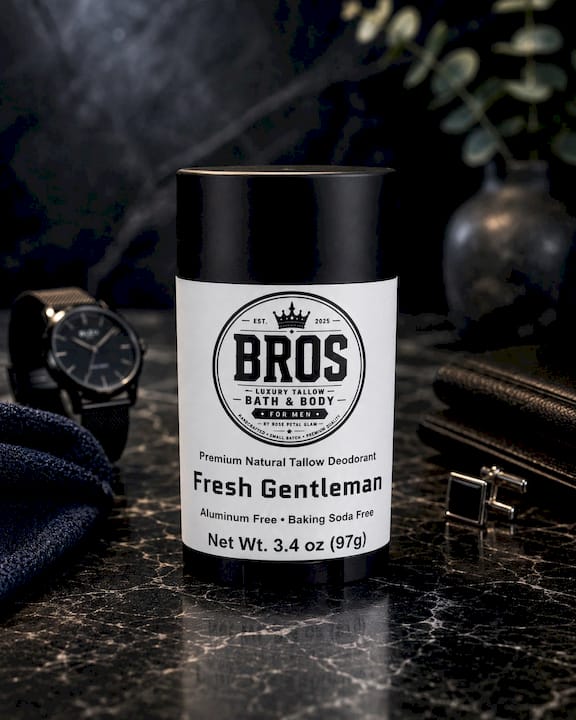
For most men, the best aluminum-free deodorant for men is Rose Petal Glam’s BRO’S Fresh Gentleman Tallow Deodorant. It pairs real odor control with tallow and jojoba oil, which condition underarm skin instead of just masking sweat with fragrance. If you sweat heavily at the gym or work outdoors, that skin-nourishing base matters more than most guys realize, because a lot of “natural” sticks trade comfort for performance.
That said, no single deodorant fits every guy, every armpit, every climate. Here’s a fast shortlist by use case:
- Best overall pick: BRO’S Fresh Gentleman Tallow Deodorant (Rose Petal Glam) — odor control plus skin barrier support
- Best scented option: Halo Vanilla Tallow Deodorant (Rose Petal Glam) — warm vanilla note on the same tallow base
- Best for heavy sweat/active days: Salt & Stone Extra Strength Aluminum-Free Deodorant — built for longer wear under exertion (claimed by the brand).
- Best for sensitive, reactive skin: Dove Aluminum Free Deodorant Stick — hydrating, baking-soda-free formula marketed for sensitive or reactive skin.
- Best budget pick: Arm & Hammer Essentials Solid Deodorant — low cost with dependable baking-soda-based odor fighting
Pick by two factors first: how reactive your skin is, and how hard you sweat on a normal day. Everything else, scent, texture, price, is secondary to those two.
Key Takeaways
The most reliable path to a good aluminum-free deodorant for men is matching skin sensitivity and activity level to ingredients before scent or price.
| Point | Details |
|---|---|
| Verdict pick | BRO’S Fresh Gentleman Tallow Deodorant combines odor control with tallow and jojoba for skin nourishment. |
| Skin sensitivity comes first | Baking-soda-free formulas like Dove or Rose Petal Glam’s tallow line reduce irritation risk for reactive skin. |
| Match activity level to strength | Heavy sweaters should consider extra-strength options like Salt & Stone over standard everyday sticks. |
| Expect an adjustment window | Switching from antiperspirant typically takes two to four weeks for sweat glands to normalize. |
| Rose Petal Glam’s proof point | Its tallow deodorants list full ingredients transparently and are made in small batches for consistency. |
Table of Contents
- What Is Aluminum-Free Deodorant for Men, and How Does It Work?
- Which Aluminum-Free Deodorants Are Actually Worth Buying?
- How Do You Choose the Right Aluminum-Free Deodorant?
- What Do “Dermatologist Tested” and “Clinically Tested” Actually Mean?
- Why Rose Petal Glam’s Tallow Deodorants Made This List
- How Sustainable Are Aluminum-Free Deodorant Ingredients and Packaging?
- What the Research Actually Supports
- A Simpler Way to Get Skin-Friendly Deodorant Right
- Sources
- FAQ
What Is Aluminum-Free Deodorant for Men, and How Does It Work?
An aluminum-free deodorant does not plug your sweat glands. Antiperspirants use aluminum compounds to physically block pores and stop sweat before it reaches the skin. A deodorant without aluminum takes a different route entirely: it lets you sweat normally but interrupts the process that turns sweat into odor.
Sweat itself doesn’t smell. Odor shows up when bacteria on your skin break down the proteins and fatty acids in sweat, and that’s what aluminum-free deodorants actually target, using ingredients like magnesium, plant starches, or activated charcoal to absorb moisture and fight the bacteria responsible for the smell. Nothing here stops your body’s natural cooling function, which is one reason dermatologists tend to view aluminum-free formulas as the gentler long-term option for daily use.
The tradeoff is that these formulas ask more of you upfront. You may sweat visibly through a shirt where an antiperspirant wouldn’t let you. For a lot of men, that’s a fair trade for skipping aluminum salts and the sticky white residue that comes with them. For men doing physical labor or training hard, it means picking a formula built for higher output, which is where extra-strength natural sticks and cream-based options earn their keep.
Which Aluminum-Free Deodorants Are Actually Worth Buying?
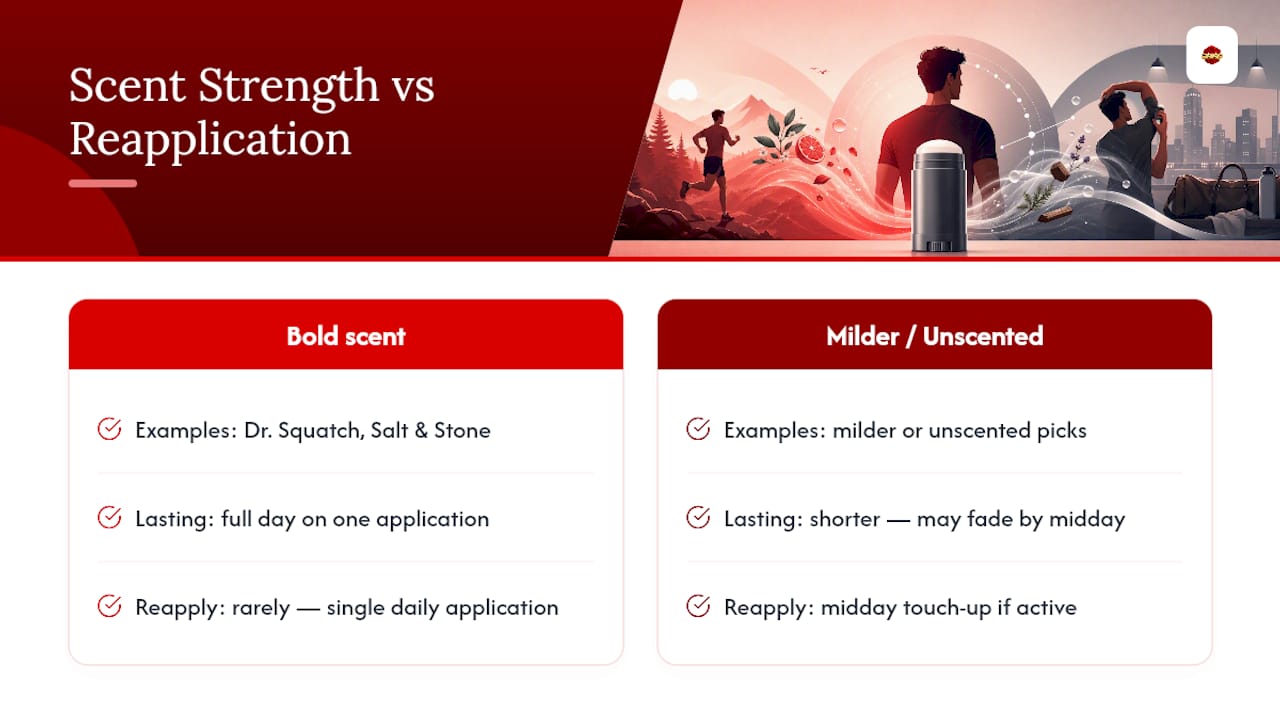
Pro Tip: Match scent strength to how often you reapply. A bold scent (Dr. Squatch, Salt & Stone) can carry you through a full day on one application, while milder or unscented picks may need a midday touch-up if you’re active.
Rose Petal Glam’s two tallow deodorants lead this list because they solve a problem most aluminum-free sticks ignore: dryness and irritation from repeated daily application. Tallow closely resembles the lipids already in human skin, so it absorbs without leaving the greasy film some natural deodorants are known for. Jojoba oil adds a light, non-comedogenic layer that helps calm skin that’s been shaved or waxed recently, a detail that matters if you’re switching from a razor-heavy grooming routine straight into deodorant application.
Old Spice GentleMan’s Collection Deodorant is the safe, familiar choice. You’ll find it in every drugstore, and it delivers predictable, unremarkable performance. It’s not the most sophisticated formula on this list, but it’s the one you can replace anywhere without hunting for a specific store.
Dr. Squatch Odor Squatching Deodorant leans into bold, masculine scent territory. If Old Spice feels too generic and you want something that smells distinctly different from what your coworkers are wearing, this fills that niche. Its odor-control approach relies on natural actives rather than aluminum, but the scent is the real selling point here.
Dove Aluminum Free Deodorant Stick stands out for one reason: it’s formulated with a moisturizing cream base and marketed with dermatologist-friendly positioning. For men with genuinely reactive or eczema-prone underarm skin, this is one of the gentler mass-market options, and it’s baking-soda-free, which matters if you’ve reacted to sodium bicarbonate before.
Nécessaire The Deodorant goes minimalist. Short ingredient list, skin-care language on the label, premium price to match. If you already buy your face wash and moisturizer from skin-care-focused brands rather than drugstore shelves, this fits that same mindset.
Arm & Hammer Essentials Solid Deodorant is the value pick. It’s inexpensive, it’s been a category staple for years, and the baking-soda formulation genuinely fights odor well for men who don’t react to it. Skip it if sodium bicarbonate has ever left your armpits red or itchy.
Hume Supernatural Deodorant breaks from the stick format entirely. It’s a cream you apply with your fingers, which sounds unusual until you realize it means you control exactly how much product goes on. That’s useful for men who found sticks either too light or too heavy.
Saltair 5% AHA Serum Deodorant is the most unconventional entry here. It uses AHA exfoliation, the same category of ingredient in skin-care serums, to manage buildup and odor at the same time. It’s worth trying if you deal with dark underarm skin or textural buildup, but skip it right after shaving, since AHA on freshly irritated skin is a recipe for a burning sensation.
Salt & Stone Extra Strength Aluminum-Free Deodorant earns its “extra strength” label with a formula built for men who sweat through standard sticks by early afternoon. It’s a legitimate answer for gym-heavy schedules, though the tradeoff is a higher price point than most of the list.
How Do You Choose the Right Aluminum-Free Deodorant?
Start with your skin, not the scent. Baking soda is the most common irritant in natural deodorants, so if you’ve ever broken out in a red, itchy rash after switching brands, look specifically for a baking-soda-free label before anything else. Magnesium- and starch-based formulas tend to be gentler on reactive skin.
Activity level comes next. A man sitting at a desk all day has very different needs than one doing physical labor or training twice a day. Heavier sweat calls for extra-strength formulas or a cream that lets you control the amount applied, rather than a light everyday stick.
Run through this checklist before you buy:
- Does the label say baking-soda-free, and do I know if baking soda irritates my skin?
- Is the format a stick, cream, or serum, and which one fits my routine?
- Does the scent strength match how long I need it to last without reapplying?
- Are there alcohol or synthetic fragrance ingredients that have bothered me before?
- What’s my actual sweat level on a normal day versus a workout day?
- Does the brand list its full ingredient set clearly, or is it vague about what’s inside?
Pro Tip: Before committing to a full-size product, do a small patch test on your inner forearm for 24 to 48 hours. It catches most reactions before they show up somewhere as visible and uncomfortable as your underarm.
Switching from an antiperspirant takes patience. Expect two to four weeks of adjustment as your sweat glands, which have been chemically blocked, return to normal function. You may notice more visible sweat and a stronger odor during this window. That’s a detoxification period, not a sign the new deodorant is failing. Body chemistry and skin microbiome vary enough that a formula working perfectly for a friend might do nothing for you, which is exactly why testing more than one pick, rather than committing to the first one you grab, tends to save both money and frustration in the long run.
What Do “Dermatologist Tested” and “Clinically Tested” Actually Mean?
These phrases sound authoritative, but there’s no single standardized test behind them. Federal labeling rules govern claim language for deodorants and antiperspirants, yet they don’t require brands to publish exact study methodology. That means “clinically tested” on one label could reflect a rigorous trial, while on another it means a small internal panel test. Look for a brand that publishes study details or third-party testing notes rather than taking the phrase at face value.
The criteria that actually separate a good aluminum-free deodorant from a mediocre one are straightforward: odor control under real sweat conditions, how long it lasts through a workday or workout, whether it leaves residue or stains fabric, and whether it irritates skin over repeated use. Independent product reviewers use these same four factors as their primary testing axes, and they hold up well as a shopping checklist for anyone comparing labels in a store aisle.
One more thing worth knowing: aluminum-free status alone doesn’t guarantee a product is gentle. Ingredient-level sensitivities, fragrance, essential oils, alcohol, drive most irritation complaints, not whether aluminum is present. A “natural” label isn’t automatically a “safe for my skin” label.
Why Rose Petal Glam’s Tallow Deodorants Made This List
Rose Petal Glam makes two deodorants built specifically for men: BRO’S Fresh Gentleman Tallow Deodorant and the Halo Vanilla Tallow Deodorant. Both use a tallow base combined with jojoba oil, and kaolin clay appears across the brand’s tallow skincare line as an odor-absorbing, skin-soothing ingredient.
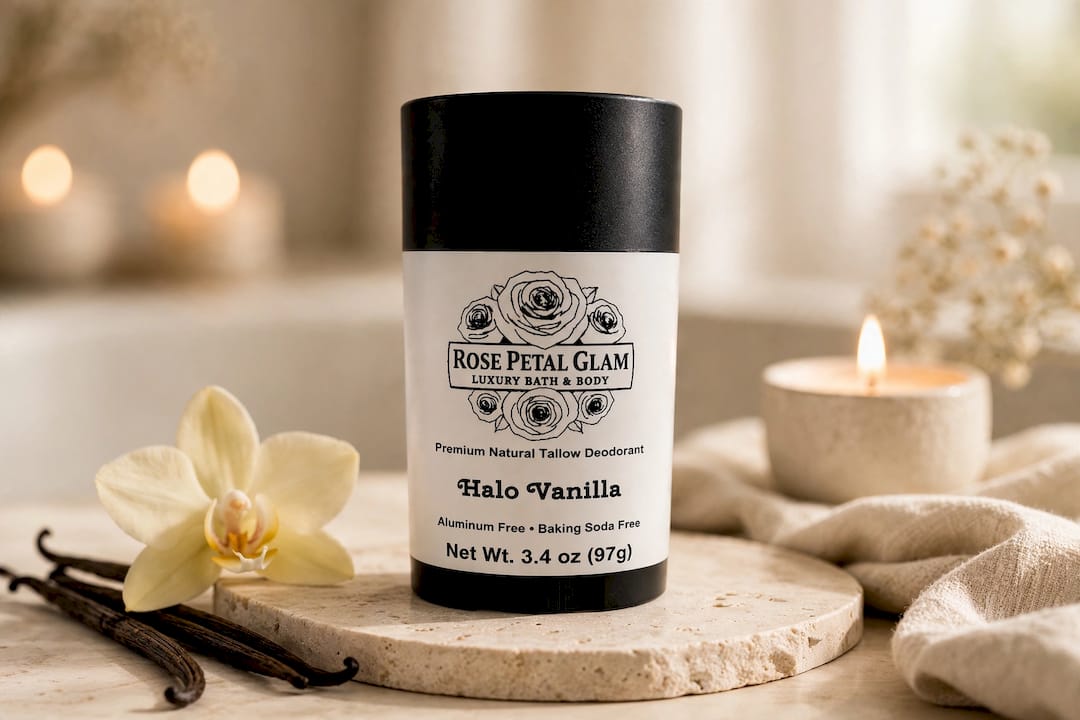
Tallow works because its fatty acid structure closely mirrors human skin lipids, which is why it tends to absorb without the greasy feel some plant-oil deodorants leave behind. That barrier-support quality matters most for men reapplying deodorant daily on skin that’s also dealing with shaving, sweat, and fabric friction.
Rose Petal Glam makes these in small batches and lists ingredients transparently on every product page rather than hiding behind vague “natural fragrance” labeling, exemplifying the benefits of their tallow cream that supports skin health and moisture. For a category where label claims can be murky, that transparency is the proof point worth checking yourself before you buy.
How Sustainable Are Aluminum-Free Deodorant Ingredients and Packaging?
Aluminum-free formulas tend to have a lighter environmental footprint on the ingredient side. Plant starches, magnesium compounds, and tallow are biodegradable, unlike aluminum salts, which persist longer in wastewater systems after rinsing off in the shower. Tallow specifically comes from rendering fat that would otherwise be discarded as a byproduct of beef production, making it a use-what-you-have ingredient rather than one grown or mined specifically for cosmetics.
Packaging is where brands diverge more sharply. Mass-market sticks from brands like Old Spice or Arm & Hammer typically ship in standard plastic push-up tubes, functional, but not designed with end-of-life disposal in mind. Small-batch brands more often use paperboard tubes or recyclable materials, though practices vary by product line, so it’s worth checking a brand’s own packaging notes rather than assuming.
None of this makes aluminum-free deodorant a solved sustainability problem. Shipping, sourcing, and production scale all factor in too. But between ingredient biodegradability and the packaging choices smaller manufacturers tend to make, aluminum-free options generally edge out traditional antiperspirants on environmental impact, even before you factor in the skin-health argument.
What the Research Actually Supports
Most “best deodorant” roundups treat scent and price as the deciding factors, and that’s backwards. The research keeps pointing to two things that matter more: ingredient sensitivity and reapplication realism. A deodorant that smells incredible but irritates your skin after two weeks isn’t a good pick, no matter how many five-star reviews it has.
The conventional advice, “just try a few until one works”, isn’t wrong, but it undersells how much skin type and activity level should narrow that search before you start. Men with sensitive skin who blindly grab a baking-soda stick because it’s cheap are setting themselves up for a rash they’ll blame on “natural deodorants not working,” when the real issue is one ingredient in one formula.
Prioritize skin sensitivity first, activity level second, scent last. That order will save you more wasted purchases than any brand comparison ever will.
A Simpler Way to Get Skin-Friendly Deodorant Right
If comparing ten different sticks and creams sounds like more research than you signed up for, there’s a simpler path: buy from a brand that builds its formulas around skin health first. Rose Petal Glam makes its deodorants, soaps, and body butters in small batches using grass-fed tallow, jojoba oil, and other ingredients chosen for how they actually treat skin, not just how they smell on a shelf.

That approach differs from picking through mass-market options where you’re often guessing at what “natural” or “dermatologist tested” really means on the label. Every product page lists exactly what’s inside, so you know whether an ingredient that’s bothered you before is in the formula before you buy it. If you’re pairing your deodorant with the rest of your routine, the brand’s whipped body butter line uses the same tallow and jojoba base for dry skin elsewhere on the body.
Ready to try it yourself? Order the BRO’S Fresh Gentleman Tallow Deodorant directly and see how your skin responds over the first few weeks.
Sources
- Whole body deodorant guidance — The Ohio State University Wexner Medical Center
- Regulations for deodorants and antiperspirants — Electronic Code of Federal Regulations (21 CFR Part 350)
- Antiperspirants and kidney disease — National Kidney Foundation
- The Best Deodorants — Wirecutter (NYT)
FAQ
Should Men Use Aluminum-Free Deodorant?
Men with sensitive skin, frequent irritation from antiperspirants, or a preference for letting their body sweat naturally are good candidates for aluminum-free formulas. Men with heavy sweat concerns can still use them, but should choose extra-strength or cream-based formulas built for that need.
Do Aluminum-Free Deodorants Actually Work?
Yes, but through a different mechanism: they target odor-causing bacteria and absorb moisture rather than blocking sweat glands outright. Effectiveness depends heavily on matching the formula to your body chemistry and activity level.
What Is the Healthiest Deodorant for Men to Use?
The healthiest choice is typically a baking-soda-free, aluminum-free formula with a transparent ingredient list, such as Rose Petal Glam’s tallow deodorants or Dove’s Aluminum Free Deodorant Stick, since ingredient-level sensitivity affects skin health more than aluminum status alone.
What Deodorant Is Best for Men Without Aluminum?
For daily wear with skin-nourishing benefits, BRO’S Fresh Gentleman Tallow Deodorant is a strong pick. For heavier sweat, Salt & Stone Extra Strength Aluminum-Free Deodorant is built for more demanding conditions.
Recommended
- BRO’S Fresh Gentleman Tallow Deodorant Net Wt. 3.4 oz | Handmade Deodorant | Rose Petal Glam
- Halo Vanilla Tallow Deodorant Net Wt. 3.4 oz | Handmade Deodorant | Rose Petal Glam
- BRO’S Fresh Gentleman Premium Body Spray 2.0 Net Wt. 2 oz (60 mL) | Handmade Body Spray | Rose Petal Glam
- Sour Watermelon Candy Tallow Deodorant Net Wt. 3.4 oz | Handmade Deodorant | Rose Petal Glam